
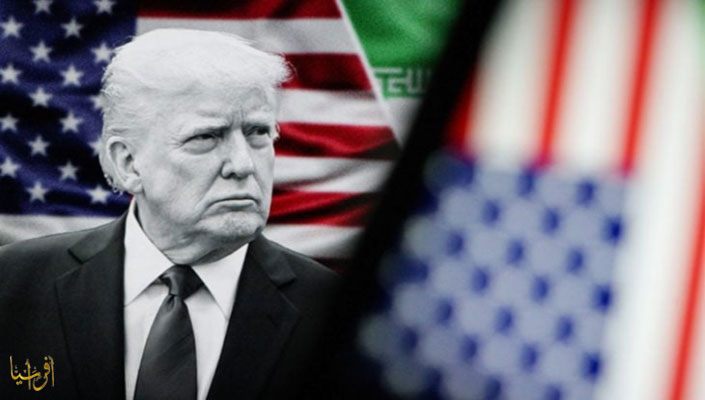
Afrasianet - Jamal Zahalka - A few days after announcing the start of the "Freedom Project," boasted by U.S. President Donald Trump, which aimed to break the closure of the Strait of Hormuz, imposed by Iran's Revolutionary Guard Corps (IRGC), by opening the way for U.S.-protected commercial vessels, the U.S. backed down and wrote on the Truth Social platform that he had ordered a freeze on the project "until it is clear whether an agreement can be reached."
The decision reflects a U.S. desire to prevent the ceasefire from deteriorating, and appears to be It is related to what the media outlets, especially the "Axios" website, published about intensive contacts between American and Iranian officials to renew negotiations to reach an "agreement of principles" that ends the war and deals with its causes and repercussions.
The news affected the oil market and its price fell by more than 10% in a few hours, and the IRGC's naval forces announced that, "with the elimination of the threat of aggressors and in light of the new measures, safe and stable passage through the Strait of Hormuz will become possible."
Its objectives, and the United States is now in a "defensive state" in the Gulf. Trump, who had previously threatened to renew the war if Iran did not give up its nuclear weapons and close the Strait of Hormuz, has recently avoided the word war, and even when he mentioned it, he used the term "small war" and reiterated his optimism that a deal with Iran could be reached. U.S. Secretary of War Pete Hegseth, who has long waved and sang of lethal and striking military force, simply stated this week that "we do not seek to fight" and reiterated that the war is over.
Does this change in U.S. rhetoric fall within the cyclical movement of Trump's swing between the two limits of a destructive all-out war of erasure and an agreement on a historic peace?
Some Israeli sources have gone so far as to say that it is "a tactic of camouflage and anesthesia... The possibility of renewed war and attacks outweighs the chances of success in negotiations."
This Israeli "assessment" reflects unconcealed desires rather than a realistic and objective reading.
The divergence in positions between Tel Aviv and Washington has reached a point of contradiction: the United States is looking for a way out, Israel is looking for an entrance, the former is seeking to turn the page on the war and the latter wants to resume it.
But unlike on the eve of the start of the war, it is the Trump administration today that decides, and Israel is forced to follow suit.
The divergence in positions between Tel Aviv and Washington has reached a point of contradiction: the United States is looking for a way out and Israel is looking for an outlet, the former is seeking to turn the page on the war and the second wants to resume it.
The American Position
It seems that US President Donald Trump is not interested in resuming the war, and it also seems that the "peaceful" statements of his senior officials reflect an actual position, not just a language breakthrough. This trend has heavyweight factors that Trump cannot ignore and seem to outweigh the reasons for resuming the war.
The possibility of a return to war remains present, if Trump does not obtain an agreement that saves him face and gives some credibility to his claim to achieve victory and reach goals, especially with regard to the Iranian nuclear file, which remained the only one of the original goals, as well as the opening of the Strait of Hormuz, which was later added to the list of reduced goals.
The equation has changed from war until Iran fully acquiesces to the US conditions, to negotiations until an agreement is reached that saves the face of both sides and the possibility of war, presented as a negotiating tactic and as a prelude to the claim that Iran has submitted to Trump's threats.
Trump cannot ignore the rift in his base and political camp, after pledging that American foreign policy will be based on the principle of "America First" and committing to refrain from being dragged into long and endless wars. Polls show that an overwhelming majority on the American street opposes a return to war, as do more than half of Republicans.
Nor can the U.S. president turn a blind eye to his personal popularity falling to rock bottom, with only one-third of Americans satisfied with his performance.
Worse still, complaints about rising fuel prices are widespread in the United States itself, not just in global markets. All this on the eve of next November's midterm congressional elections, which could very well result in the Republican Party losing the majority it currently enjoys in the Senate and House of Representatives.
There is no doubt that the impact of the electoral war is driving a loss for Republicans, and resuming it will lead to more losses. According to the logic of American policy, this factor alone will deter Trump from venturing again, but there are other factors that weigh in, including anxiety and tension in Congress, about the need to vote on the war according to the law that must be passed by parliament after American soldiers have been engaged in combat for more than 60 days, and there is an ongoing debate on this issue among the governing forums in Washington.
The pressure of time is also an important factor because of Trump's visit to Beijing next Wednesday, and he wants to reach a negotiated track that preserves Washington's prestige, before meeting with the Chinese president, and Trump does not want to meet him and the United States in a crisis and relatively weak state.
The US military has proven that it is capable of inflicting terrible destruction on Iran and its military and civilian facilities, but it has revealed its inability to force a change in the Iranian leadership and break its political will. Most U.S. analysts argue that more war and destruction will not force Iran to radically change its positions, and that the impact of sanctions and economic temptations is greater than aerial bombardment.
Sanctions need a long time to take a serious effect, but it seems that war needs longer. There are repeated indications that the first alternative to the failure of negotiations, if they fail, is not to return to fighting, but to impose more economic sanctions. In recent days, U.S. officials have expressed their opinion that Iran and the United States have reached the closest point to reaching an agreement since the beginning of the war.
The "Agreement of Principles" document, which is the subject of contacts between Washington and Tehran and has been reported in the media, stipulates a definitive cessation of the war and points that can be agreed upon if we take into account the well-known positions of both sides: first, that Iran does not possess a nuclear weapon and does not seek to produce it; second, that Iran should not possess a nuclear weapon and that it should not seek to produce it; second, that Iran should open the Strait of Hormuz; and third, that sanctions should be lifted, that the blockade should be lifted, and that billions of Iranian dollars frozen in the world's banks should be released.
Israeli media reported that the Israeli army is pushing for renewed fighting and inflicting painful blows on Iran to force it to make concessions, and a senior military official said in the publication that "the blockade is effective but not enough, and if the war is to be renewed, it is preferable to do so quickly."
The war began with Israel dragging the United States into it, and it was managed in partnership with Israel, and it seems that it is on its way to officially ending with an American decision and Israeli submission to this decision. To summarize it with a question for the US administration and the Israeli government, the first would answer yes, and the second would say no: "There is still hope for more war and fighting."
________________

