
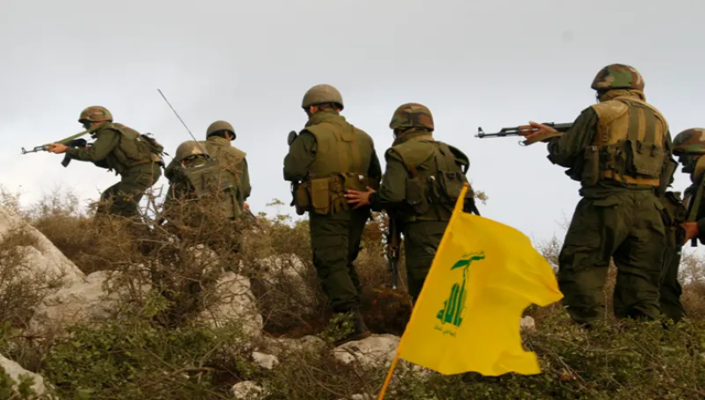
Afrasianet - Oraib Al Rantawi - Hezbollah did not wait more than 48 hours to enter a "war of support" for Iran in the face of a dual US-Israeli aggression, in an apparent restoration of the scenario of supporting Gaza, which the party launched just 24 hours after the October 7, 2023, operation.
The results of the first war of support came to the party in terms of its leadership and capabilities, in addition to its catastrophic repercussions on its social environment and on Lebanon as a whole.
But the urgent question is: Do the party and its new leadership believe that the results of the second war of support will be different from what happened the first time?, what are the circumstances and circumstances surrounding this decision?, and what are the party's capabilities to create a qualitative difference in the course of the ongoing regional war, to justify and "legitimize" this risk, and what developments and repercussions will result from such a development?
A tour of the party's strategic mind
The U.S.-Israeli war on Iran has attacked the party at a critical transitional moment, and it is barely succeeding in rebuilding its ranks, especially in light of the faltering and even interrupted supply chains, financial and armaments.
His new leadership is also dedicating its role and leadership with great difficulty, and filling the vacuum of the charismatic leadership of its late Secretary-General Hassan Nasrallah, amid increasing reports of internal disagreements and disagreements resulting from the restructuring, perhaps the most prominent manifestation expressed was the departure of the party's strong man, Wafik Safa, from its ranks, resigning or being dismissed.
The party is fully aware that the war on Iran this time is different from previous wars and rounds. This time, Tehran's opponents are hiding their worst intentions: Trump wants Tehran to raise the white flag of surrender and accept submissiveness on his terms (read Israel's humiliating terms).
Netanyahu goes further and wants to change the entire regime, not just change his policy, even if it leads to the worst-case scenarios and nightmares: chaos, divisions, and reproductive civil wars, which do not stop at Iranian geography, but extend the region that stretches from the shores of the Caspian to the shores of the Mediterranean.
The party, which has not yet survived the blow of the "fall of the Assad regime" on December 8, 2024, is fully aware that there is no existence and no future for it or its weapons, and that it has no role or status in Lebanon and the region, if it loses the Iranian incubator after losing the Syrian artery.
For him, it is therefore an existential war, not a struggle over roles and weights, whether inside Lebanon or at the level of the party's regional role, which has been amplified in the decade of the "Arab Spring", starting with Syria and not ending with Iraq, Yemen and Palestine.
When the party was assessing (and appreciating the situation) with the outbreak of the war on Iran on February 28, it was doing so, at the height of the field and political contraction on the Lebanese national scene, after its role retreated from the regional arena following the accelerated developments following the "flood." It accepted to withdraw its weapons south of the Litani, while the state and the army planned to enforce "exclusivity of arms," which would be pursued by its northerners, and throughout Lebanese territory, starting with the Mesopotamian region.
The party, which drank the cup of poison by accepting the agreement of November 27, 2024 to stop the "hostilities," and its social environment have been exposed to a barrage of daily Israeli violations of that agreement, as it has affected hundreds of cadres, leaders, and fighters.
His villages and towns in the south, the Bekaa and even the suburbs have also suffered daily losses, eating away at his weapons stock, and his ability to "protect, deter, and liberate," which is the "golden triad" with which the party has always justified the possession of weapons and defended its right to keep them.
The more the campaign against weapons from its internal and external opponents intensified, the more difficult it would be for the party to defend it, in light of the arrogance and aggression that the occupation leaders reveal, with its reluctance to react and its commitment to calm and calm.
As was evident in the approval of the ministers of the Amal Movement on the decision to delegitimize the party's military and security apparatus at the emergency cabinet meeting last Sunday, and the commitment of the President of Amal, the Speaker of the House of Representatives, to the phrase "no comment" on the government decision, it can be said that the decision to enter the war of support was an escape and an expression of the depth of the "predicament". It is not the embodiment of a capacity for choices and choices, or an expression of a state of recovery and ascendancy.
The party entered the war devoid of its allies, and there are signs of a widening rift between it and the Amal Movement, while the Shiite environment is undergoing qualitative transformations, which will emerge more deeply once the dust of the ongoing battles in Lebanon and the region subsides
As for the party, the war on Iran is not the mother of the battles, but its conclusion, especially since it is watching Tehran swing on the edges of the "Temple of Samson", which is intended to be demolished on everyone's heads, and the party will have nothing left if Iran loses, after losing Syria, and the last bullet in its sleeve is worthless, if it is not fired today, and there is no need for it to save it for later battles, because there is no battle more important than today's battles.
If Iran holds out (and wins), it will be a partner in the victory and its spoils, and if it is weakened and defeated, it has nothing to lose. The theory of aligning with the "victor", which is usually covered by the statement "aligning with the right side of history", is not a luxury available to the party, but rather a compulsion to align itself with Iran, victorious or defeated.
In any case, the party had declared some of what was going on in its strategic mind, when it "spilled" with the beating of the drums of war, and before it broke out, that it would enter it into one of two situations, or both: targeting the Iranian regime to topple it, or targeting the Supreme Leader in his life. The Supreme Leader was assassinated by the fire of Washington and Tel Aviv, and both parties do not hide their intentions to change the regime or take it out of its skin, and to "dress" it in another skin that does not accommodate "proxies" and "arms", and the party is the most important and at the forefront of them.
Hezbollah, like Hamas, cannot be thought of as a "political party" in isolation from "arms" and "resistance," which are the justification for their existence, and they are the "DNA of which they are known."
The party enters the war isolated
The party entered the war devoid of its allies, and there is an indication of the widening of the breach between it and the Amal Movement, while the Shiite environment is undergoing qualitative transformations, which will emerge more deeply once the dust of the ongoing battles in Lebanon and the region subsides, and the identity of the victor and the defeated in this war is revealed.
The party's entry into the line of support has been lackluster so far, and we do not know how it will escalate, if it will escalate at all, but the cost of "support" seems to be high for its environment and Lebanon, and there are some suggestions that a large-scale ground war has begun, and Israel had prepared for it in advance, and would have carried it out in any case, without waiting for an excuse or justification, and perhaps the party's missiles and drones resulted in the haste of their timing and presentation, but all the indications pointed to the inevitability, or at least the likelihood occurrence.
We do not know what weapons and fighters the party has left, but most estimates say that they are not enough to make a difference in the balance of war and the broader fighting.
The Israeli "brutality" will reach a great deal, and that the plans to occupy the southern Litani after emptying it of its inhabitants this time have been put into practice, and that there is a green light from the United States, internationally and regionally, that gives Israel a free hand in Lebanon and against Hezbollah in particular.
Unlike Hamas in Palestine, there are no regional incubators for Hezbollah (Iran today needs someone to support it), and unlike Gaza, there is no international momentum to prevent the spread of Israeli brutality. Hezbollah today is in a more difficult situation by all these standards and standards.
Most of the Israeli occupations in the south came after the ceasefire, and the Israeli ground advances that were achieved before it were limited and measured by a few kilometers, and the party has a long historical record in fighting "soldiers on the ground" after neutralizing the factor of Israel's enormous air and technological superiority.
Israel can occupy southern Lebanon even the Litani, and perhaps even beyond, but the more important question is: How long will Israel be able to maintain its occupation, what costs will it have to pay to sustain and stabilize it?, and how will the state and the party's opponents respond to the challenge of the occupation's survival, perhaps for many years to come?
Will there be an "effective diplomatic option" to remove him and ensure his departure, and how will the state, with its various institutions, deal with the flood of displaced people in their homeland, and where will they spend their latent and apparent energy of anger, if the state is unable (and this is likely) to absorb them and return them to their towns and villages?.. Hezbollah does not have to worry alone, as its many opponents and arguments should worry as well.
As if Hezbollah is planning to return as it started, is this a realistic option after all these transformations in Lebanon, the region, and the international system?
In light of the impasse that the Lebanese state and party are trapped, is it possible to think of a "post-Hezbollah resistance"?, and will the Israeli occupation create new resistances, according to the categorical rule: "Occupation begets resistance", and what resistance will be created?, what is Hezbollah's position in it, and how the Lebanese scene will develop in the coming days and years? Questions and questions await who (and what) will answer them.
