
Afrasianet - On the morning of Saturday, February 28, 2026, Israel and the United States launched a war against Iran, targeting hundreds of security, military and sovereign sites and assassinating a large number of regime leaders, led by Supreme Leader Ali Khamenei.
Regardless of the course of events, the way the war is conducted, and the parties involved and who may participate in it, there are two intersecting general frameworks that serve each other.
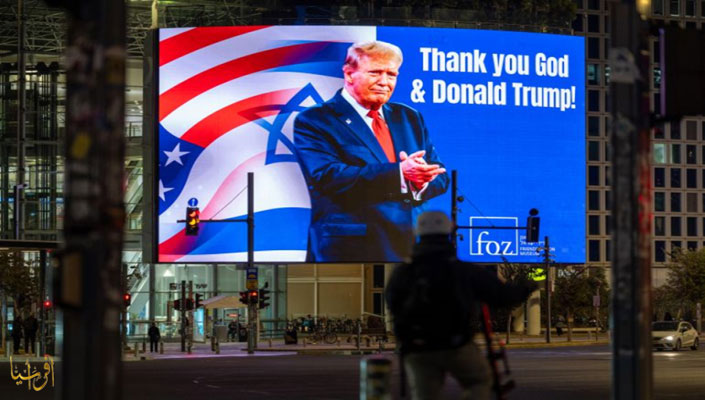
The geopolitical framework revolves around Israel's goal of "changing the Middle East" and redrawing its maps, while the framework related to international relations revolves around US President Donald Trump's goal of changing the international system to be consistent with his vision of "making America great again."
If Israel's goal in waging war on Iran is closely related to its larger goal of changing the Middle East, the relationship of this war to the goal of reshaping the international order needs to be clarified and synthesized to pieces of the incomplete picture.
Changing Iran to Change the Middle East
Israeli leaders make no secret of their goal of changing the geopolitics of the Middle East, and the declaration of this goal is constantly echoed in the speeches of their leaders, both political and military.
It is true that this goal was associated with Prime Minister Benjamin Netanyahu, especially during the two-year war on Gaza, but its roots are far away, dating back to the beginnings of the establishment of the Zionist entity at the end of the 1940s. This objective has been inherent in the existence of the entity at various stages and is reflected in its policies of war and peace.
The idea of changing the Middle East in its first form originated in the "tug-of-war" theory, which was first used by Israel's first prime minister, David Ben-Gurion.
A state that was founded on the occupation of another people's land was not natural, and the environment in which it grew up was not conducive to it or to live with it, so the thought of changing that environment began early.
When the policy of pulling the limbs was formulated in the 1950s, the Arab center was made up of the trio of Egypt, Syria, and Iraq, and the parties meant to tighten around that center: Ethiopia in the Horn of Africa, Iran adjacent to the Gulf, and Eurasian Turkey.
At that stage, the policy of pulling the strings was aimed at securing the existence and continuation of the occupation, compensating for its material and strategic losses resulting from diplomatic isolation and the Arab boycott, and strengthening its rising power to achieve regional supremacy.
In the same vein, in addition to drawing these parties to Israeli policy and regional goals, Israel has sought to reach out to religious and ethnic minorities in the region, such as the Maronites in Lebanon, the Druze in Syria, the Kurds in Iraq, the Jews in North Africa, and some tribes in South Sudan.
Over time, the equations in the region changed, weakening the components of the Arab Center and turning into periphery, and the former parties were strengthened and turned into centers.
Instead of rapprochement and alliance relations with Israel, some of the new centers have become competing with Israel for regional influence, such as Turkey, and some are hostile, such as Iran.
To keep pace with this development in the regional equations, Israel's policy of pulling the sides has expanded to include more African countries, such as Kenya, Asian countries such as Azerbaijan, and Europeans, such as Cyprus and Greece. However, the idea of changing the Middle East has not left the heart of Israeli strategic thinking.
During his speech to the 78th session of the United Nations General Assembly, on September 22, 2023, just before October 7, and the beginning of the war on Gaza, Israeli Prime Minister Benjamin Netanyahu presented a map titled "The New Middle East," in which he divided the Middle East into two parts, a section that includes Israel's allies and friends from countries that have normalized or intend to normalize their relations with it, and a section for the rest of the countries in the region, with the absence of any Palestinian presence on that map.
During the war on Gaza, the idea of changing the Middle East floated again and vigorously, echoing the tongues of the occupation's leaders.
On September 27, 2024, Netanyahu once again presented to the United Nations General Assembly two maps, the first for the axis of friends, including India, and the second for the axis of enemies, which included Iran, Iraq, and Syria (show two maps).
At the same time, Israel has penetrated into southern Lebanon to carve out a buffer zone, and has advanced deep into Syria to seize more territory in addition to the Golan Heights, which has been occupied since 1967.
In June 2025, it launched a twelve-day war on Iran, during which Prime Minister Benjamin Netanyahu declared that Israel was "changing the face of the Middle East with its military campaign against Iran."
The 12-day war has placed Iran at the top of Israel's priorities as a regional power that should be neutralized first on the way to achieving the goal of redrawing the new Middle East.
In addition to its network of armed groups in Lebanon, Yemen, and Iraq, Iran's missile force, which inflicted significant damage on Israel in that war, poses a security threat that is difficult for Tel Aviv to live with. Therefore, as soon as the June War ended, preparations began for this war, which he planned to overthrow the regime.
If Israel achieves the goal of regime change by waging this war, it will get rid of the threats it poses and will be able to change Iran's position on the map of regional alliances.
First, it will get rid of the nuclear program, which is the biggest source of security threat and sees it as a threat to its existence. Iran's possession of nuclear capabilities would reduce Israel's military superiority gap and change the balance of deterrence in the region. Therefore, Israel opposed the nuclear deal in 2015 because it does not prevent Iran from developing military nuclear capabilities in the Independent Territory.
Second, Israel will get rid of the network of proxies from Iranian-linked armed groups within the framework of the so-called axis of resistance, which Israel faced during the Gaza war on several fronts.
Third, it will get rid of its self-developed ballistic missile and drone capabilities in cooperation with its Russian and Chinese allies.
If these capabilities are generalized to Tehran's allies, such as Hezbollah, the Houthis, and Iraqi armed groups, the threat to Israel's security becomes twofold. Finally, Israel will get rid of a powerful competitor in the context of its struggle for regional influence and dominance.
Neutralizing Tehran, and possibly polarizing it into an alliance with Tel Aviv, would fundamentally alter the balance of power in the region and enable Israel to form a regional order that would entrench its strategic superiority and weaken any opposing force or emerging alliances. This was reiterated by Netanyahu in a press conference held on the evening of Thursday, March 12, 2026, by saying: "We are in the process of creating the right conditions for the overthrow of the Iranian regime. "We are in the process of transforming the Middle East into a regional power and, in some respects, a global power."
If the general framework in which the current war against Iran is taking place, from the Israeli perspective, is to change the Middle East, and that this framework requires at this stage the overthrow of the Iranian regime and a change in the regional balance of power in favor of Israel in preparation for the next war, how can we understand the general framework from the American perspective? How does sharing the immediate goal with Israel serve the White House's agenda and its far-reaching global vision of changing the international order?
The war on Iran and the eye on China
Since returning to the White House in his second term, US President Donald Trump has made no secret of his concern that the international order will continue to be based on its rules since the end of World War II.
This system, which the United States has co-built and led alone since the fall of the Soviet Union in the late 1980s, no longer serves American interests, but has become a burden on it. This system has allowed the rise of adversarial international and regional powers such as China, weakened U.S. power and limited its global influence. It should therefore be changed and reshaped on new rules that "make America great again."
The U.S. National Security Strategy, released in November 2025, outlines the major goals the United States should achieve, ranks its priorities in the areas where it will act, and outlines policies in the coming years to restore America's "greatness."
This strategy does not disclose the goal of "reshaping the international order," but its implementation in the five regions of the world (the Western Region, Asia, Europe, the Middle East, and Africa) ultimately leads to the achievement of this goal. How do we understand the war on Iran in this context?
The path to reshaping the international order and restoring American greatness begins with securing the western hemisphere "from hostile foreign interference and preventing rival international powers from having essential assets on this continent."
The Middle East has a special place in this strategy: it is "the most important source of energy in the world, a major theater of great power competition, and an arena for regional and global conflicts...
Therefore, America will always be keen to preserve its core interests in this region, prevent hostile forces from controlling energy supplies in the Gulf, keep the Strait of Hormuz open and the Red Sea navigable, and ensure Israel's security."
The importance of the Middle East, and Iran in particular, is all the more important given China's position in the U.S. strategy, which was formulated, at this point, to correct the mistakes of previous administrations over the past 40 years. Those mistakes, according to the current administration, have allowed China to enter the international system and take advantage of the opportunities it offers for enrichment and power accumulation.
Therefore, the United States should correct its economic relations with China in order to maintain its supremacy, and restore the balance of military and commercial power in its favor and that of its allies in the region.
In all U.S. goals related to China, Iran is at the heart of the equation, either directly or indirectly.
In geopolitical calculations, Iran is a pivotal node at which geography and energy lines converge, and political and military alliances are formed around it. In addition to its imperial historical legacy that continues to fuel the memory of the Islamic Republic's decision-maker, Iran is a global strategic crossroads in which major powers compete and manage their conflicts.
Therefore, any quest to reshape the international order and change the global balance of power should take into account Iran's geopolitical position in the Middle East, as well as Venezuela or Brazil in Latin America, or Taiwan or Malacca in Southeast Asia. Containing, encircling, or weakening China, the rising global power, makes weakening Iran or changing the shape of its regional and international alliances away from China a strategic goal for the United States. Achieving this goal would advance the US agenda against China on several levels, most notably:
1. Expand U.S. control of the global energy market and deny China easy access to its resources.
Regime change in Venezuela, which has been exporting more than 50 percent of its oil to China, was a step in that direction. Regime change in Iran, as planned, would deprive China of another, more important source: Iranian oil accounts for about 13 percent of its imports. It would also bring a U.S.-friendly or allied regime that controls navigation in two of the world's most important waterways, the Strait of Hormuz and the Bab al-Mandeb Strait, where a significant share of global trade and about one-third of energy resources pass.
2. Blockade China's Belt and Road Initiative, which aims to redraw global trade routes and connect the arteries of the global economy to Beijing.
Iran is a key link in this geoeconomic network of roads, railways, ports, and logistics, linking the rising Asian axis to the Middle East and Europe. Iran's pivotal position in this global multilateral project, as much as it opens up Tehran, which has been besieged for decades, to trading partners on various continents, also helps China expand its economic and geopolitical influence and strengthen its competitive position with the United States. Therefore, taking Iran out of this equation would disrupt this project and prompt Beijing to reconsider its paths, cost, and feasibility.
3. Exhausting the anti-Western axis with its two main pillars: China and Russia, and weakening the regional and international blocs that revolve around them, such as the Shanghai Cooperation Organization and the BRICS group.
Iran is an active member of both organizations, a key ally of Beijing and Moscow, and a voice of what has come to be known as the "Global South," calling for a more just and balanced multipolar world order. If Tehran's direction changes to the West, the face of the Middle East as a whole will change, and it will become a pure sphere of U.S. geopolitical influence, in which the "new" Iran, the Gulf region, Turkey, and Israel will be alled. Thus, "America is great again," dominating the Western hemisphere, extracting the Middle East for itself, and besieging Chinese and Russian influence and pushing it to retreat.
Al-Haqd Account and Al-Baydar Account
The overthrow of the Iranian regime would have been the best scenario to achieve the goals of the Israeli-American alliance if it had been achieved with a fatal first strike, as the war plan would have been on paper. But the course of the war changed once Iran absorbed the blow and was able to respond quickly, expanding the range of targets and revealing military capabilities that did not appear to have been taken into account in calculations from the strategists of the war in Washington and Tel Aviv.
During the first four weeks, the U.S.-Israeli calculus changed, and with it, the goals of the war changed more than once; the overthrow of the regime was no longer a goal, but a negotiated agreement with its new leadership. During this period, Iran uprooted an important geopolitical negotiating card of control of the Strait of Hormuz.
If the two sides sit at the negotiating table in the future, the strait will be an additional file to be negotiated by Tehran along with its other files related to its nuclear and missile programs and its regional influence.
In this sense, it will be difficult for Netanyahu to convince his base that the war has brought Israel closer to achieving its goal of changing the map of the Middle East. Trump will have the same difficulty convincing his constituents that the war serves the strategic goals of the United States of restoring "American greatness" and achieving absolute superiority in the field of international competition, especially with regard to China.
