
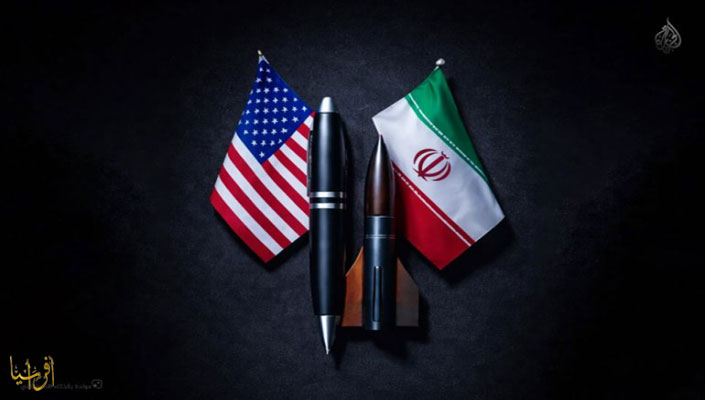
Friedman: The Trump administration's fundamental failure in the Iran war lies in its extreme disregard for the resilience of the Iranian leadership
Afrasianet - American writer Thomas Friedman has launched a scathing attack on President Donald Trump, saying that his decision to wage war on Iran alongside Israeli Prime Minister Benjamin Netanyahu was based on the belief that it would lead to "quick and easy" regime change, and instead ignited a fire that they had no power to extinguish.
Friedman said in an article in the New York Times that the world is witnessing the catastrophic repercussions of Trump's decision to intervene militarily in Iran, and described the US president as a "slippery and unstable man" and likened him to a child in the form of a man fiddling with matchsticks, the most powerful army in the world, inside a room full of gas.
Friedman argues that the Trump administration's fundamental failure to wage war on Iran lies in its extreme disregard for the resilience of the Iranian leadership, assuming that the airstrikes would topple the regime there.
Friedman said that the Iranian regime has demonstrated a flexible military capability, not only harming Israel and America's Arab allies, but also controlling the Strait of Hormuz , the world's most important energy artery, with dangerous consequences as the global economy reeles under the repercussions of the closure of the strait.
Meanwhile, Friedman adds, Trump has become in an "ashamed" position as he vacillates in his statements about the outcome of the conflict, at times claiming to have decided the war and at other times admitting that he has no strategy to open the Strait of Hormuz, leaving him with few options in his preferred threat to destroy Iran's industrial and civilian infrastructure.
Confused decisions
Friedman attributes the administration's "floundering and undisciplined" decision-making process to the environment created by Trump by selecting a group of ministers based on their "handsomeness" and personal loyalty rather than constitutional competence, with the support of a Republican majority in Congress that gave him a "blank check."
Friedman dwelled on the case of Secretary of War Pete Hegseth, saying his appointment to that post was a spark of danger, and warned that the "prayer sessions" he led at the Pentagon had turned the geopolitical conflict in the Middle East into a religious war.
Friedman added that President Trump turned Iran into a "very malignant" problem after it was just a "malign problem," and recalled that former U.S. President Barack Obama dealt with it by reaching a nuclear deal in 2015, which secured America's interest in preventing Iran from acquiring a nuclear weapon.
But during his first term, President Trump decided at Netanyahu's instigation to withdraw from the nuclear deal in 2018 without an alternative strategy, and when he decided to wage the current war on Iran, he turned what he called a difficult problem into a "very malicious" problem.
Peace from two points
According to Friedman, Trump's current 15-point plan to end the war on Iran is "ridiculously complex." The way out of the current war is to achieve two things: the first is to meet what Iran wants, which is to keep the regime alive, and to achieve what America and Israel want , which is to prevent Iran from obtaining a nuclear weapon.
Friedman explained that the way to end the war between the two sides lies in Iran's relinquishment of its possession of more than 430 kilograms of highly enriched uranium, and Washington's abandonment of the idea of "regime change" in Iran by providing formal guarantees that the war will end and stop the destruction of the Islamic Republic's infrastructure. Friedman suggested that the remaining Iranian regime may be fully prepared to consider giving up uranium in exchange for its survival.
Under the agreement, Friedman expects all hostilities between the two sides to cease and the Strait of Hormuz to reopen to international navigation, thus eliminating the threat of U.S. ground intervention in Iran.
But it is the only way to prevent a full-blown regional collapse, Friedman said, adding that President Trump would be "very lucky" if the Iranian regime accepted those conditions.
Friedman mocked Trump's remarks about "regime change" when he claimed that the deaths of dozens of senior leaders in Iran were "actual regime change," and that surviving Iranian leaders had become "very rational."
Friedman commented that it was just a face-saving way to allow negotiations with the IRGC, which he described as the real force running the scene from behind the scenes.
Friedman: Netanyahu is deceiving Trump and American Jews again
In a previous article, veteran American writer Thomas Friedman argues that the Israeli right-wing government led by Benjamin Netanyahu is "deceiving" both US President Donald Trump and US Jewry by focusing attention on the threat of Iran, while in practice proceeding on a path that threatens American interests and the security of Jews around the world.
Friedman called for an end to this evasion and naming things, saying that this extremist government is spitting in America's face and wants us to believe that this is "rain, not rain," but that it is an omission to both Trump and American Jews, and that the United States should not allow it.
In his column in the New York Times, Friedman asserts that Netanyahu keeps Washington focused on the Iranian nuclear and missile threat, but that despite its importance, Netanyahu's goal is to distract attention from what is happening in the West Bank and Gaza.
Former Israeli Prime Minister Ehud Olmert, in an article in Haaretz, said that there is a "violent and criminal effort" to ethnically cleanse areas in the West Bank through settler attacks aimed at pushing Palestinians to leave in preparation for annexation.
According to Friedman, accelerating annexation in the West Bank, and seeking permanent survival in Gaza while denying Palestinians political rights, is a "morally reckless and demographically suicidal" adventure.
If Israeli leaders, Friedman says, are adamant about "national suicide, I can't stop them."
But the author warns that the repercussions will not be limited to Israel, but will affect the United States, pointing to polls showing declining support for Israel among young Republicans and Democrats, and to positions such as Alexandria Ocasio-Cortez who have called for a review of unconditional aid to Israel.
Friedman goes further, explaining that the Israeli government's continued approach will tear Jewish communities between supporters and opponents, and confront the reality of a Jewish state that is paried.
In Friedman's view, the problem is not limited to foreign policy, but extends into Israel, where he accuses Netanyahu of seeking to weaken the judiciary, undermine the independence of institutions, and obstruct investigations and actions that affect the rule of law, including in connection with the failures of the October 7, 2023, attack, and considers this "internal threat" to be more dangerous to Israel's democracy than Iran itself.
In his opinion, if Israel were to seriously engage in the two-state solution, the door would have been opened to broader normalization with Arab countries, and American interests in the region would have been strengthened.
Iran is not the greatest threat to Israel as a democratic state governed by the rule of law, nor is it the greatest threat to U.S.-Israeli relations. Nor is it the greatest threat to the unity and security of Jews around the world, nor is it the reason for the emigration of so many Israeli technicians, engineers, and doctors, nor is it the main reason why Israel has become an apartheid state, not only by its refusal to seek an independent Palestinian state, but by its tireless work to make it impossible.
Rather, the reason for all this is "the government of messianic fanatics, Arab-hating nationalists, and ultra-modern Israeli ultra-Christians, whom Benjamin Netanyahu has brought together to stay in power," as he put it.
Source: The New York Times
