
Afrasianet - Omar Fares - From Tehran to Budapest, through the Vatican, then Washington, London, Beijing, and Moscow, signs are intensifying that the world no longer revolves around a single axis. We have entered a new phase in which absolute American hegemony is no longer taken for granted, nor even desirable by many traditional allies. What until two decades ago was considered a stable international order under the leadership of a single power, is now an arena open to increasing challenges: political, economic, military, and moral.
It is true that the United States still possesses enormous tools of power—from a warship sailing the seas, to a global financial system it controls, to a powerful media that reaches every corner of the planet—but its ability to impose its will without resistance or compromise has been clearly and concretely diminished.
Running the world as a joint stock company, or as if it were a hotel that can be refurbished at the will of the CEO, is a sure recipe for humanitarian disasters. People revolt not because they refuse to change, but because they refuse to decide their fate without them.
States, not even loyal allies, are ready to engage blindly in externally imposed policies, especially when they contradict their vital interests, or with the pulse of their people, who are increasingly aware of their rights and dignity.
In this context, a political model emerges that sharply reflects this transformation and even accelerates it: Trump. The man, whether re-elected or not, is no longer just a former president, but a phenomenon that reflects a broad segment of the American elite who see the world as an open market, and in international relations a game of deals without a soul.
For this view, alliances are measured by the logic of immediate gain and loss, not by the logic of long-term strategic values or balances. Big issues — war and peace, trade, asylum, and climate — are becoming mere bargaining chips that rise and fall according to mood or personal gain.
But this vision, no matter how practical it may seem in closed rooms, collides with a reality that cannot be ignored, a reality that is both painful and simple: people are not real estate.
Peoples are not companies that can be merged or sold in an acquisition deal, nor land whose fate can be negotiated between two poles behind closed doors. Peoples carry history, memory, identity, dignity, and dreams.
These elements are not subject to market logic, cannot be priced in dollars, and cannot be dumped into Excel spreadsheets. When this simple fact is ignored, the results are not stability, but more anger, tension, and social and political explosions that are sweeping cities from Paris to Beirut, and from Santiago to Tehran.
Running the world as if it were a joint stock company, or as if it were a hotel that could be refurbished at the will of the CEO, is a sure recipe for humanitarian catastrophes. People revolt not because they refuse to change, but because they refuse to make their own destiny without them, or because their future is sold in a side deal between leaders who know nothing about their daily pains.
The world needs a more balanced and equitable system, which recognizes that real power is measured not only by weapons and money, but by the extent to which the will of the people is respected, and the ability to build bridges rather than walls.
What we are witnessing today, from the Middle East to Europe, is not just a rearrangement of the balance of power, but an existential struggle in the shape of the world to come. Three paradigms emerge here, each with its own context, but they converge on one point: the rejection of external dictates. Tehran is an example of political and ideological rejection of Western hegemony, even if it pays a heavy price for its economic isolation. But it has proven that a medium-power state can, for decades, say "no" to Washington without collapsing.
Budapest reflects a growing European trend toward independence in decision-making, as it confronts the policies of Brussels and Washington on immigration, sanctions, and social values, claiming that it represents the voice of the "other Europe" that does not want to be subordinate. The Vatican, in a very different voice, is trying to remind the world of its moral and spiritual dimension at a time when human values are being relegated to narrow interests.
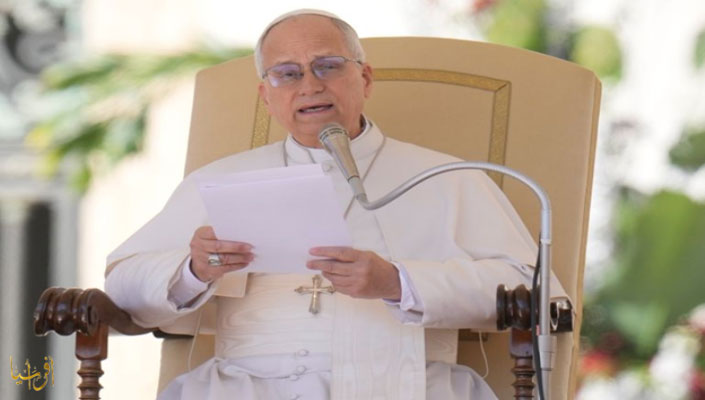
The Pope is no longer just a religious leader, but a global voice that criticizes brutal capitalism, demands respect for immigrants and the poor, and warns against the logic of arms and deals. The Vatican is not a power-maker, but rather a conscience of the world that reminds those who have forgotten that people are not just numbers.
The most dangerous thing in the current phase is not only the decline of the dominance of another power and the rise of another, but also the absence of a just humanitarian vision that regulates this transition.
The real question is not whether America will collapse? The question is: will the international system continue to be dominated by a single power that imposes its conditions and categorizes those who obey it and those who disobey it?
Multipolarity does not necessarily mean justice or peace. It may mean more regional conflicts, proxy wars, and organizational chaos. But it also means an opportunity to rebuild the rules of the international game on a more balanced footing, where no party, no matter how powerful, can monopolize truth or impose its model on everyone.
The most dangerous thing at the current stage is not only the decline of the dominance and rise of another, but also the absence of a just human vision that regulates this transition. The world does not need a new trader who manages its affairs with the logic of buying and selling, nor does it need a new tyrant of a different color.
The world needs a more balanced and equitable system, which recognizes that true power is measured not only by weapons and money, but by the extent to which the will of the people is respected, and the ability to build bridges rather than walls.
At the heart of all these transformations is the clearest truth, which some still seem to be deliberately ignorant: the people are neither bought nor sold. Not in the Trump deals, not in the Pentagon's calculations, not in the United Nations game.
People stay, wait, revolt, dream. Those who forget this will pay the price, sooner or later. The world is changing, perhaps beyond the comprehension of its leaders. But at the heart of this change, there is one voice that should not be silenced: the voice of the people who want to live in dignity, not to be sold on the stock exchange of the great powers.
