
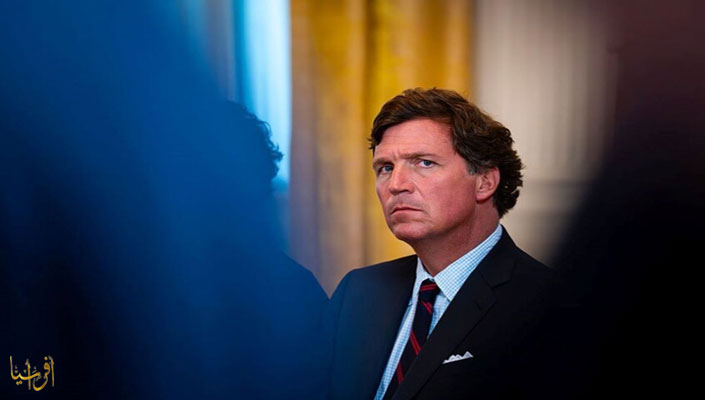
Afrasianet - In an April 20 episode of "The Tucker Carlson Show," popular media personality Tucker Carlson expressed regret for supporting President Donald Trump in the ongoing Iran war, which he described as a "betrayal." It was a striking admission from the former Fox News anchor, who contributed to Trump's political rise but has become more critical of him in recent months.
I belong to the Conservative Party and voted for Trump, and I oppose a never-ending war with Iran. For the good of Americans, this conflict must end soon; if it drags on, Trump risks losing conservative support for him. But Carlson's comments raise the question: Do Trump voters share Carlson's remorse, or do they simply disagree with him on Iran?
Carlson did not hesitate to explain his regret on his show, even going so far as to say that other conservatives who supported Trump were "involved" in the fallout from the Iran war. In a conversation with his brother, former Republican speechwriter Buckley Carlson, Carlson said, "Me and you and everyone who supported him — you wrote letters for him, and I campaigned for him — we're definitely involved in this.
"It's not enough to say, 'Well, I've changed my mind,' or to say, 'That's bad, I'm going to withdraw,'" Carlson said. "It's like we, in very small ways, but in real ways, you and me and millions of people like us, are the reason this is happening right now." He added that he would like to suffer from this for a long time. He would like to apologize for misleading people, because it was not intentional.
While I am reluctant to endorse Carlson's comments, I understand the frustration with Iran. I argue that its nuclear ambitions must be contained, but steady escalation is draining U.S. resources.
In fact, Carlson deserves some credit for admitting remorse, even if he tends to be arrogant. It's also worth asking how many of Trump's 77 million voters were really affected by him. But I disagree with him on the substance of his claim. Voting is not conclusive evidence that the president is responsible for everything he does during his tenure.
I haven't seen Democrats claim that every Biden voter was implicated in the deterioration of his administration. Nor is it reasonable to hold voters accountable for every decision the president makes in office.
Donald Trump campaigned on the basis of avoiding perpetual wars. Joe Biden presented himself as the ultimate decision-maker. Voters based their choices on these perceptions. Voting in a democracy is a privilege, not a binding endorsement of every future action of the president, nor a lifetime responsibility for decisions made long after Election Day.
Carlson's remorse raises the question: Is it an anomaly, or an early indication of what will happen?
It is clear that some voters are becoming increasingly dissatisfied with Trump. An April 22 Fox News poll showed that 56 percent of voters believe his administration has been incompetent in running the federal government, a majority of Democrats. Only 2 in 10 Republicans agree.
The all-out war with Iran, which has no signs of ending, overshadows some of Trump's modest accomplishments, including cutting taxes and curbing illegal immigration. But there is little evidence that Republicans share Carlson's regret.
Although Trump's popularity has declined slightly among Republicans over the past year, it is still higher than it was in June 2023, and slightly lower than it was in 2017, according to the Public Debt Research Institute.
Religious voters have also remained loyal to Trump. A Fox News poll in mid-April showed Trump's approval rating among Catholics still at 51 percent, even amid his ongoing feud with Pope Leo XIV.
There is resentment, but it has not turned into regret, at least not yet. Public disagreement within a political movement, especially when its leader is targeted, is a sign of constructive dialogue. It shows the willingness of some parties to break out of the ordinary.
But not every opposition has its weight. Carlson's remorse may be obvious, but it is unclear whether it reflects a real shift among Republican voters or just another turn in the cycle of influence.
Ultimately, the real criterion is not what Carlson says now, but whether anyone will follow him.
