
Afrasianet - Maryam Mashtawi - In Ain al-Mreissa, where the effects of the destruction are still present, Ali Abboud stands in front of the rubble, not only as a witness to what happened, but as part of an unfinished story.
In a calm, almost emotionless voice, he says: The sentence is not a passing description, but the conclusion of an experience that a family has been living for days.
Since last Wednesday, 26-year-old Zahraa Abboud has been missing following the raid on a building in the area. So far, no trace has been found.
The rubble was repeatedly flipped over, from side to side, in the hope of finding any clues. Among the stones and rubble, some of her personal belongings, her bag, her passport, and other items were found at the site. However, the most important element was still missing, Zahraa herself.
This lack of certainty is what makes the experience even more harsh. The family does not face the news of a death that can be dealt with, but lives in a suspended state of waiting, oscillating between hope and fear.
In parallel with the field research, a DNA test was conducted, hoping it would provide a definitive answer, but the results are yet to be released, adding a new layer of waiting to an already worrying reality.
We did a DNA test... But after something," Ali says, pausing for a moment before adding: "If something comes out... We can rest."
Rest here does not mean a happy ending, but a clear ending.
In such cases, certainty, no matter how painful, becomes less harsh than continuing in the unknown.
In wars, events are often reduced to numbers, the number of casualties, the extent of the destruction, and the dates of strikes.
But what doesn't show up in these numbers is what happens afterwards, what families experience when the first moment ends, and they begin to face the daily details of disappearance.
It is the story of a family that waits, and the story of a city that used to complete its life, despite everything that is broken in it.
A sentence that sums up the extent of the suffering and reveals the essence of this experience, which is an absence without an end. I
n Ain al-Mreissa, the rubble is still there, and the search is still ongoing.
Between the hope of finding an answer and the fear of the truth, Zahraa Abboud's family remains suspended in a moment that has not yet ended.
A moment in which absence becomes heavier than death!
How does childhood resist the harshness of reality?
In Gaza, tales don't start out loud, often with a whisper.
From a small detail that seems fleeting, but in fact it holds more than it can bear. In one of the scenes that went viral recently, a child sits with a small glass cup of tea, while a child stands behind her as he sings with her.
Nothing in the picture suggests exceptional at first glance, two children, a cup of tea, and a laugh. However, it is enough to meditate a little to realize that what is happening is much more than simplicity.
I describe to you, my dear tea", lyrics taken from the song "Um Kulthum", but here they take it out of its artistic context and become a spontaneous expression of trying to understand the world.
It is not the tea itself that is intended, but the ability to describe something beautiful in a place where it is becoming more and more difficult to describe. In the camps, where everyday life intersects with harsh reality, children do not live their childhood as they are supposed to.
No fixed school seats, no safe spaces to play, no regular rhythm of the days.
However, they are creating their own ways of surviving. Singing, in this context, is neither a luxury nor a mere pastime, a soft means of defense, an attempt to reorder the world, even for a brief moment.
It becomes a simple symbol of warmth, of a temporary sense of security, of something that can be grabbed in a world where things get away quickly.
In this scene, it seems as if childhood itself is trying to cling to the rest of its small details, such as the flavor of mint, the sweetness of sugar, and the warmth of a shared moment. It is closer to a stand.
A laugh that chooses to go on in spite of everything, as if to say that the ability to rejoice, even if temporarily, is itself a form of resilience. In another scene, a number of children gather, clap and sing together.
There is no theater, no audience in the traditional sense, but there is a heavy presence of life.
They try, in their own way, to create a moment of happiness, as if they are carving it out of a time that doesn't give them many opportunities.
In these moments, singing is no longer just a collective activity, but becomes a common space in which they share the capacity to endur.
What is striking about these scenes is not only their spontaneity, but also their profound paradox.
Children live in harsh conditions, yet insist on producing light moments.
Here, childhood is no longer just an age, it becomes a human situation. To be a child in such a reality is to endure all the contradictions at once.
To laugh when you know, to play while you see, to sing while you realize that the world around you is not like songs.
It's no longer a question about tea, it's about everything that is hard to explain.
How can a complex reality be described in simple words? How can childhood remain present in a place that is pressuring it with all its weight?
These scenes don't offer clear answers, but they do reveal something fundamental: children don't wait for a full explanation of what's going on.
They come up with their own ways of dealing with it. In singing, they postpone fear, in laughter, they lighten reality, and in participation, they find a form of balance. In the end, the scene may seem simple, two children, a cup of tea, and a song.
But behind this simplicity are layers of meaning that are hard to ignore. It is an expression of a deep human capacity to adapt, to find a space to live, even in the most extreme circumstances.
In Gaza, when a child is singing, it is not a small detail that can be easily skipped. It is an event in itself.
________________
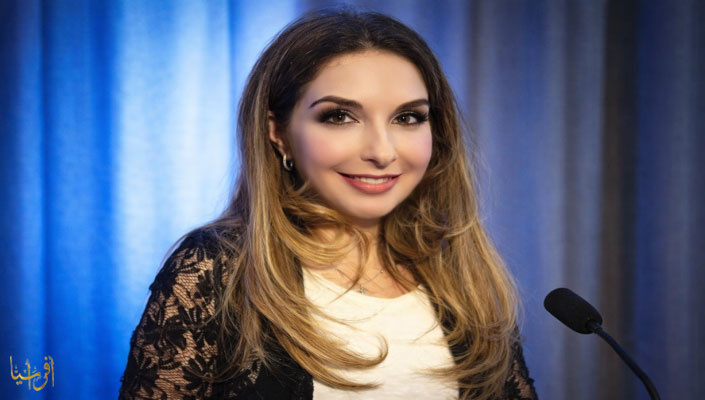
Maryam Mashtawi - Lebanese Writer
________________
