
Afrasianet - Every time international tensions escalate, the debate within the United States about the limits of the president's authority to use military force without congressional approval comes back.
With US President Donald Trump launching war on Iran, the question of the president's war powers has come to the fore strongly, especially after the implementation of large-scale military operations without a clear legislative mandate.
Washington has not officially declared war since 1941
Despite the many conflicts in which the United States has intervened, it has not officially declared war since 1941, in the wake of the attack on Pearl Harbor, according to a report published by Business Insider.
Since then, U.S. administrations have relied on more flexible formulations such as "authorizing the use of military force," or ignored Congress entirely, relying on expanded interpretations of the president's powers as commander-in-chief.
The following is a list of monitoring these wars based on the site's report, with each president's justifications for the invasion and the number of deaths each time the administration launched a war that was not approved by Congress.
Philippines 1899: An Example Before World War II
The Philippine-American War came after the United States took control of the Philippines under the Treaty of Paris (1898), when Spain ceded the Philippines and other countries to Washington, according to the report.
The main reason for the intervention was Washington's quest to impose its control over the islands, after the Philippine rebels declared independence and rejected U.S. rule, leading to a bloody war.
Then-U.S. President William McKinley did not ask for a formal declaration of war, but relied on congressional ratification of the Paris Treaty, which he considered a green light for the attack.
The war was bloody, with about 200,000 Filipino civilians, 20,000 Filipino fighters and about 4,000 U.S. soldiers killed.
1950 Korean War: A "police operation" without consent
In 1950, U.S. President Harry S. Truman sent U.S. troops to South Korea after North Korea invaded it, and the move was made without consulting Congress.
According to the report, the president justified the intervention as a "police operation" under the umbrella of the United Nations. This characterization has raised domestic objections, but it has passed politically because of international support.
At least 5 million people, most of them civilians, have died as a result of the war, while 37,000 U.S. troops have been killed, according to the report.
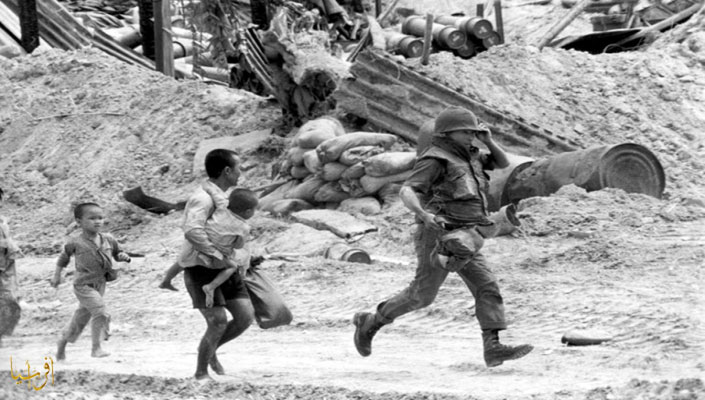
Vietnam 1964: Mandate and then Legal Vacuum
During the Vietnam War, U.S. President Lyndon B. Johnson received congressional authorization through the Gulf of Tonkin Resolution in 1964.
But as the war continued, pressure on the government to stop it increased.
Although Congress repealed this resolution under Johnson's successor, U.S. President Richard Nixon, the latter continued military operations and bombing, without any clear legal cover.
Nixon's actions opened the door to fierce debates about overstepping executive power, but U.S. courts later tried to avoid ruling on the legality of war as a "political issue."
About 58,000 U.S. troops have died in the war, according to the website.
Cambodia 1969: Secrecy and Congressional Response
President Nixon then launched air strikes on Cambodia without the knowledge of Congress between 1969 and 1973. The operation's stated military objectives included targeting North Vietnamese bases and supply corridors and weakening the spread of communism, but the attack sparked widespread controversy because it bypassed the legislature.
This came in the context of the Vietnam War, where North Vietnamese forces were using neighboring Cambodia's territory as a safe haven and a logistical corridor known as the "Ho Chi Minh Road" to transport weapons and fighters to the south, so Washington considered it part of the battlefield and targeted it.
The escalation prompted lawmakers to pass the War Powers Act of 1973 to limit the president's powers, in one of the rare instances in which Congress has regained some of its influence.
According to the website, Washington dropped 540,000 tons of bombs on Cambodia, and estimates of the number of civilians killed as a result of the bombing range between 150,000 and 500,000.
Grenada 1983: Swift and controversial intervention
After a bloody and violent coup in Grenada, President Ronald Reagan ordered the invasion of Grenada, justifying it by protecting U.S. citizens on the island and "restoring order" after a military coup.
The operation was carried out without congressional approval, according to the report, but was completed within eight days, tempering criticism despite raising legal questions.
However, the report stated that 24 civilians were killed, while 19 US soldiers were killed.
Panama 1989: Noriega is shot down
U.S. President George H.W. Bush ordered the invasion of Panama to overthrow then-President Manuel Noriega after he was accused of drug trafficking and threatening U.S. interests.
Among the war's goals, according to the report, was to secure the vital Panama Canal, which sparked political controversy during Trump's second term.
The president did not seek congressional approval, but instead relied on traditional justifications related to protecting citizens and democracy.
While the operation was swift and widely publicized, 1,000 civilians were killed, while only 23 U.S. soldiers were killed.
Yugoslavia 1999: NATO cover
During the Kosovo War, President Bill Clinton led a NATO bombing campaign against the Yugoslav army with the aim of stopping the "ethnic cleansing" against Kosovo Albanians and forcing Yugoslav troops to withdraw from the area.
The operation did not receive explicit authorization from the U.S. Congress, as a House measure to approve the strikes failed.
A judge also dismissed a lawsuit filed by members of the council against the president, justifying it as "there is no clear stalemate between the executive and legislative branches," the report said.
The strikes killed more than 1,000 Yugoslav fighters, in addition to about 500 civilians.
Libya 2011: International Legitimacy Instead of Congress
President Barack Obama has participated in military strikes against the regime of Libyan leader Muammar Gaddafi, invoking UN Security Council Resolution 1973 of March 17, 2011, which granted an international mandate to take military action to protect civilians.
U.S. President Barack Obama did not seek explicit authorization from the U.S. Congress, prompting widespread criticism from lawmakers.
The administration relied on the Security Council resolution as legal cover, claiming that the operation was "limited" in scope and objectives, and therefore fell within the president's powers set out in the War Powers Resolution, according to the report.
Yemen 2023: Airstrikes are a gray area
Since 2023 in particular, the United States has carried out strikes against the Houthis in Yemen without a legislative mandate, according to the website, after they attacked commercial ships in response to Israel's invasion of Gaza.
Successive administrations, including the Trump administration, have argued that air operations do not warrant the same restrictions as ground wars, setting a controversial precedent.
Based on data from the Airwars group, the strikes in 2025 killed at least 224 civilians.
Iran 2025: Strikes on nuclear facilities
Trump ordered the bombing of Iran's nuclear facilities in June 2025 without congressional approval, citing an "imminent threat."
Despite the support of some Republicans, the resolution faced sharp criticism from Democrats and within the Republican Party itself, according to the report.
Trump launched the latest war on Feb. 28, citing persistent allegations that Iran is seeking to develop a nuclear bomb — which Tehran denies — and vowing not to allow it to acquire the weapon.
Israeli Prime Minister Benjamin Netanyahu asserts that Iran's nuclear program has already been "destroyed," relying on the results of the June 2025 "12-day" war and the intensified campaign of U.S. and Israeli airstrikes in recent weeks, though some experts are skeptical.
Venezuela 2026: A sudden process of regime change
In January 2026, the United States carried out raids inside Venezuela and arrested Venezuelan President Nicolás Maduro.
The administration described the operation as "law enforcement" against a criminal organization, but many saw it as an outright military intervention without legal basis.
According to CNN, Maduro now spends his time in a private housing unit with near-total isolation and limited freedom of movement, which in reality resembles a solitary cell, where he spends 23 hours a day with little contact.
Ongoing escalation
These cases indicate a gradual shift in the balance of power within the American system, where Congress has effectively ceased part of its power to the president, especially in light of the complexities of international politics and the speed of military decision-making.
On the other hand, debate among U.S. policymakers remains: Is this "flexibility" necessary to protect national security, or is it a serious undermining of the principle of separation of powers?
Iran's War Confuses America. Divisions in Congress, the Trump Camp, and the Street
Despite US President Donald Trump's desire to convince the world of his good management of the war on Iran, and the support of the Americans, American newspapers and websites painted a very different picture of a country torn by differences of opinion, and most of its residents confirmed their opposition to their president's hasty decision to start a costly war with vacillating goals and serious long-term effects.
The division begins at the top of the leadership pyramid between Trump and Vice President J.D. Vance, who was once known for his harsh criticism of the country's involvement in foreign wars, and the tension extends to Americans in general and supporters of the MAGA movement in particular, with some members attacking each other over the president's policies.
These divisions are exacerbated by a real and deep concern that dominates the hearts of Americans about Trump's strategic goals of the war, so that Trump soon makes an argument to justify spending billions of dollars on a war that does not interest the people, until he jumps to another argument.
The situation is further exacerbated by the apparent divergence between what he wants to achieve from the war and the goals of Israeli Prime Minister Benjamin Netanyahu: while the former wants to end the war quickly after securing access to Iran's oil supplies, the latter goes further to seek to overthrow the Iranian government.
Among these different accounts and conflicting narratives, several voices have emerged against the war on Iran, not necessarily for philosophical or moral reasons, but because they consider it contrary to American national interests and throws soldiers into a war that is unjustified in the eyes of most American society.
"Our philosophical vision has changed"
A report published by Time magazine examined the divergence in the positions of the president and vice president, revealing fundamental differences in their views of the war, despite the White House's attempt to downplay it.
Trump acknowledged that Vance was less enthusiastic about the war at the outset, but at the same time stressed that there was no real disagreement between them. "Our philosophical vision was different at first, and he may have been a little less enthusiastic about the war than I was, but he was also enthusiastic and we had no disagreement," Trump said.
by J.D. Vance in 2024
But Vance's record of statements in recent years shows a more complex attitude toward foreign military interventions.
After the outbreak of the war, the vice president defended U.S. strikes, asserting that the main goal was to prevent Iran from acquiring a nuclear weapon.
In an attempt to distinguish between the current war and past experiences, he refused to compare it to the Iraq war in which he served in 2005 when he was a military journalist. He said the intervention in Iraq had been carried out without a clear goal, while stressing that the current administration had defined its goals with regard to Iran.
But his previous statements reflect a very different position, raising doubts about the extent to which his position is consistent with the president.
The magazine monitored the fluctuation of his position and statements, and the following is a list that summarizes his shift from a total refusal to engage in a foreign war and praise Trump as a "peace" president, to a defense of the logic of igniting a regional war:
• 2023: Former presidents who "plunged America into unwise wars and failed to win them" criticized in an article in the Wall Street Journal titled "Trump's Best Foreign Policy... Not Start Any Wars."
• 2024: In October before the US election, he asserted that America's interest "lies in not going to war with Iran, as such a war would be very costly and would be a great drain of resources."
• February 2026: Prior to the first strikes, he stated in an interview with The Washington Post that he still doubts the option of foreign military interventions, preferring diplomacy.
• March 3, 2026: He reversed his previous positions and confidently declared that "the president was very clear in his goals: Iran cannot have a nuclear weapon."
• This discrepancy in statements has drawn criticism within some MAGA circles, especially from Marjorie Taylor Greene, who was a Trump ally in the House of Representatives before she resigned earlier this year, who questioned why Vance was relatively silent compared to the president's and other administration officials.
Vance's stance on the war on Iran has gone through multiple phases between reservation and support, reflecting the tension within the political current, which promised during the 2024 campaign to avoid foreign wars and focus on the U.S. interior.
Less Popular Wars
The division within the leadership appears to be a reflection of a broader division within American society, with polls revealing that the current war has the weakest popular support compared to the beginnings of most previous American wars.
One of the reasons for the lack of support for the current war is the lack of a clear political campaign to explain its reasons to the public before it erupts, experts say
A few days after the United States launched military strikes against Iran, polls showed that a majority of Americans oppose the operation.
The New York Times stressed that even the highest levels of support recorded for the current war remain well below the levels of support seen by the United States at the start of previous conflicts.
Following the Japanese attack on Pearl Harbor in 1941, 97 percent of Americans supported entering World War II. A 2001 Gallup poll showed that 92 percent of Americans supported sending troops to Afghanistan after the 9/11 attacks.
Even wars that later became unpopular began with broad support at first: the 2003 war in Iraq was supported by 76 percent of Americans the day after it began, and 80 percent supported the military intervention in Panama in 1989.
The U.S. intervention in Kosovo in 1999 received 58 percent support, and even less support for the intervention in Libya in 2011 was about 47 percent.
Experts say one of the reasons for the lack of support for the current war is the lack of a clear political campaign to explain its reasons to the public before it erupts, and international relations researcher Sarah Maxey pointed out that previous US administrations spent a lot of time justifying wars and convincing the public of their necessity, as happened before the invasion of Iraq in 2003.
Harvard political science professor Matthew Baum told the newspaper that political polarization has played an important role in the decline of the so-called "flag rolling" effect, the traditional tendency of Americans to support presidents at the beginning of wars.
That influence has declined sharply over the past three decades, as the partisan divide in the United States has grown.
Part of Trump's political base also elected him mainly on the basis of his promises to avoid foreign wars and focus on the U.S. interior, making the outbreak of a new war the subject of criticism and skepticism even among his traditional supporters.
Maga Rises Up
In this regard, American websites have revealed an unprecedented division within the conservative current in the United States, as the debate over the war is no longer confined to Republicans and Democrats, but has extended to the president's own camp, especially among prominent media and political figures in the MAGA movement.
The most prominent manifestation of this division is the renewed confrontation between Republican Senator Ted Cruz and conservative anchor Tucker Carlson, with the two sides trading attacks over the war on Iran and the United States' stance on Israel, according to the American website Politico.
Cruz called Carlson "the most dangerous demagogue in the country," accusing him of spreading anti-Semitism within the American right. He said during a seminar on anti-Semitism in Washington that Carlson was the most influential voice in spreading these ideas.
Cruz's comments came in response to comments Carlson made on his show, in which he mocked politicians who trust Israeli intelligence, calling some, including Cruz, "naïve."
The dispute is part of a broader struggle within the Republican Party over the relationship with Israel and the U.S. role in the Middle East. It is also seen as a potential early showdown between two figures who could seek to run for president in the 2028 election.
The war has created a wide rift within MAGA media circles, with the most prominent conservative commentators divided between supporters and opponents of Trump's policy
At the same time, another report published by the American website The Hill indicates that the war itself has created a wide rift within the "MAGA" media circles, with the most prominent conservative commentators divided between supporters and opponents of Trump's policy.
Former Fox News anchors Megyn Kelly and Carlson were among the most vocal critics of the war in its early days, as Carlson warned of the dangers of escalation with Iran, and Kelly argued that trying regime change in Tehran could turn out to be a major political mistake.
Kelly sharply criticized Republican Sen. Lindsey Graham and Fox News anchor Sean Hannity for their strong support for the war, calling Graham's hardline remarks "disgusting," The Hill said.
Famous broadcaster Joe Rogan also joined the critics of the war, noting that many Americans feel cheated when Trump campaigned on the basis of ending foreign wars.
Ultimately, these differences reveal that the war on Iran has not only opened a military front, but also sparked a political and media conflict within the American conservative camp, which could have far-reaching repercussions for the future of the Republican Party and the upcoming presidential elections.
Source: Politico + Time + New York Times + The Hill
