
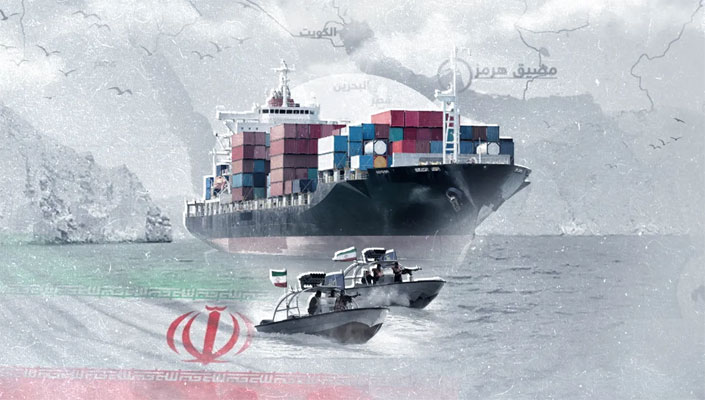
Afrasianet - Hossam Hamza - Every additional week of the Strait of Hormuz closure cuts off Europe's ability to replenish its stockpiles and brings European Union countries closer to the 30-day threshold that some analysts associate with the possibility of a slide into a broad industrial crisis.
As the hours and days pass, the relative sense of stability that prevailed in European energy markets in late February is gradually dissipating. Natural gas futures at the Dutch TTF Center, the reference point for natural gas trade in Europe, were trading at around €32 per megawatt-hour, their lowest level since January, driven by expectations of warm weather and a record Norwegian supply flow.
However, the first Sunday of March, due to the aggression against Iran, ushered in a completely different phase in the market dynamics when the price of the TTF exceeded the 65 euro threshold, which is equivalent to doubling its value in just three business days, and on a weekly basis, the percentage of the increase was close to 85%. On the other hand, Brent Crude crude stabilized at $77.74 per barrel, after the US index exceeded $71, recording a 25% rise since the beginning of the year.
There is no doubt that this shock is a direct and natural product of a single engine, namely the closure of the Strait of Hormuz and the widespread and severe disruption it has induced in global energy flows, the figures confirm that Europe will pay dearly for it.
Europe faces a compound shock
The U.S.-Israeli strikes on Iran led to the latter announcing the closure of the strait to navigation, which was the first shock for Europe. However, the deeper impact on Europe was related to the second shock of the targeting of Qatari gas facilities. QatarEnergy announced the suspension of LNG production at the Ras Laffan and Mesaieed complexes, the world's two largest LNG export hubs, following drone attacks. As a result, nearly 20% of the world's LNG production capacity has come to an immediate halt.
In the UK market, gas contracts rose to 158p per thermal unit, an increase of more than 44%. ANZ Bank analysts noted that these disruptions came at a very sensitive time, with European inventories falling to levels not seen for this time of year in years.
The overlap between the naval shutdown and the disruption of gas liquefaction facilities has created a dual strain on actual supplies and future prospects, which is quickly reflected in both spot and futures prices.
Response Varies Between Oil and Gas
Despite its high prices, oil compared to gas has recorded a relative stability. The world entered this crisis with an estimated 2.8 million barrels per day of supply, in addition to large stockpiles accumulated by China in the previous months. This reserve margin has limited the intensity of the volatility, at least circumstantially.
European gas, on the other hand, lacks a similar backing, with EU stockpiles at only 30% at best, compared to 40% in the same period last year, although major EU countries have never reached this figure. In Germany, for example, the filling rate is only 21.6%, in France it is less than 20%, and in the Netherlands the filling levels are very low. These figures are crucial for Europe, simply because it is preparing for a re-season Summer infusions that are supposed to prepare stocks for the coming winter.
Oxford Economics warned of a scenario in which European gas stockpiles could fall below the 20% threshold by the end of the summer if supply chain disruptions continue, making it extremely difficult to reach the 80% target by December, even if daily injection requirements are eased.
These estimates are based on a strict time formula: the restocking season is governed by a limited time window, and every week in which the natural flow of supplies is disrupted is directly deducted from the technical and logistical capacity to compensate later.
As the Strait of Hormuz continues to be closed by the ongoing aggression against Iran, the pressure on the European market is intensifying, because the problem is related to a structural imbalance in the refill cycle itself, which is not just a transient price shock, a situation that threatens to turn the supply crisis into an extended storage gap that may reach Its effects to the next winter.
Investment Banks Readings: Time is Not on Europe's Side
Since Iran decided to employ the Hormuz Card as part of its response to U.S.-Zionist aggression, financial institutions have been quick to adjust their forecasts related to the natural gas market. Goldman Sachs raised its TTF price forecast in April from €36 to €55.
However, the market exceeded these estimates within hours of the Hormuz closure, and if the lockdown scenario continues for a month, the price could reach the 74 euro threshold, a level reached during the 2022 crisis that led to a sharp contraction in industrial demand, especially within Europe. If the outage exceeds two months, the price could approach 100 euros.
JPMorgan warned that some Gulf producers will have to cut production in a few weeks if storage tanks are full and tankers continue to be grounded, a scenario that could materialize within 25 days of the complete closure of Hermez. Analysts at Fitch Ratings' BMI believe that prices could remain above €40 even if tensions drop quickly, as the market is adding an additional price that reflects the risk of geopolitical turmoil, a factor that will not disappear once the crisis is over. It will remain part of the gas pricing method going forward.
One striking structural element in the midst of this crisis is the limited ability of the United States to increase exports to make up for Europe's losses: U.S. gas liquefaction plants are now operating at almost their maximum capacity, so a further response to European demand will be impossible even as prices rise.
Reshaping European Energy Dependency
Prior to 2022, Russian gas accounted for about 41% of EU imports, but this dependence was sharply reduced by the war in Ukraine, but the process of diversification led to a concentration of demand in a way that created a new European dependency.
In January 2026, the United States provided 63% of Europe's LNG imports, and the EU pledged to buy $750 billion worth of US energy by 2028, as part of its reshaping of transatlantic relations Trump on the Europeans.
However, the current crisis reveals that switching from one source to another does not mean achieving energy independence at all, as US gas, despite its size, faces a production ceiling that is lower than the size of European demand, and the disruption of Qatari supplies due to the ongoing war in the region is a severe blow to the second alternative in the structure of European imports.
Teresa Ribera, vice president of the European Commission, summed up this problem by saying that "the transition from one dependency to another cannot constitute a sustainable model of resilience and competitiveness."
Potential economic and social risks
The looming repercussions of the European crisis due to the closure of the Strait of Hormuz are not limited to financial indicators, but also to the social structure. Prior to recent developments, about 20% of EU citizens were unable to adequately heat their homes, and 28% were unable to pay their energy bills over the past year. Rising prices with low inventories and stalled supply chains will only exacerbate the vulnerability of these groups.
Italy is at the forefront of the at-risk economies by virtue of its record reliance on Qatari LNG with up to 45% of its imports and accounts for 50% of Europe's total imports of Gulf gas transit through the Strait of Hormuz.
Germany, with its only 21.6% stockpile and energy-intensive industrial base, faces dual economic and political pressures. In Eastern European countries, where energy accounts for a larger proportion of income, the price shock could turn into a factor of internal instability as elections approach.
If the figures reveal that the cost of closing the Strait of Hormuz to Europe is mainly through market channels, even without direct military involvement, the old continent finds itself facing three simultaneous constraints: spot pricing that quickly integrates geopolitical risks into cost calculations, limited ability to increase supplies at major suppliers, and a legacy of strategic decisions that has reshaped dependency patterns without providing sufficient margin of safety.
Each additional week of the closure of the Strait of Hormuz cuts off Europe's ability to replenish its stockpiles and brings EU countries closer to the 30-day threshold, which some analysts associate with the possibility of a slide into a large-scale industrial crisis.
If this development suggests that Tehran is effective in using its power cards and achieving the goals of its response strategy, the continuation of the American-Zionist escalation without Europe taking action to curb it will make the cost of the disruption high for it, and the greatest burden will fall Ultimately on the European consumer who will face accumulated living pressures.
________________
