
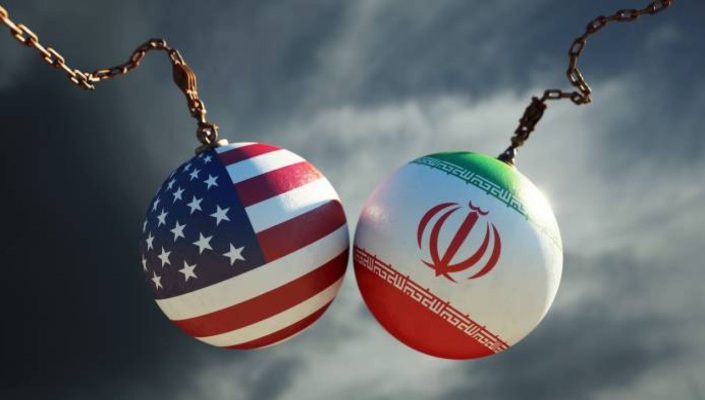
Afrasianet - At a time when the situation seems open to all possibilities, both the United States and Iran have been active and continue to be active in multiple and intensive diplomatic efforts to try to defuse a war that seems to be imminent between the two countries.
Attempts from every direction
Several Arab and Islamic countries are involved in these ongoing efforts, as visiting Iranian Foreign Minister Abbas Araqchi held talks on Friday (January 30th) with Turkish officials in Istanbul aimed at de-escalation, amid Turkey's efforts to prevent the outbreak of war between Tehran and Washington.
At a joint press conference with his Turkish counterpart Hakan Fidan in Istanbul, Araqchi said after the talks: "There are no negotiations with the threat, there are no preconditions before sitting at the negotiating table." He added that Iran is "ready and ready for negotiations, and it is also ready for war, and even more prepared than last year."
For his part, Fidan said that Turkey "will do its best to prevent this war against Iran," explaining that President Recep Tayyip Erdogan called his Iranian counterpart Massoud Bezishkian, and that "our efforts are continuing with American officials to find diplomatic solutions," warning the United States against responding to Israeli pressure to launch a military attack on Iran.
Iran's Tasnim news agency on Saturday (January 31st) quoted Iran's foreign minister as saying the US administration was seeking to reach out to Iran through third parties, adding that his country was "open to a fair nuclear deal".
In an interview with CNN Turk, Araqci said, "They are conveying messages to us from US officials and asking us to intervene diplomatically.
Our position is clear: We are ready for fair and balanced diplomacy," he said, noting that "the United States must abandon threats and intimidation, and be prepared to negotiate on an equal footing, based on mutual respect and common interests."
Also on Saturday, January 31, Qatari Prime Minister and Foreign Minister Sheikh Mohammed bin Abdulrahman Al-Thani was a guest in Iran, as part of the same efforts aimed at defusing the war, and the Qatari minister discussed with a number of Iranian officials to enhance the chances of peace and avoid war .
According to the official Iranian News Agency, Sheikh Mohammad bin Abdulrahman Al-Thani met on Saturday (January 31) in Tehran with Iranian Foreign Minister Abbas Araqchi and Secretary of Iran's Supreme National Security Council Ali Larijani.
American side
On the US side, in the latest statements, US President Donald Trump said that Iran is holding "serious talks" with Washington, expressing his hope that Tehran will accept an agreement under which it will abandon the pursuit of a nuclear weapon.
In response to questions from reporters aboard Air Force One about his latest assessment of Iran, Trump said, "It is possible to reach a negotiated and satisfactory agreement, without nuclear weapons... They have to do it, but I don't know if they will. They are talking to us in serious conversations."
Matthew Whitaker, the US ambassador to NATO, said that President Trump's patience with the Islamic Republic's acceptance of US demands is "not limitless", adding in an interview with Fox News on Saturday, January 31, that "President Trump has been very clear with the Islamic Republic, telling them: You can't have a nuclear weapon, you can't kill protesters. He has brought a warship to Iran's periphery to be supportive of these conditions and demands."
However, the US president's conditions for Iran to reach an agreement seem to go beyond the issue of the nuclear program, as Israel's Channel 14 revealed that the conditions that Trump sets before the Iranian leadership are three: the complete and final abandonment of the military nuclear program, and the complete and radical reduction of Iran's missile capabilities to ensure that it does not reach Israel. The third condition is to stop funding and supporting all factions allied with Tehran in the region.
The Israeli news website "Walla" said that Israeli officials fear the success of negotiations between the United States and Iran, and the conclusion of an agreement that restricts any Israeli strike on Tehran, and forces Israel to take military action on its own.
In this context, Mr. Shibl writes, the scenario of Iran being the first striker or the longest hand in any future confrontation cannot be ruled out, not out of adventurism, but as an attempt to impose a new equation that ends the state of attrition.
With the escalation of the US military deployment in the Middle East, and its clear focus on Iran, a central question arises about the nature of this escalation: Is the United States preparing to launch a direct military aggression against Iran, or is what is happening part of a broader exhaustion strategy aimed at encircling Tehran and depleting it politically and economically, without descending into an all-out war?
This question is especially important in light of the regional and international complexities that make any open confrontation costly for Washington and its allies.
In recent weeks, the United States has beefed up its military presence by sending the aircraft carrier Abraham Lincoln to the region, increasing the deployment of F-15 fighter jets, and deploying advanced air defense systems such as the Patriot and THAAD.
While some see these moves as a prelude to an imminent military strike, others question Washington's ability to implement them, given the calculations of U.S. interests, the positions of regional allies, and the nature of a possible Iranian response.
U.S. Reinforcements: A Direct Threat or a Trap for Attrition?
Historically, the United States has moved its fleets and aircraft carriers more than once, and returned to its bases without carrying out large-scale military operations, this happened during the days of Bill Clinton against North Korea between 1993 and 1994 in what was called the "first nuclear crisis", and it also happened against Iran between 2019 and 2020, during Trump's first term, even the aircraft carrier "Abraham Lincoln" docked for a long time near the Strait of Hormuz, and the only achievement of the US administration at that time was the assassination of a commander The Quds Force, the martyr Qassem Soleimani, and the importance of this operation, but it is not directly related to the massive US military posture that took place.
Washington is aware that Iran is not an easy bite; it has the ability to completely close the Strait of Hormuz, which will lead to a crazy jump in global oil prices that could collapse major economies, and it has an "offensive defense" strategy through a wide network of allies in the region, including Hezbollah in Lebanon, Ansar Allah in Yemen, and the Popular Mobilization Forces in Iraq, not to mention Iran's threat to launch an "all-out war" targeting U.S. interests and bases in the Gulf. Israeli depth, in response to any American strike, even if it has limited targets.
The Israelis tested Iran's ability to threaten the depth of their strategic entity during the 12-day war, which has led Israeli Prime Minister Benjamin Netanyahu, unusually, to seek to dissuade Donald Trump from launching a military strike on Iran, or more precisely, to work to keep Israel out of any potential direct confrontation between Washington and Tehran. In this context, messages have been sent through intermediaries that the Israeli "army" does not intend to carry out a pre-emptive strike against Iran, in an attempt to reduce the chances of Israel was subjected to a direct Iranian response.
In addition, the United States cannot wage war against a country like Iran in light of regional data that is contrary to this option. Past experience indicates that the U.S. military does not engage in a broad military intervention unless a minimum of regional support for its decisions is guaranteed. In the case of Iran, influential Arab states, traditionally allies of the White House, led by Saudi Arabia, the United Arab Emirates, and Egypt, reject any military confrontation with Tehran, but rather seek to play the role of mediator between Washington and Iran in an attempt to contain Escalation. This position is based on a collective recognition that the cost of war will be high, and that its repercussions will reflect negatively on the security, stability of the region and its economic interests.
Thus, the chances of Donald Trump launching a military strike against Iran are slim, as he does not have the option of launching a limited war, after Tehran blocked this possibility by implicitly declaring that "any strike, even a showmanship, will be met with a comprehensive response." Trump, with his pragmatic financial mindset, and with the situation within the United States itself, does not seem ready to get involved in a protracted war in the Middle East. In this context, the U.S. military presence is likely to be a diplomatic tool, used as a "hammer." to intimidate Iran and push it back from its regional role, a goal Trump explicitly outlined in his National Security Strategy released in early December 2025.
In essence, the United States is not targeting Iran as a state as much as it is targeting its regional role. If Iran had remained integrated into the Western system and reconciled with Israel, as it was before 1979, it would not be targeted today.
Based on this, Trump's approach is based on strengthening the US military presence, deploying tens of thousands of troops, tightening the naval blockade, and repeatedly announcing that a military strike is about to take place, as part of a policy of extreme stress that combines the military threat, economic sanctions, and undermining the cohesion of society, in parallel with supporting the subversive and separatist elements that have been active during the past month inside Iran.
This escalation aims to destabilize Iran's economic, social and political stability to the maximum extent, forcing Tehran to accept a settlement that is not limited to the nuclear file, but also includes the missile program, and most importantly, reducing its foreign activity opposing American hegemony, which Washington is aware that acquiescence to it will put the Iranian regime in front of an existential crisis.
The Economic Dimension of the Military Presence
In an obscure context, the political vision converges with the commercial interests of the American arms companies, and the American reinforcements have created a state of "security concern" among the Gulf states, which prompted them to strengthen their defense capabilities. Saudi Arabia, Qatar, and the United Arab Emirates have signed huge deals to buy THAAD and Patriot systems, and employ American experts to manage these systems.
In 2025-2026, the value of U.S. arms deals with the Gulf states exceeded a quarter of a billion dollars. In this sense, the U.S. military presence becomes a lucrative venture: it ensures the flow of Gulf capital into the coffers of U.S. defense companies (such as Lockheed Martin and Boeing), while maintaining the blockade around Iran.
A few days ago, the United States made a deal with Saudi Arabia worth about $9 billion, including about 730 Patriot PAC-3 MSE missiles, in addition to logistical, training and operational support systems, and made large arms deals with Israel worth about $607 billion, including the sale of 30 Apache attack helicopters and tactical vehicles.
Naval and Economic Blockade: Lessons from Iraq and Syria
Washington adopts a near-static military approach that can be summed up in the rule that "economic and social exhaustion precedes direct military intervention." The United States rarely fights an all-out war before its adversaries are drained from within, as is evident in the example of Iraq between 1990 and 2003, where a comprehensive blockade that lasted nearly thirteen years dismantled infrastructure and exhausted society, making invasion possible at the least direct military cost.
This pattern was repeated in the Syrian case through the Caesar Act, which aimed to stifle the economy and prevent trade and financial transactions, resulting in the collapse of the currency and worsening living conditions, without the need for large-scale ground intervention.
In the case of Iran, the naval blockade is aimed at preventing the export of oil, Tehran's main lifeline, and isolating Iran as a whole from global markets, and preventing it from importing what it needs from abroad. Iran's oil exports have declined significantly in recent years, leading to billions of dollars in losses annually, and inflation soaring to high levels, as the value of the rial depreciated.
The U.S. goal behind the blockade, which leads to market turmoil and high inflation, is to provide a fertile environment for internal unrest and separatist movements in the border provinces, which puts the regime in front of difficult internal challenges.
The strategy of "silent strangulation". And the possibility that Iran will turn the tables?
According to current data, the United States is not capable of "all-out aggression" for fear of catastrophic consequences for the global economy and the security of its allies. Therefore, the alternative will be "silent strangulation," which is achieved through naval isolation, economic blockade, and mobilization of Iran's interior. Thus, the goal of military reinforcements is not to declare war, but rather to exhaust Iran in order to strip it of its cards of power (oil and missiles), and to make it accept Washington's conditions at its weakest.
However, the opposite hypothesis emerges here, namely that Tehran may not be satisfied with the role of a "resilient state in the face of pressure," but may seek to turn the tables and impose a new equation by force. Field data indicate an increasing Iranian readiness for confrontation, as manifested in the announcement of naval maneuvers with live ammunition in the Strait of Hormuz, with the deployment of the drone carrier Shahid Bagheri in the waters of the Gulf near the strait, about 6 km south of Bandar Abbas, as well as the movement of swarms of speedboats and drones and missiles, reflecting a shift from traditional defensive deterrence to hinting at the possibility of an offensive initiative to deter any potential U.S. escalation.
Tehran is aware that accepting a heavy U.S. military presence on its borders, blockading it by sea, draining its economy, and supporting internal turmoil poses a long-term existential threat. From this perspective, Tehran may see a calculated blow to U.S. forces or its interests in the region as the only way to break the noose imposed on it and impose a direct cost on Washington that will push it to recalculate its calculations, and perhaps withdraw or ease the blockade.
Therefore, the scenario of Iran being the first striker or the longest hand in any future confrontation cannot be ruled out, not out of adventurism, but as an attempt to impose a new equation that ends the state of attrition and forces the United States to retreat.
U.S. secrecy of Iran's plans deepens Gulf allies' concerns
The Gulf concern stems not from the prospect of a military strike on Iran, but from the ambiguity surrounding post-strike scenarios.
In light of the escalating tension between the United States and Iran, the administration of US President Donald Trump has chosen to manage this sensitive file with an unprecedented policy of secrecy even towards its closest allies in the Gulf, which has deepened the state of anxiety and uncertainty among Gulf capitals, which find themselves at the heart of any possible escalation scenario, without being aware of its basic features.
Trump's recent remarks to Fox News, in which he explicitly asserted that Washington could not share its military plans with Gulf allies during negotiations with Iran, were a revealing moment for the nature of the relationship at this stage. The US president not only justified not sharing the plans with allies, but also went further by likening telling them about the plan to telling the press, considering that it could be "worse" than leaking it to the media.
This statement in itself reflects a deep level of mistrust, or at least an absolute priority for U.S. security considerations at the expense of the traditional strategic partnership with the Gulf states.
The Gulf concern stems not from the possibility of a military strike on Iran, but from the ambiguity surrounding post-strike scenarios.
The Gulf states, by virtue of their geographical location and proximity to the theater of operations, will be most vulnerable to potential Iranian reactions, whether by targeting U.S. bases on their soil, threatening navigation in the Gulf, or even through indirect tools including cyberattacks or mobilizing regional allies.
In the absence of clear information from Washington, these countries find themselves faced with a difficult equation: bearing the consequences of decisions they did not participate in.
Statements from high-ranking Gulf officials reflect the magnitude of this concern.
Gulf allies view the chances of success in the ongoing negotiations between Washington and Tehran. While acknowledging that Iran is actually seeking to sit at the negotiating table, they do not trust that these talks will lead to a sustainable agreement that limits Iran's nuclear and missile programs.
A Saudi official stressed that the kingdom will not allow its airspace or bases to be used to launch an attack on Iran, in a clear sign of Riyadh's desire to distance itself from any military action that could ignite the region.
Other Gulf sources also revealed that the United States has not shared any details regarding goals or plans with allies, despite high-level meetings held recently in Washington specifically to seek clarification.
This disconnect between overt political coordination and the reality of actual decision-making reflects a shift in the nature of the security relationship between the two parties.
From a U.S. perspective, this secrecy can be understood as part of a "constructive ambiguity" strategy, which aims to keep Iran in a state of suspense and uncertainty, and to prevent the leakage of any information that Tehran might exploit to thwart pressure or prepare for proactive responses.
The Trump administration, which is dealing with the Iranian file with a confrontational negotiating mentality, believes that early disclosure of military intentions could weaken its negotiating position, both with Iran and at the international level. However, this logic, while it seems justified from Washington's point of view, does not dispel Gulf fears, but rather compounds them.
The Gulf is not just a sidetheater in the conflict with Iran, but the first line of contact for any escalation. The history of previous confrontations, including the U.S.-backed Israeli attack on Iran in June 2025 and the subsequent Iranian missile and drone responses, has strengthened the Gulf states' conviction that any military spark could quickly spread to their security space.
That experience has exposed the limited ability of regional states to control the repercussions of conflict, even when they are not directly involved in it.
Complicating matters further, the Gulf allies themselves view the chances of success of the ongoing negotiations between Washington and Tehran. While they acknowledge that Iran is actually seeking to sit at the negotiating table, they do not trust that these talks will lead to a sustainable agreement that limits Iran's nuclear and missile programs.
This skepticism intersects with another concern that Washington may use the option of military escalation as a negotiating leverage, with no real intention of carrying out a full-scale strike, leaving the region stuck in a state of constant tension.
Trump's response to this assessment reflects a degree of pragmatism mixed with ambiguity, when he said that the Iranians "are negotiating, so we'll see what happens."
The phrase, simple as it is, sums up the uncertainty that dominates the scene: ongoing negotiations, an escalating military buildup, and anxious allies who don't know which way things will go.
In the face of this reality, the Gulf states find themselves forced to pursue multiple precautionary strategies, including enhancing their defense readiness, diversifying their diplomatic channels, and seeking to reduce their exposure to any direct confrontation.
It also prompts it to reassess the nature of its security dependence on the United States, not out of discontinuity, but out of a search for a broader margin of independence in risk management.
The U.S. secrecy of plans to deal with Iran reflects a shift in the way traditional alliances are managed, with narrow security calculations taking precedence over the logic of partnership and coordination.
While Washington sees ambiguity as an effective leverage tool, Gulf allies see it as a concern that threatens their stability at a very fragile regional stage.
In the absence of a clear vision or real channels of consultation, the Gulf remains stuck between the hammer of American escalation and the anvil of the Iranian response, waiting for the direction of the American compass to become clear, before developments on the ground impose a new reality on everyone.
What would happen if Iran closed the Strait of Hormuz?
In a related context, with the escalation of military threats between the United States and Iran, the Strait of Hormuz is returning to the forefront as a vital choke point for global energy markets, and a strategic pressure card capable of shifting tension from the level of political discourse to a wide-ranging international economic shock.
This sea corridor was not just a conduit for ships to pass, but has historically been linked to major conflicts in the Gulf, as a report on the island by Suhaib al-Assa shows, recalling the years of the Iran-Iraq War when the strait became an open arena for tanker warfare.
During those years, oil tankers were targeted from both sides, leading to severe disruption in maritime navigation and a record high in oil prices, and the strait's position as a political and economic fulcrum that doubles in sensitivity with each new military escalation.
The Strait of Hormuz connects Gulf waters to the Gulf of Oman and the Arabian Sea, and extends for a distance of approximately 180 kilometers, while its width does not exceed 33 kilometers at the narrowest point, with a depth of up to 60 meters that allows the passage of the largest oil tankers.
The strait includes two shipping lanes 3 kilometers wide in each direction, separated by a buffer zone and its territorial waters are under the control of Iran and the Sultanate of Oman, while about 21 million barrels of oil pass through it daily, equivalent to 21% of global consumption.
A basic artery of energy
These figures are not only important for oil, as more than 20% of global LNG trade passes through the strait, making it a key artery for energy security in Asia, especially China , India , Japan, South Korea, and Europe.
A complete closure of the strait could push oil prices as high as $200 a barrel in days, with massive jumps in marine insurance costs and severe supply shortages, a scenario that could send a shock to global energy markets.
Militarily, freedom of navigation in the strait is seen as a red line for the United States and its allies, making any closure a gateway to direct military intervention, even though Iran itself relies on the strait to export its oil and import its basic needs.
During past years of tension, Tehran has repeatedly threatened to use the strait as leverage, as in 2019 through attacks on tankers in the Gulf of Oman and the detention of commercial vessels, before later intensifying its maritime patrols and threatening deterrent measures.
According to military estimates, Iran relies on unconventional means to disrupt navigation, including thousands of naval mines, speedboats equipped with missiles, torpedoes, suicide drones, and techniques to jam global navigation systems.
With these tools, the Strait of Hormuz is transformed from a vital corridor for energy flow into a potential arena of conflict, where military calculations are mixed with the global economy, in an open confrontation whose limits or outcomes are difficult to predict.
