
Afrasianet - The appointment of the Islamic Republic's third and new Supreme Leader, Mojtaba Khamenei, has dashed the president's hopes of choosing Iran's new leader, according to Financial Times commentator Gideon Rashman.
He added that the official name of the U.S. military campaign in Iran is "Operation Epic Fury," while the unofficial name it should have been "The Desperate Search for Delsi."
Trump's decision to wage war on Iran was heavily influenced by his military success in Venezuela in early January.
The US president, who has promised to end the wars, was clearly impressed by what he called a "spectacular, effective and powerful display" of military power. He also expressed his public happiness at the prospect of access to Venezuelan oil.
A few weeks later, the United States, in coordination with Israel, moved to overthrow the Iranian government. In his turn, Trump saw the selection of a new leader for Venezuela as a model that could be applied to Iran. "I have to be involved in the recruitment process, as happened with Delcy [Rodriguez] in Venezuela," he told Axios.
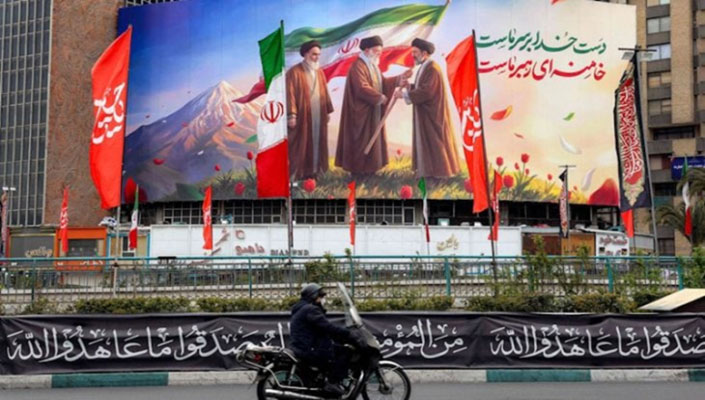
That hope has been dashed, at least for now, with the proclamation of Mojtaba Khamenei, the son of former Supreme Leader Ali Khamenei, who was assassinated at the beginning of the war, as Iran's new Supreme Leader.
The Israelis are likely to seek to assassinate Khamenei Jr. But even if they succeed, it is clear that the future of Iran's leadership will not be determined by Trump.
Unlike Iran, the United States was in clear contact with Rodríguez before launching the Venezuela operation and arresting President Nicolás Maduro. Since Rodríguez was Venezuela's vice president, her inauguration as the country's new leader was relatively easy. But Washington has not had a ready successor in Iran to succeed the elder Khamenei, and the White House has so far shown little enthusiasm for Reza Pahlavi, the exiled former shah's son, for leadership. In a tragic irony, Trump revealed that "most of the people we were thinking about are dead."
Rashman did not rule out the presence of a pragmatic person close to the top of the Iranian regime, who is willing to assume Rodriguez's role, in exchange for peace and personal gains. But there is no clear path for such a person to replace Iran's new Supreme Leader and consolidate his power.
Rashman argues that the failure to install a pro-U.S. leader in Iran makes it impossible to follow the Venezuelan approach. Jeremy Shapiro of the European Council on Foreign Relations has described this strategy as "regime modification, not regime change." This policy focuses on installing a leader who will carry out America's orders, but the intervention stops there, as there is no real effort to change the existing political system.
This strategy does not care about the aspirations of pro-democracy forces in Iran and Venezuela, but it seems attractive to Trump. Regime change promises the United States immediate geopolitical and trade gains, while avoiding getting involved in the complex and often futile process of state-building. So far, the regime-change strategy has proven successful for Trump in Venezuela, where the country has transformed, almost overnight, from a collaborator with Russia, China, and Iran to a U.S. vassal.
U.S. Interior Secretary Doug Burgum visited Venezuela with a group of U.S. businessmen to strike deals in energy and critical minerals. Rodríguez received him with a standing ovation, while its former president, Maduro, is in prison in America.
Rashman believes that the U.S. military intervention in Iran has sharply deviated from the Venezuelan model. Maduro's arrest took only hours, and the attack on Iran has been more than a week since the attack, while Trump has talked about a military operation that would last four or five weeks and is considering sending ground troops.
Unlike Venezuela, the attack on Iran has turned into a regional war, with more than a dozen countries being hit or targeted by missiles during the first week of the conflict.
Trump wanted to get the situation under control quickly by finding a "great and acceptable" leader for Iran, but those hopes have now been dashed.
The immediate and catastrophic economic fallout of the war with Iran has risen sharply following the de facto closure of the Strait of Hormuz. Continued gas prices and declining markets will increase domestic political pressure on the White House. With the midterm elections approaching, and pressure mounting on Trump's MAGA coalition, the president may not tolerate an economic recession caused by Iran for long.
Rashman said that if Trump is faced with a choice between escalation or a quick withdrawal, his nature and political interests indicate that he is seeking to minimize his losses. And it may be easier for him than all of his more traditional predecessors. Trump has a unique ability to claim victory even when he has clearly lost.
But declaring victory in Iran and simply withdrawing may not be easy. There are some 40,000 U.S. troops in the region, as well as military bases, economic assets, and allies at risk. While Trump has chosen the timing and start of the war, he may not be able to end it on the same terms. The "epic fury" is doomed to failure.
