
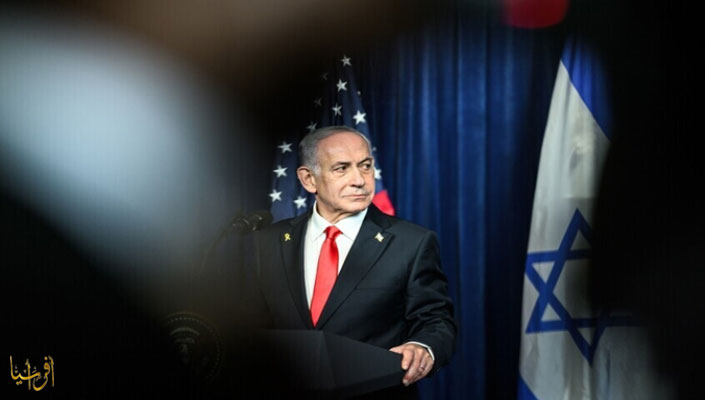
Afrasianet - Avi Shlaim - On February 28, Israel and the United States launched an airstrike on the Islamic Republic of Iran, without moral or legal justification, killing Supreme Leader Ali Khamenei and several senior regime officials.
Operation Epic Fury soon turned into a regional war with far-reaching repercussions, not only for the victim, but also for America's European allies and allies in the Gulf, global energy security and the international economy. This is arguably the most foolish war of the twenty-first century. Who was the owner of the idea?
Amr Moussa, the former secretary-general of the Arab League, stated that "the ongoing attack on Iran is not just an Israeli adventure that Netanyahu succeeded in dragging the United States into, but a planned American strategic move, in which Washington used Israel as a regional partner in a major step toward changing the Middle East."
In reality, however, it was the Israeli desire that drove the American position: Israel manipulated the United States to achieve military dominance in the region.
Donald Trump will certainly not be happy with this characterization of the situation, nor with his characterization as a follower of Benjamin Netanyahu, but on the other hand, he is incapable of providing a coherent logical explanation for this war: Trump is not a strategist, but a naïve and paranoid narcissist, and his actions are unpredictable, and therefore extremely dangerous.
The goals, or rather pretexts, that Trump has put forward for the war on Iran are constantly changing. At first, he pretended to give the Iranian people a chance to overthrow his brutal regime, but the Iranian people's freedom and rights are unlikely to be their top priority, or even their priority at all.
Then came the claim that the attack was aimed at preventing Iran from producing nuclear weapons, but in June last year, following the first Israeli-American attack on Iran, dubbed the "12-Day War," Trump boasted that he had completely destroyed Iran's nuclear facilities. If so, there was certainly no need for another attack.
Another goal mentioned by Trump is to destroy Iran's ballistic missile program and its means of delivery, but the enemy's possession of these missiles is difficult to justify a war, because under international law, only the threat of an imminent attack gives the state the right to self-defense, and there has been no imminent Iranian threat to the United States, or to Israel in this case.
Two days after the war began, Secretary of State Marco Rubio revealed that the United States had attacked Iran only because it knew that its ally Israel was going to strike, and therefore feared that America would become the target of retaliation from Iran.
In other words, the imminent threat came from Israel, not Iran, and Trump appeared not as a leader but as a subordinate to his command. Under pressure from the White House, Rubio tried to retract his remarks, but it was too late: he leaked the secret.
No one has done more than Netanyahu to promote the idea that Iran poses an existential threat to Israel, demonizing the Islamic Republic and repeatedly calling for a U.S.-Israeli military offensive to topple its regime.
No U.S. president could have been persuaded to go ahead with this crazy idea, but Netanyahu found in Trump a willing cooperating partner.
Trump's involvement in this blatant war of aggression was a decisive factor in its outbreak. The day after the first air strikes on Iran, Netanyahu declared that U.S. involvement "allowed us to do what I had hoped to do 40 years ago." It was clear that it was not Trump who forced him to do so.
Joseph Kent, a senior counterterrorism official and a staunch Trump supporter, has forcefully put forward the idea that the U.S. president should be tricked by Israel into abandoning the "America First" principle and rushing toward a war that "does not serve the interest of the American people and does not justify the cost of American lives."
In his resignation letter, which he posted on the X platform, Kent wrote, "Iran has not posed any imminent threat to our people, and it is clear that we started this war because of pressure from Israel and its powerful lobby in America."
"Early in the administration, high-ranking Israeli officials and influential members of the U.S. media launched a disinformation campaign that completely undermined your America First program and instilled pro-war sentiment to encourage a clash with Iran.
"I have used this media environment to trick you into thinking that Iran is an imminent threat to the United States, that you should strike now, and that there is a clear path to a quick victory."
The Hebrew press revealed details of a key meeting on the road to war, which brought together Benjamin Netanyahu and Donald Trump on December 28-29, 2025, at Mar-a-Lago, the president's estate in Palm Beach, Florida.
The content of Netanyahu's message, according to these reports, was as follows: that the nuclear issue was no longer the main issue; the top priority was the ballistic missiles that the Iranians developed in a complex multi-layered system after the Israeli-American strike in June 2025, and which had to be destroyed to prevent them from being used as a deterrent against any attack on their nuclear weapons production facilities.
Netanyahu warned Trump against negotiating a new nuclear deal with Iran, explaining that if he does not get the green light, Israel will go it alone and Trump will have no choice but to join it.
Omani Foreign Minister Badr al-Busaidi, who mediated the latest nuclear talks between Iran and the United States in Geneva, offered a harsh assessment of the events leading up to the war. In an article in The Economist, the United States "lost control of its foreign policy." According to al-Busaidi, the two sides were "close to reaching a real agreement" in the nuclear negotiations.
Similarly, Jonathan Powell, Britain's national security adviser who attended the final phase of the talks, expressed surprise at the significant progress toward a lasting and substantive nuclear deal, which he said was enough to stop the war between the two sides.
The U.S. negotiating team in Geneva consisted of Trump's special envoy, real estate developer Steve Whitkoff, and his son-in-law, Jared Kushner. They reportedly did not bring any experts with them. One Gulf diplomat described the duo as "Israeli tools that conspired to force the US president into a war from which he now wants to escape."
In Geneva, the Iranians agreed to crucial concessions, including a reduction and freeze on uranium enrichment, and offered the United States the opportunity to participate in a future civilian nuclear program, in exchange for the lifting of sanctions and the release of frozen assets.
The final phase of negotiations was scheduled to take place the following week in Vienna, but just 48 hours later, bombs began to fall on Tehran.
However, wars rarely go according to plan, and it is much easier to start a war than to end it. The air war on Iran quickly spiraled out of the control of its engineers and turned into a regional war that is the most damaging, destructive, and with global repercussions.
The attackers not only hit military targets but also targeted civilian infrastructure, power plants, hospitals, and schools.
On the first day of the war, a U.S. Tomahawk missile struck an elementary school for girls in Minab, southern Iran, killing about 165 and injuring nearly 100 others.
In the first three weeks of the attack, more than 2,000 people were killed in Iran. In Lebanon, in flagrant violation of the ceasefire agreement, Israel renewed its aggressive and indiscriminate attack on Hezbollah, killing 1,039 people and injuring 2,876 others, bombing homes, schools, hospitals, and bridges, and forcing nearly a million people to flee their homes in the south of the country.
The Iranians did exactly what they said they would do if attacked: They responded with great force and effectiveness against Israel, firing missiles and drones at U.S. military bases across the Middle East, and bombing ports, airports, power plants, oil refineries, and other sensitive civilian targets of America's allies in Bahrain, Qatar, Kuwait, Saudi Arabia, and the United Arab Emirates.
They have also closed the Strait of Hormuz, through which a fifth of the world's oil and liquefied gas passes, threatening a deep and lasting global economic crisis as stock markets collapse and the cost of living soars.
At the same time, war on Iran is no longer increasingly popular at home, especially in Trump's own "MAGA" rule. His critics argue, with good reason, that this unapproved foreign adventure is aimed at making Israel, not America, great.
The war costs the United States far more than $1 billion a day, and after failing to consult Congress, the administration is now asking for a whopping $20 billion to continue a war that cannot be won. As Pete Higseth, the pedantic, ironically explained, it "takes money to kill the bad guys."
What Trump doesn't seem to understand is that some of his goals don't align with Netanyahu's agenda. His main goal is regime change in Tehran, while Netanyahu's ultimate goal is the collapse of the regime. Trump naively predicted a process similar to that in Venezuela, where the hostile leader would be removed and replaced by someone more submissive from within the regime itself.
But Iran is not Venezuela. The regime there, while deeply unpopular, is deeply entrenched and has so far shown no signs of cracking under allied strikes.
Netanyahu does not hope for a more moderate leadership, but for the total collapse of the government, the weakening of its military forces and the fragmentation of the country; he wants separatist groups such as Azeris, Baluch, Arabs, and Kurds to press their demands and weaken the central government.
The Mossad is trying to encourage the Iraqi Kurds in particular to invade Iran, and if the result is a civil war, then what is ultimately needed is a weak country that is unable to defend itself, such as Syria.
This is part of a broader plan to dismantle the Iranian-led "axis of resistance" against Israeli hegemony, which includes Hamas in Gaza, the Houthis in Yemen, and Hezbollah in Lebanon. All of this has nothing to do with making America great again, but rather starkly contradicts Trump's promise in the last election to avoid getting involved in unnecessary and unprofitable foreign military conflicts.
Trump is in fact isolationist and needs a calm and stable regional environment to make deals with the wealthy Gulf states. Israel, by contrast, is an agent of chaos, a country that lives by the sword, and is therefore a source of turmoil, violence, and endless wars.
It uses the global media's focus on the conflict in Iran to distract attention from the ongoing genocide in Gaza and ethnic cleansing in the West Bank.
In its relentless pursuit of the dream of a "Greater Israel," it is turning public opinion not only against itself, but also against its superpower patron.
Several weeks after this Israeli-led attack on Iran, Trump finds himself in a bind: he needs to end a costly and unpopular military intervention without spitting his face, or he will assert his reputation as someone who always backs down for last-minute fear.
The only way to end this ill-conceived war is not by military escalation but by a return to negotiations. But here Trump faces a dilemma of his own making, since he supported Israel's strategy of beheading the regime, complaining, "All their leaders are gone."
"We are having a tough time. We want to talk to them and there is no one to talk to." What a poor Donald! He looked like a man who killed his parents and then begged the judge to have mercy on him on the pretext that he was an orphan.
• Avi Shlaim
One of the world's most prominent historians, one of the founders of the "New Historians" movement, and an honorary professor of international relations at the University of Oxford.
He is one of the most important contemporary Jewish historians to have taken a critical stance on the Zionist project. Avi Shlaim has made significant intellectual contributions to the understanding of the geopolitics of the Middle East. His most notable books include The Iron Wall: Israel and the Arab World, as well as his influential autobiography Three Worlds: Memoirs of an Arab Jew.
In the context of his observation of current developments, he stands out as one of the co-authors of the book "The Genocide in Gaza: Israel's Protracted War on Palestine", which provides a critical analysis of military policies and their humanitarian implications. His intellectual output is characterized by courage in questioning historical constants, which has made him a balanced academic voice in criticizing the policies of domination and occupation.
