
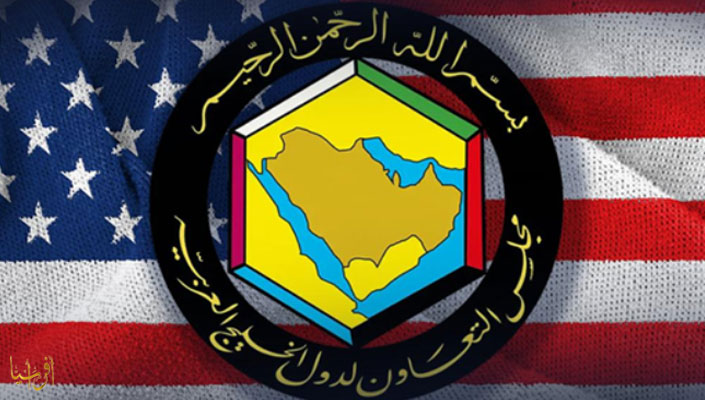
Afrasianet - For decades, the U.S. security umbrella in the Gulf has been taken for granted, but the U.S.-Israel war with Iran could change that.
During that war, and the defensive challenges it posed as a result of Iranian missile and drone attacks on defense systems that were trying to prevent them from targeting critical facilities in the Gulf Cooperation Council (GCC) countries, these countries were not only monitoring the missile trajectories, but also Washington's reactions, after finding itself the scene of a war that Gulf figures say they were not consulted about.
Has this crisis exposed the limited security arrangements between Washington and the Gulf states? Will it reduce or strengthen the dependence of Gulf capitals on U.S. military power?
Decades of cooperation
All GCC countries have security partnerships with Washington, which designates Saudi Arabia, Qatar, Bahrain, and Kuwait as "key non-NATO allies," while the UAE is a "major defense ally."
American interest in the Gulf region actually began in the aftermath of World War II, as the United States gradually replaced Britain as the main external power there. The Washington-led security system in the Gulf was driven by two reasons: the Gulf region's geographic importance, its vast oil reserves, and a strategic goal of wanting to counter Soviet influence.
Even two years before the war ended, then-President Franklin D. Roosevelt predicted the importance of oil and the Gulf region for his country's future, declaring in 1943 that "the defense of Saudi Arabia is of paramount importance to the defense of the United States," justifying the need to provide military and economic aid to the kingdom and strengthen relations with it.
In 1945, Roosevelt met King Abdulaziz Al Saud aboard the cruiser USS Quincy in the waters of the Great Bitter Lake of the Suez Canal in Egypt. Although official records do not mention that the discussion between them touched on oil, this meeting is usually described as the beginning of the "special relationship" between the two countries.
Dr. Jeffrey F. Grush, an expert on international relations and author of Gulf Security and the U.S. Military: Regime Survival and the Politics of Basing, told BBC News Arabic that at the end of World War II, the United States "had one of the most comprehensive and extensive military base systems and logistical support in the world," adding that the U.S. military at the time had "adjusted its rhetoric and policies to focus on the The Gulf region in particular.
By 1949, with the exception of air transport bases in Germany, Dhahran had become the most active U.S. overseas air base, and was considered essential to U.S. operations and coordination efforts globally in the postwar period.
Ghrush notes that U.S. promises of military and economic assistance helped conclude agreements on military bases at the time, and that the U.S. "was willing to approve Saudi requests for ammunition and military equipment because it feared that if it refused, the kingdom would resort to buying military equipment from the Soviet Union."
External and regional security concerns remained "a key factor behind the completion of agreements to extend the U.S. military presence in Saudi Arabia during the decade after the war," despite internal opposition to the alliance with Washington "because of its support for the State of Israel and the subsequent partition of Palestine," Gharsh said.
There has been small-scale military cooperation between the United States and the rest of the Gulf states from the end of World War II until the 1980s, taking multiple forms such as security cooperation agreements, military training, or hosting U.S. military forces at local bases: for example, Washington's 1971 agreement with Bahrain that allowed it to use previously British naval facilities to establish a port in Juffair.
In the late 1960s and early 1970s, U.S. President Richard Nixon pursued a policy toward the Gulf region based on Iran and Saudi Arabia as "pillars" of U.S. security and stability and the protection of U.S. oil interests, which Washington recognized as important to outmaneuver the Soviet Union in the Cold War. The "Twin Pillars Policy" led to the United States arming both countries and providing military training to their forces.
U.S.-Gulf relations were strained during the 1973 war, when the Organization of Arab Petroleum Exporting Countries (OAPEC) imposed a ban on oil exports to countries that supported Israel in the war, led by the United States.
In 1979, the Islamic Revolution in Iran ended the "Two Pillars" policy after overthrowing America's close ally, Shah Mohammad Reza Pahlavi, followed by the Soviet invasion of Afghanistan the same year. These developments have heightened Washington's concerns about a possible Soviet expansion in the Gulf, and its sense of the need for a sophisticated military infrastructure that secures its oil interests there.
In 1980, then-U.S. President Jimmy Carter declared that "any attempt by an outside power to control the Gulf region. will be confronted by all necessary means, including military force." Many American experts believe that this policy continued under Presidents Ronald Reagan and George H.W. Bush.
The establishment of the Gulf Cooperation Council (GCC) in 1981 during the Iran-Iraq War created a collective security framework that included Saudi Arabia, the United Arab Emirates, Qatar, Bahrain, Kuwait, and Oman. While the council's goal was to coordinate defense efforts, its effectiveness remained limited, and U.S. assurances became the main deterrent to regional threats.
The 1980s saw tensions between Iraq and the Gulf states on the other, culminating in Iraq's invasion of Kuwait in 1990.
The years 1990 and 1991 marked the culmination of the shift of American policy to the Carter Doctrine, during the Gulf War, when the forces of an international coalition led by the United States carried out the "Desert Shield" and "Desert Storm" operations aimed at protecting Saudi Arabia and liberating Kuwait.
This was the beginning of a massive U.S. military presence in the GCC that continued through the 1990s to impose a no-fly zone over Iraq, and was a testament to the U.S. ability to protect the Gulf states and enhance its role as an indispensable guarantor of regional security.
Dr. Sultan al-Amer, a senior fellow at the Middle East Policy Council in Washington, told BBC News Arabic that security arrangements in the Gulf in the 1980s were not enough to prevent a ground invasion similar to Iraq's invasion of Kuwait, "thus being linked to a U.S. protection umbrella, military cooperation with the U.S., and the presence of military bases in the region ensure that these countries are protected from any ground invasion or other military threat."
The 2003 invasion of Iraq and the overthrow of President Saddam Hussein marked another milestone in the U.S. role in the Gulf, transforming from a force of security and balance to an occupying power.
The Gulf countries continued to rely on Washington as a key guarantor of their security, and Washington intensified its presence in the region, strengthening its bases in Bahrain, Qatar, Kuwait, and the United Arab Emirates.
At the same time, the overthrow of Saddam Hussein eliminated Iran's main adversary, enabling it to expand its influence in the region and alarming the GCC countries.
In the same year, the United States announced the withdrawal of its planes and the majority of its soldiers from the Prince Sultan base in Saudi Arabia, and moved its air operations center in the Gulf to the Al-Udeid base in Qatar, in what observers saw at the time as a move aimed at easing the internal pressures that the kingdom was facing due to opposition to the American presence, but this did not affect the operational cooperation between the two countries.
The Americans have concluded several military, defense and economic agreements with the GCC countries, including the provision of advanced weapons systems as well as training programs. Riyadh, for example, last year made pledges to invest with the United States, initially estimated at $600 billion, and then the White House announced last November that it would expand its reach to $1 trillion, including a $142 billion arms sales deal that was described as the largest in history.
But the past few years have seen limited efforts by Gulf countries, particularly Saudi Arabia and the UAE, to diversify their partnerships and relations with other international powers such as China and Europe, primarily economically and diplomatically, and to a lesser extent in the area of military and security technologies.
This coincided with some events that raised questions in Gulf countries about whether they could continue their dependence on Washington.
For example, there was frustration with what was considered a limited reaction to the Iran-aligned Houthis' attacks on Saudi oil facilities in 2019. Dr. Sultan al-Amer says that Washington "decided instead of striking Iran to send some air defenses to Saudi Arabia.
This incident made it clear to the Kingdom that the U.S. commitment to protecting oil facilities or to protecting the Gulf from Iran's strikes is neither credible nor strong, and this led to the Kingdom beginning to adopt a regional policy that ended with reconciliation with Iran in Beijing, coordination of its regional relations, and diversification of alliances in addition to an alliance with the United States."
The UAE was also frustrated after the United States condemned the Houthi attacks on Abu Dhabi airport in 2022. Attacks on Qatar by Iran and then Israel in 2025 have fueled the debate about the feasibility of investing in a long-term relationship with the United States.
Anger and frustration in Gulf circles
Hours before the start of the Israeli-American war with Iran on Feb. 28, Omani Foreign Minister Badr al-Busaidi, whose country brokered negotiations between the United States and Iran, said the talks had made "significant and unprecedented progress" and that reaching an agreement was "within reach."
The GCC countries found themselves caught in war, and relations with Iran collapsed after those countries made a lot of effort over the past years to reform them, and they were able to achieve a major breakthrough that culminated in the restoration of diplomatic relations between Tehran and the majority of the GCC countries.
Gulf economies have been hit hard by Iranian attacks on energy infrastructure and other critical facilities, and countries such as Saudi Arabia, the United Arab Emirates, and Qatar have been positioned as key regional hubs for sectors such as tourism, aviation, investment, and information hubs.
In an article published in the British magazine The Economist on March 18, al-Busaidi accused Washington of having "lost control of its foreign policy" and called the war a "disaster."
A number of Arab and Western observers saw the posts written by Emirati billionaire Khalaf al-Habtoor on March 9 on the X website and later deleted as a reflection of what they described as the Gulf elite's anger toward the United States, as well as their concern about the repercussions of the war.
The posts came in response to statements by prominent Republican Senator Lindsey Graham, in which he called on the Gulf countries to go to war alongside the United States and Israel, and threatened to reconsider defense agreements with those countries if they refused to participate.
Among the posts: "We know exactly why we are being beaten and we also know who has brought the whole region into this dangerous escalation without consulting his so-called allies... We don't need someone who claims to have come to the Middle East to save us... We do not deny the Iranian threat to the region... But this is a dirty game in which many forces are fighting at the expense of our region... We will not enter this war to serve the interests of others."
Qatari academic Nayef bin Nahar criticized President Trump's handling of the conflict, saying in a post on the X website on March 23: "Today Trump postponed hitting energy in Iran for fear of the movement of the prices of the American market, but he has been seeing the Gulf societies for more than twenty days under Iranian missiles and the Gulf economies being damaged by tens of billions, and this has not made him change anything about his decisions."
The former head of Saudi Arabia's intelligence service, Prince Turki al-Faisal, said in an interview with CNN during the early days of the war that "this is Netanyahu's war. Clearly, he somehow convinced the president to support his view."
There has been a feeling in the Gulf countries since the beginning of the war that U.S. support has not been commensurate with the threat to which they have been subjected.
According to Dr. al-Amer, the current sentiment among the Gulf "oscillates between the fear that the United States will abandon them in a deal with Iran that does not take into account their interests and the fear of further decisions that expose them to further attacks in a war that did not take their interests into account."
Perhaps exacerbated by the Gulf states' frustration with relatively low-cost Iranian drone and missile attacks on critical infrastructure facilities, such as desalination plants, oil facilities, and ports, attacks that have been able to bypass and significantly damage expensive conventional defense systems, which in turn have led to a sense of vulnerability and vulnerabilities in their security arrangements.
Diversifying partnerships and hedging strategy
In recent years, Gulf countries have begun to diversify their economic and technological partnerships to include countries such as China, India, Russia, France, and Germany, and this trend has extended to a limited extent into the security and defense sphere.
During the recent U.S.-Israeli war with Iran, Saudi Arabia, the United Arab Emirates and Qatar concluded agreements with Ukraine during President Volodymyr Zelenskyy's Gulf tour at the end of March, under which Kyiv provided those countries with drones, electronic warfare techniques and interception of drones. Zelensky had earlier announced that his country was helping five countries, namely the United Arab Emirates, Saudi Arabia, Qatar, Kuwait and Jordan, in countering Iranian drones.
The Axios news website recently reported, citing Israeli officials and a US official, that Israel provided the UAE with an "Iron Dome" air defense system, as well as soldiers to operate it, at the beginning of the war.
Will the current conflict prompt the Gulf states to reconsider U.S. security guarantees, or will it increase their reliance on them?
"I think the conflict is likely to lead to a tougher and more conditional dependence on the United States, rather than an outright distancing from Washington," says Dr. Andreas Craig, an associate professor at the School of Security Studies at King's College London, adding,
"The Gulf states are not moving toward a strategic divorce, but toward a more cautious and utilitarian version of the relationship itself. Assessments inside Saudi Arabia currently place the lesson of the war in the context of the need for strategic autonomy within the context of continued dependence on the United States: increasing stockpiles, increasing domestic sustainability, strengthening the national defense industry and multi-layered air defense systems, as well as increasing coordination between Gulf institutions but under a U.S. umbrella. So I think the war will strengthen the Gulf states' dependence on the United States in the short term, but at the same time it will weaken confidence in it."
Dr. Al-Amer believes that the Gulf countries will move forward in diversifying their military partnerships: "The path in my imagination is not a substitution path – either America or another country, but rather maintaining this partnership while inoculating it and diversifying the security system from other sources."
One of the reasons why there is no "divorce" between the two sides is that the Iranian attacks have increased the conviction of some Gulf states of the need for a U.S. protective umbrella. "The majority [of the GCC countries] see the U.S. military presence as an important deterrent to Iran, even in the current crisis, and thus justify the existence of U.S. military bases in countries like Bahrain and Qatar," says Dr. Gharsh. Anwar Gargash, a former Emirati minister of state and adviser to the president for diplomatic affairs, said in an interview with Bloomberg News on March 17 that Iran's attack on the Gulf states "has pushed them closer to Israel and the United States."
Another reason is the absence of realistic alternatives to the United States.
Dr. Craig argues that China and Russia, for example, "are politically important, but they are not substitutes when Gulf capitals need immediate air defense, intelligence integration, and sustained deterrence credibility... Diversification efforts are already underway, but they are limited by capacity, geography and time."
Dr. Amer says the air defense system that the Gulf states bought from the United States and activated to protect them from missiles coming from Iran "has proven an interception rate of more than 90 percent.
I think this will continue," he said, noting that they may add to this system "a less expensive, more effective and replaceable system, such as Ukrainian weapons and others, to repel such incoming threats.
As for joint military action and the system of rules, replacing or changing them... It takes a very long time because this is an architecture that has been around for 30 to 40 years and a lot of resources have been spent on it, and the technology coming from the United States has no competitor yet."
It is worth noting that the Gulf countries are not united in their positions and orientations regarding the future of their security relations with the United States.
Also, "some have options other than America, and others don't," according to Dr. Al-Amer, who adds, "It will not be surprising to see the UAE strengthen its security ties with Israel and Saudi Arabia to further strengthen its regional ties with Turkey and Pakistan."
What the recent crisis has shown is the widening gap between expectations and reality, and the weaknesses of the U.S.-Gulf alliance — or at least its limitations. The challenge for the Gulf states right now is how to manage their dependence on the U.S. security umbrella, and how well they can held and diversify their bets.
The war against Iran has proved that the United States of America could not or did not do anything to secure a security umbrella for the Gulf countries, and that it fought its war in the service of the Zionist entity, as the Gulf countries have become the last of their concerns, and that what matters to them from the Gulf countries is the money that they seize in various ways from these countries, and the Gulf countries, if they are interested in their interests, to engage in a unified regional system capable of confronting American and Zionist ambitions.
________________
