
Shifts on the ground pave the way for the consolidation of Israeli control over "Area C"
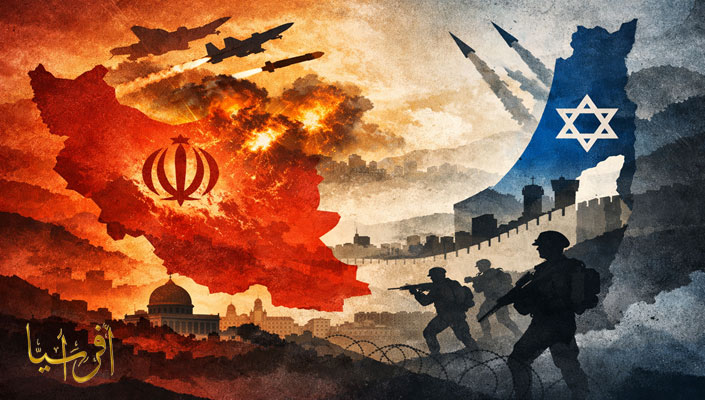
Afrasianet - In recent days, cities in the occupied West Bank have become an arena for intensifying Israeli military operations, at a time when the Middle East is witnessing an unprecedented escalation in a war waged by the United States and Israel against Iran.
This regional escalation has given Tel Aviv ample space to implement policies on the ground aimed at consolidating its control over the West Bank and creating conditions for future political steps, most notably strengthening Israeli control over areas classified as "C", which represent about 61 percent of the West Bank.
Palestinian observers point out that the world's preoccupation with the regional war and the preoccupation of international powers with bombing Iran has created a suitable environment for intensifying incursions, arrests and military deployment in Palestinian cities and towns. The West Bank, where about three million Palestinians live in contrast to more than 700,000 settlers, has come under dual pressure from the Israeli army and settlers, reflecting a systematic policy of consolidating control on the ground, in the absence of effective international and Arab reactions.
Palestinian political expert Ahmed Rafiq Awad, director of the Jerusalem Center for Studies, says Israel is taking advantage of international preoccupation with the war on Iran to intensify its actions in the West Bank.
In many cases, Israeli operations do not target direct security threats, he adds, but rather aim to impose a new political reality on the ground.
These include the frequent introduction of armored vehicles and tracked troop carriers into Palestinian cities, making the military presence familiar to the population and establishing absolute control over Area C.
Awad points out that this policy is based on a dual strategy: on the one hand, to strengthen control over the land, and on the other hand, to create the conditions for the legislation of future political steps, such as the annexation of Palestinian lands or the consolidation of settlements in areas of strategic value.
As the regional war continues, the West Bank has arguably become a laboratory for Israeli policies that go beyond the immediate security response to become part of a long-term project of domination.
Area C under the Oslo Accords, which are under full Israeli control, are the central goal of current Israeli policy. These areas account for more than half of the West Bank and include hundreds of thousands of Palestinians, agricultural land, and property targeted by the Israeli government to seize them by registering them as state property, as happened last February.
This trend reflects Tel Aviv's desire to turn military control into a permanent reality on the ground, thereby strengthening its negotiating position in any future political settlement.
The world's preoccupation with the regional war, and the preoccupation of the international powers with bombing Iran, has created a suitable environment for intensifying incursions, arrests, and military deployment in Palestinian cities and towns.
Observers confirm that the repeated incursions include raiding entire neighborhoods and turning Palestinian homes into temporary military barracks, which imposes a state of daily fear and tension on the residents.
These actions are accompanied by an increase in settler attacks on Palestinian villages, including attacks on property, reflecting a strategy of double pressure on civilians and ensuring continued Israeli superiority on the ground.
From a humanitarian point of view, Israeli operations since the beginning of the war on Iran have resulted in the death of hundreds of Palestinians, the injury of thousands of others, and the arrest of tens of thousands, according to official Palestinian figures.
Fatah spokesman Iyad Abu Znit said the measures were a consolidation of control over the West Bank, taking advantage of international concern for the regional conflict. He adds that the internal Palestinian division increases Israel's ability to impose a new reality on the ground without facing real pressure.
Politically, this trend reflects Tel Aviv's desire to strengthen its influence before any future negotiations, and to achieve a reality on the ground that is difficult to overcome. The expansion of control over Area C is not limited to the military structure, but extends to settlement and annexation policies, which strengthens Israel's position in the next stages of any political or negotiation talks.
These operations are part of a comprehensive strategy that links the regional conflict over Iran to Israel's expansion in the West Bank. International preoccupation with the regional war gives Tel Aviv an opportunity to intensify its control on the ground and consolidate its influence, at a time when the world is witnessing a dynamic shift in the balance of power.
For the Israeli government, the link between the war on Iran and control of the West Bank provides a pretext for implementing long-term policies, based on relative international political support and international silence on abuses in the occupied territories.
Arguably, the regional war on Iran has given Israel the opportunity to consolidate its control over the West Bank, especially in Area C, where the military presence has become a daily reality.
As incursions, arrests, and settlement attacks continue, it becomes clear that Israel is imposing a new political and field reality, taking advantage of international preoccupation with the regional war, and benefiting from the Palestinian division and weakening international pressure.
As the Palestinian population continues to face daily pressures, the West Bank remains a testing ground for whether Israel's military and political policies will take hold on the ground and determine the shape of any future settlement of the Palestinian-Israeli conflict.
