
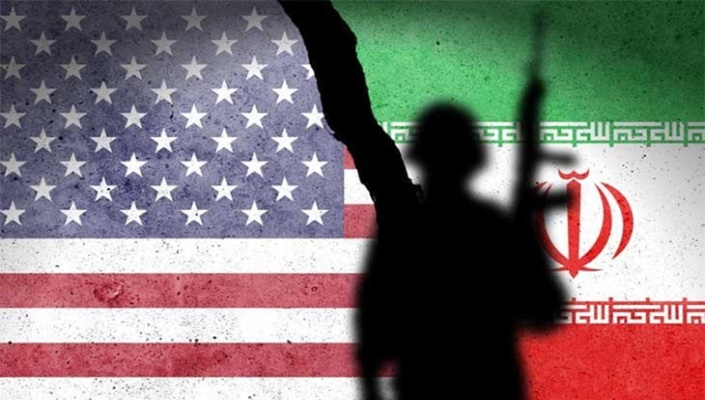
Afrasianet - There were optimistic impressions from Iranians and Americans about the results of the latest round of talks in Geneva, including Iranian Foreign Minister Abbas Araqchi's remarks about tangible progress in setting the main principles of a possible agreement on the nuclear file, and US Vice President J.D. Vance talking about some progress in the Iranians' offers, but he returned to his reservations by saying that Tehran's proposals have not yet touched what he called the "red lines" of US President Donald Trump, who stated before the Geneva round, that he would participate in a different way He was given a maximum period of one month, and is represented by his son-in-law Jared Kushner, and his favorite envoy Steve Witkoff, and the two participated at the same time, and in the same Swiss city itself, in other negotiations related to the Ukraine war, and the Russian-Ukrainian negotiations did not result in a significant renewal, and observers fear that this result will be similar to, or approaching, what happened in the round of indirect negotiations, between Washington and Tehran, which took place, like the previous round of Muscat, with Omani mediation, and was limited to exchanging letters, in which I expressed Tehran seems to be ready for tangible concessions that are different from its declared position, especially with regard to the rate of enrichment, the disposal of hundreds of kilograms of uranium enriched to more than 60 percent, and proposals for a gradual but not complete lifting of the US sanctions imposed on Iran 47 years ago. later to Geneva, with the same unilateral Omani mediation, and maintaining the form of indirect negotiations, and then by offering economic temptations that drooled the Trump delegation, and opened the door to American investments in Iran's oil fields, natural gas, and rare earth reserves, which may be worth up to a trillion dollars, and the Iranians' ingenuity in negotiating and prolonging it, pushed Trump himself, who is considered the most brilliant negotiator, to be cautious, as he appeared in his statements before the Geneva round, and said that negotiating with the Iranians is "very difficult," and that "they have been for 47 years.
They talk and talk, and during that period a lot of lives were lost," Trump of course means the lives of the American dead, he no longer mentions the lives of the Iranian dissidents demonstrating, and he claimed weeks ago, that American help is on its way, and that they should take the initiative to control the institutions of the Iranian government, and then he no longer mentions them literally, and when some journalists reminded him of his promises, he simply said that he fulfilled them through thousands of Starlink devices, referring to the plan that was foiled by the Iranian regime's apparatuses, and he is focused Today, an agreement on the nuclear file completely prevents Iran from enriching its nuclear program, even if it tries to save some face, and warned Iran of a "very painful blow," as he put it, and considered that changing the Iranian regime is "the best that can happen."
What Trump refrained from saying, was said by those close to him, whether in the "MAGA" movement in the Vance way, or in the Zionist lobby that supports him and pressures him fiercely, and his most prominent symbols are Trump's friend, the Jewish Zionist Senator Lindsey Graham, who went to the occupation entity before the Geneva round of negotiations, and from there declared the real goal he adopts with Israel, and said clearly, that "regime change in Iran is the best solution to the problems that Iran creates in the region."
He stated that Trump did not decide to send the largest American aircraft carrier "Gerald Ford" in order to "observe the weather conditions in the region", and at the time of the statements of Trump and his close Zionist friend Graham, the response of Iran's Supreme Commander Ayatollah Ali Khamenei, was decisive in challenging the American-Zionist arrogance, and announced that Trump's dream of "ending Iran" will not be realized, and that American aircraft carriers are a dangerous weapon, but the most dangerous is It is known that Khamenei is the first and last decision-maker in the Iranian regime, and that his decisions have both religious and worldly priority in Tehran, and that his regime's base on the many ethnic, political, social and economic opposition groups is still popular and continues to be steadfast, despite the imposition of 7,000 Western and American sanctions, and its vitality was evident in the demonstration of the millions, in celebration of the 47th anniversary of the February 11, 1979 revolution, and before that in the millions' exit to end the unrest Without needing much explanation.
We are in the midst of two parallel wars to topple the Iranian regime, a war negotiated under maximum economic and military pressure, and an expansion of the list of American-Israeli demands, not just subjugating the Iranian negotiator in the nuclear file, and pushing Iran to accept a "zero" policy of enrichment, and the transfer of enriched stockpiles abroad If Tehran accepts all of this, Washington will ask to discuss and restrict Iran's missile program and its network of relations with allied factions, all of which are impossible demands, which make no sense other than the regime's self-suicide and comprehensive surrender, and this is a higher cost than accepting the war option and its costs, and Trump has stuck himself in the narrow corner, which does not allow him to accept partial Iranian concessions in the file He no longer has the opportunity to retreat from a major blow to Iran, after the American mobilization around Iran has increased to unprecedented extremes in the region, not only with aircraft carriers (Abraham Lincoln, Gerald Ford, and George Bush) and their fleets of destroyers, missiles and nuclear submarines, but also with a huge army of air-to-air refueling planes, F-15, F-22 and F-35 bombers, and bridges to transport weapons and troops to about sixty bases in the Levant and the Persian Gulf.
In addition to major bases in Armenia, Azerbaijan and Turkmenistan in northern Iran, and the visible possibilities of adding new crowds before the scheduled strike, perhaps in late March, taking into account the weapons of the Israeli entity's army, and the American additions to its force on land, sea and air, which may increase the American crowd ready to strike Iran, to more than half of the total strength of all American armies.
Others, even if the strike is postponed for weeks, during which Washington and Tel Aviv complete their preparations and revision plans, which the Iranians are doing by various means, which we hope will include fortifying the Iranian interior, and addressing American and Israeli intelligence penetrations, behind Iranian lines, as Trump's pragmatism may not convince him to rely on the son of the deposed Shah, as the latter does not have a popular base that supports his inauguration as an alternative, and the Americans, Israelis, and Britons may think differently about the partners of the expected strike, which is titled an agreement with a military leader from within the regime The current Iran, and replacing the all-out ground invasion with commando operations, or with an attempt to assassinate Supreme Leader Khamenei himself, despite the fact that there are three alternatives ready to be replaced in the event of the disappearance of the Supreme Leader, in addition to launching a campaign of destruction and annihilation of all of Iran's oil, military and security facilities, in an air campaign that may last weeks, and without a certain guarantee to end the regime, no one may dispute the terrible disparity between the forces of America and Iran's power.
But Iran may be able to withstand and hurt the enemy seriously and in stages in an asymmetrical war By air and sea, it does not exclude anything from Israeli and American targets in the region, and may reach its peak the closure of the Strait of Hormuz, which Iran recently conducted "smart control" maneuvers, followed by joint maneuvers with the Russians in the Sea of Oman and the Indian Ocean, while Chinese sources confirm that Iran continues to provide Iran with air defense weapons and advanced jammers, not to mention the possible roles of Iran's allies in Lebanon and Yemen, if the war prolongs and expands, it is a war of destiny that is broader than the maps of Iran and the region All of them, and the Iranian regime has no choice but to rise from its ashes and fires.
