
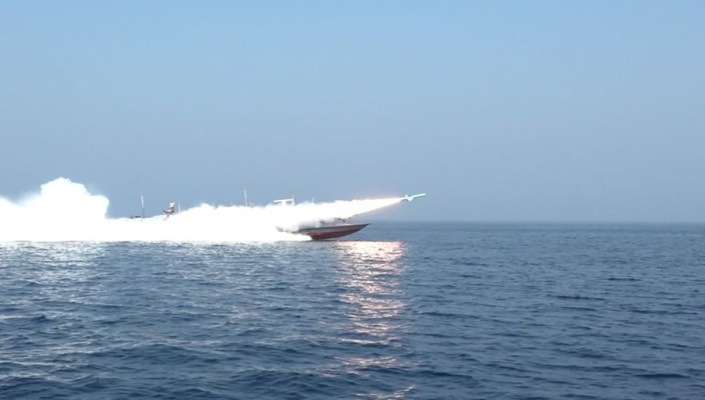
Afrasianet - Rasool Al Hai- Just a day after the Islamic Revolutionary Guard Corps (IRGC) concluded naval exercises that saw the partial closure of theStrait of Hormuz, Tehran announced a joint naval exercise between the Iranian navy and the Russian Federation on Thursday in the Sea of Oman and the northern Indian Ocean, giving it strategic dimensions beyond routine training objectives.
In the wake of an increasing US military buildup, the spokesman for the joint naval exercise, Admiral Hassan Maqsoudlou, announced that the organization of these exercises, along with various exercises by the Iranian armed forces, reflects the two countries' interest in the ongoing developments in the Sea of Oman and the northern Indian Ocean, and shows the commitment of the two parties to strengthen maritime cooperation and "confront unilateralism."
These successive military movements come at a precise and intertwined time, as the IRGC, in its maneuver under the slogan "intelligent control of the Strait of Hormuz", deliberately closed the strait for hours for "security" reasons in conjunction with the second round of negotiations between Washington and Tehran in Geneva last Tuesday, which makes the temporal convergence between the military escalation and the diplomatic movement carry clear messages, according to observers.
Military affairs researcher Mohammad Mehdi Maleki said that what is happening in the Gulf waters reflects a complex scene that combines diplomatic tracks and military parade at the same time, sending a message that Tehran is entering the negotiations from a position of strength, and that any diplomatic progress must take into account its security and economic interests.
Maleki said that these exercises are a continuation of the exercises that the IRGC began over the past two days in the strategic Strait of Hormuz and the surrounding islands, and that they come in the context of Tehran's strengthening of its international alliances in the face of the US military buildup in the region.
The IRGC's maneuvers saw the launch of modern weapons, including advanced missiles anddrones, in a move aimed at raising defence capabilities and strengthening national deterrence, he said, adding that the exercise would give Iranian diplomacy a wider negotiating space, as it is a "natural complement to diplomacy efforts".
The royal researcher explained that the current scene reflects a strategic integration between the military and diplomacy, as the two tracks go hand in hand to serve national interests, stressing that "diplomats defend the country's interests in the negotiation halls, and the armed forces perform their duty in the field, so that the desired balance between the two tracks is achieved, so that diplomats negotiate with a strong back and a solid military back, which strengthens their negotiating position."
In his view, Iran did not enter the negotiations out of fear of war or under the weight of threats, but out of a genuine desire to lift sanctionsand neutralize risks from the country, and he said that this multi-level message puts Washington and its allies to a real test: either accept a partnership that respects Iran's sovereignty and interests, or confront military capabilities that have proven their continuous development on the ground .
Strategic Messages
Strategic analyst Majid Sajjadi Baneh saw the joint Iranian-Russian exercises as a multidimensional message that goes beyond stated training objectives, and that "by focusing on the security of oil tankers and combating maritime threats, they send a new message about Iran's pivotal role in securing energy trade in the region."
Sajjadi Banah stressed that the talk in these exercises revolves around the Strait of Hormuz, through which about 20% of the world's total oil consumption and a third of the consumption of liquefied natural gas passes, adding that these drills carry a message that "if this region is to be unsafe for Iran, it must be unsafe for the whole world."
The IRGC's recent exercise to close the strait constitutes a strategic pressure card against any force that tries to obstruct Iran's oil exports, he said, noting that Russia's participation in joint exercises with Iran comes in a broader context of growing military co-operation between the two countries to ensure the common interests of the two countries.
"There are almost frequent reports that Russian and Chinese arms shipments have arrived in Iran after last June's war, and that the two countries have played an important role in strengthening Iran's military capabilities recently," Sajjadi Banah said, stressing that these moves, including joint exercises, fall within the framework of "the growing strategic partnership between Tehran and the eastern powers, especially after the recent escalation in the region."
The joint exercises with Russia "show the strengthening of military and naval cooperation between the two countries, and emphasize the orientation towards multilateralism in the face of unilateralism in the international arena," he said, adding that Moscow , which saw the results of American and Western unilateralism in the invasion of Iraq and Afghanistan, does not want to repeat that experience in Iran, and its participation in the exercises in the wake of the US military mobilization carries a message of standing by Tehran.
In recent years, Iran has conducted joint exercises not only with Russia, but also with China, he said , stressing that these exercises "confirm the active role that Tehran seeks to establish in the maritime security equation, especially in light of the transformation of the Sea of Oman and the northern Indian Ocean into major hotbeds of geopolitical competition due to their economic importance and the energy field, in which Tehran is trying to prove its active and deterrent role."
The Role of the Trinity
On the other hand, the commander of the Russian naval group in the joint exercises, Lt. Col. Alexey Sergev, said that the level of cooperation between the two countries confirms their joint ability to "manage and solve many maritime and coastal issues and challenges."
The Russian military official's remarks came at a joint press conference with the spokesman of the joint naval exercise, Admiral Hassan Maqsoudlou, where Iranian observers interpret the positions of the Russian guest as an indication of the strength of defense relations between the two countries in the face of regional challenges.
At a time of rising tensions in the region and an intensive US military presence, Sergev stressed his country's readiness to expand military cooperation with Iran to include "any region," noting that joint exercises may include specialized operations such as "counter-maritime terrorism," which are carried out with the participation of ships and gunboats from both sides.
After the Iranian, Russian, and Chinese eastern triad have been conducting annual joint exercises in the Sea of Oman and the northern Indian Ocean, Iranian observers have seen China's absence from its current version carry important implications about the nature of the existing alliances, as it reflects Russia's will to cooperate openly with Tehran at this stage.
Beijing continues its conservative approach of declaring a full military partnership with Iran, despite its unspoken willingness to provide deeper technical cooperation behind the scenes, and both serve Tehran's strategic goal of strengthening its defense capabilities and breaking its international isolation.
