
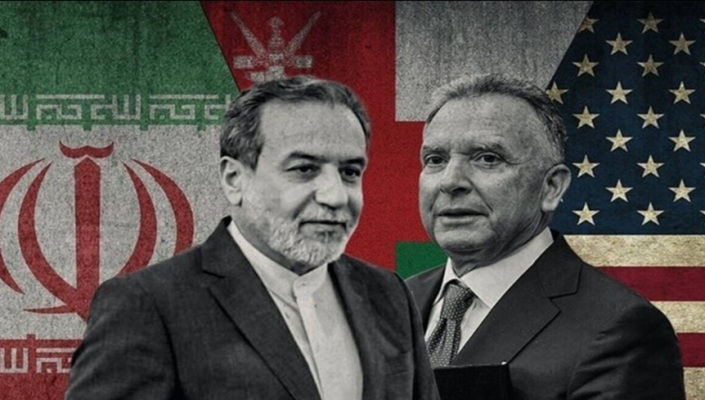
Afrasianet - Laila Nicolas - The current negotiations in Muscat seem to be a round of "war of tracks", where victory is measured by who has the ability to turn the cards of power on the ground into a trump card in negotiations in which a lot of complexity overlaps!
Between US President Donald Trump's ambition to conclude the "grand bargain" and try to take painful concessions from Iran, and Iran's steadfastness in adopting a strategy of "strategic resilience and patience," the Muscat negotiations in February 2026 revealed a new chapter in the Middle East's conflict of wills.
The current round of negotiations between the Iranians and the Americans is an embodiment of the clash between two philosophies:
The first is Iran's negotiating philosophy as formulated by Iranian Foreign Minister Abbas Araghchi in his book "The Power of Negotiation," which sees diplomacy as a means of preserving the dignity of the state and preventing strategic loss.
Second, US President Donald Trump's utilitarian philosophy seeks to divert economic pressure and harsh sanctions, the threat of all-out war, and the adoption of the style of intimidation rhetoric for political gains at no cost.
Time Management
The differences are also reflected in the perception of the time factor. In his book, Araqchi argues that time is one of the most important elements of power, arguing that "he who is not afraid to wait imposes his terms." On this basis, the Iranian negotiator usually drains the adversary and floods him with details.
In this context, Araqchi recalls in his book that during the negotiations between Iran and the five plus one countries, and the moment of the announcement of the signing of the agreement (2015), Wendy Sherman (an American diplomat) asked Araqchi, "Do you agree with the agreement?" But," she said, "you always ask for more."
On the other hand, President Trump is currently rushing with the logic of the "merchant" in a hurry to achieve a winning deal, which Tom Bragg said that his boss quickly gets bored of files and quickly moves from one file to another.
However, despite this discrepancy, and despite the Iranian negotiator's ability and experience to drain the adversary, it may not be useful for Iran to use the procrastination tactic at the moment, as the previous experience in negotiating between the current administration and Iran, and after the time was exhausted, Trump rushed to use the excuse of "running out of time" to wage war on Iran, after the 60-day deadline he had set expired.
Battle of Visualizations
Academically, we are facing a complex model of "perception management." The US administration is trying to market the narrative of "Iranian willingness" to make a deal after the threats and after the arrival of the military build-up to the region, while Iran seeks to portray sitting at the negotiating table as a "diplomatic breeze" imposed by the reality of missile deterrence in the June 2025 war and the failure of the riots orchestrated by the Mossad at home.
In practice, these narratives are an attempt to explain the "engineering of retreat" by both sides; Washington has retreated from the ceiling of "all-out war" and Iran has retreated from the ceiling of "comprehensive boycott" and refused to negotiate because of U.S. behavior, as Araghchi stated in January 2026.
Therefore, the regional balance that led to the Muscat negotiations confirms that we have moved from the stage of "imposing wills" to the stage of "managing mutual deficits." There is no doubt that the return to the negotiating table is due to the Americans realizing the difficulty of regime change and that war is not a picnic, while the Iranians have realized that calm and return to the negotiating table remain the best option as an alternative to war.
On this basis, diplomacy is currently being used to cover up the shifting balance of power in the region. The United States is trying to "disarm the adversary" diplomatically by linking the files (nuclear, missiles, and regional influence), which Iran considers a trap aimed at robbing it of its field power cards and achieving diplomacy unless Israel could achieve it on the ground during the June war.
Iran understands that abandoning the missiles is geopolitical suicide, and that the state's steadfastness and use of time, as explained by Araghchi, can only be completed by the strength of the home front and the ability to exit negotiations with a relative gain without compromising strategic axioms.
Trump is aware that lifting sanctions and returning to the previous agreement without substantial concessions from Iran will be an area of domestic and Israeli criticism.
Therefore, the current negotiations in Muscat seem to be a round of "war of tracks", where victory is measured by who has the ability to turn the cards of power on the ground into a trump card in negotiations in which a lot of complexity and parties have different goals and interests.
