
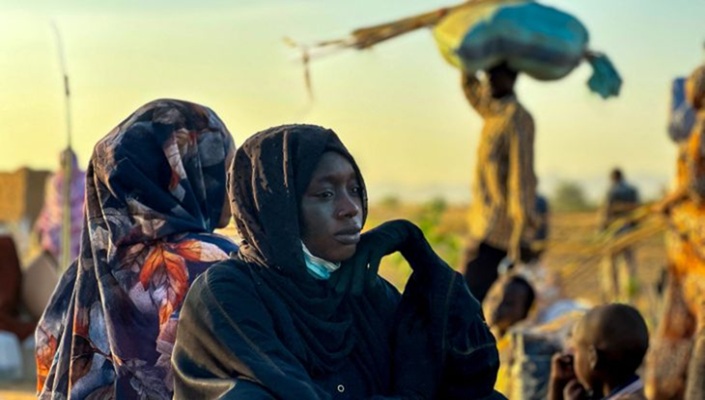
Afrasianet - As the war in Sudan nears its third year, the Sudanese people are facing a tragedy unprecedented since the country's independence in 1956, amid massive devastation and armed chaos that threatens both the state and society.
The war broke out on April 15, 2023, with the outbreak of a conflict between the head of the Sovereignty Council, Lieutenant General Abdel Fattah al-Burhan, and his deputy, Lieutenant General Mohamed Hamdan Dagalo (Hemedti), the commander of the Rapid Support Forces, which emerged as a tribal militia during the era of ousted President Omar al-Bashir.
Over time, the conflict turned into an all-out war, as reported by journalist Fawzi Bishri, that went beyond a mere clash of generals, to become a confrontation that threatens state institutions and directly targets civilians.
According to human rights organizations, the United Nations and international media, the RSF operations in Khartoum, Gezira state, El Geneina and El Fasher included murders, rapes, looting and destruction of property, which led to the violation of the dignity of Sudanese citizens and caused severe damage to infrastructure.
The war, according to UN estimates, has exacerbated a severe humanitarian crisis, with millions of Sudanese displaced and tens of thousands dead.
Observers point out that after al-Burhan's coup against Abdallah Hamdok's transitional government, civilian forces took a pragmatic stance by cooperating with Hemedti, taking advantage of his military power.
Hemedti used this consensus to give democratic cover to his conflict and expand his influence, which led to the transformation of the war through multiple stages from a struggle for power, to a "war for democracy" or "marginalized margins," and then to an all-out conflict over Sudan in terms of land, resources, water, and coastline.
At the same time, Burhan continues to reclaim strategic areas such as Khartoum, Gezira State, Sennar State, and most of Kordofan State, with less focus on civilian rule, raising questions about Sudan's post-war political and democratic future, and its ability to achieve a victory that ensures the country's stability.
The facts of the three years indicate that the Sudanese war was not just a conflict between two generals, but a multidimensional conflict in which both inside and outside the country participated, with international involvement in supporting and arming the armed forces, at a time when the Sudanese citizen is waiting for an end to this conflict, which has affected its cities and people and threatened the future of the entire country.
An independent UN-backed investigation has concluded that the Rapid Support Forces (RSF) committed in El Fasher, the capital of North Darfur state , amounts to war crimes and crimes against humanity, with indicators of genocide.
In December, satellite imagery showed dozens of piles of bodies scattered across the streets of El Fasher, which had been turned into a "vast crime scene" and a "human slaughterhouse", and said analysis suggested the bodies had been collected in dozens of piles in preparation for burial in mass graves or cremation in large pits.
