
Afrasianet - Dr. Mohamed Ayyash - There is nothing to be optimistic about the June 2026 memorandum of understanding, which refers to the "Islamabad Memorandum," which consists of 14 items aimed at a permanent ceasefire and the opening of negotiations on Iran's nuclear program.
However, the roots of the memorandum reflect the divergence between the two sides' quest for economic and political calm and the continuation of geopolitical, military and field tensions.
US President Donald Trump has officially declared the memorandum of understanding with Iran to be over, describing it as "latter" and dead, and considering that negotiations with Tehran are It's just a "waste of time."
Trump believes that the negotiated terms are no longer appropriate, accusing the Iranian side of evasiveness and lack of seriousness.
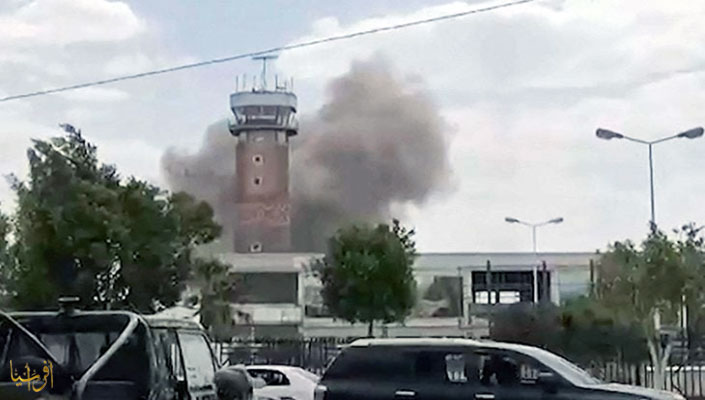
Therefore, he prioritized military and economic pressure, as Washington launched large-scale strikes on Iranian positions following Iran's retreat from navigation arrangements in the Strait of Hormuz.
He decisively emphasized that his unwavering goal is to permanently prevent Iran from acquiring any nuclear weapons. He used the crisis to test and assess the support of Washington's allies, expressing his displeasure with the positions of countries such as Spain, and calling on NATO to take a tougher stance.
Although Trump announced the end of the understanding, he left the door open for his administration's negotiators to continue dialogue if they saw the benefit of doing so.
The goals of the so-called Israeli Prime Minister Benjamin Netanyahu's attempts to sabotage or thwart the US-Iran Memorandum of Understanding and Trump's announcement of its end in July following reciprocal strikes are to achieve four Israeli strategic goals that were absent from the terms of the truce, in addition to seeking to ensure Israel's military and regional superiority.
These Israeli goals and motives can be clearly observed, as security and political circles in Israel believe that the memorandum completely absent the basic security conditions that Netanyahu was demanding, so the goal of the Israeli moves was to impose those conditions by force and across the field, including preventing Tehran from retaining its uranium enrichment capabilities and devices.
And forcing Tehran to completely dispose of its stockpile of highly enriched uranium, instead of sufficing with international monitoring, imposing strict restrictions on Iran's program to develop and produce long-range missiles.
By cutting off Iranian financial and military support to Tehran's allies in the Middle East (such as Hezbollah in Lebanon and factions in Gaza, Iraq, and Yemen), Netanyahu aims to prevent Iran from obtaining any gains or monetization and sanctions relief, to ensure that Iran's economy does not recover, depriving it of funding for its military arms.
He believed that Washington's signing of the memorandum was the result of the US administration's "impatience" and its desire to end the war, which Israel considers a concession that gives Tehran a political victory.
Netanyahu sought through escalation on the ground (especially in Lebanon, Syria, and Gaza) to thwart any settlement that obliges him to withdraw, stressing that Israel will remain in the "buffer zones" under the pretext of protecting its security, regardless of whether or not there is a US-Iranian agreement.
Netanyahu aims to convey a message to Washington that Israel retains absolute freedom of movement to attack Iranian facilities again, even if it is necessary to confront Iran alone without American involvement.
The truth behind the signing of the US-Iran memorandum of understanding almost overthrew the organic relationship with the Zionist entity and is considered an indication of the beginning of an unprecedented separation.
As the occupying power saw it as neutralizing and restricting Israeli intervention, which hopes to go to war to overthrow the Iranian regime, remove the nuclear threat, and exclude proxies in addition to The termination of the memorandum of understanding.
The resumption of the war, and the exchange of accusations between the two sides of the conflict, reflect the fragility of the agreement, and the view of the vast gap about the possibility of reaching a real agreement and the presence of main guarantors.
so we are facing a third wave of war that may be the last, and the description that Trump mentioned to the current officials is another proof of the lack of horizon.
And therefore we cannot tell you anything new except that the drums of war have been beaten, and it is only a matter of time and CENTCOM counts, collects and gives goals How do we explain the bombing of 170 targets if the targets had not been carefully set and studied?
The normal state between the two parties to the conflict, the separation, and the agreement, is a state of illness that cannot be sustained.
Trump's meanness and Tehran's stubbornness are only suitable for them as a fierce war that ends one side and the victory of the other and the coming days between us.
............................
Dr. Mohamed Ayyash - Palestinian writer and political researcher
............................
