
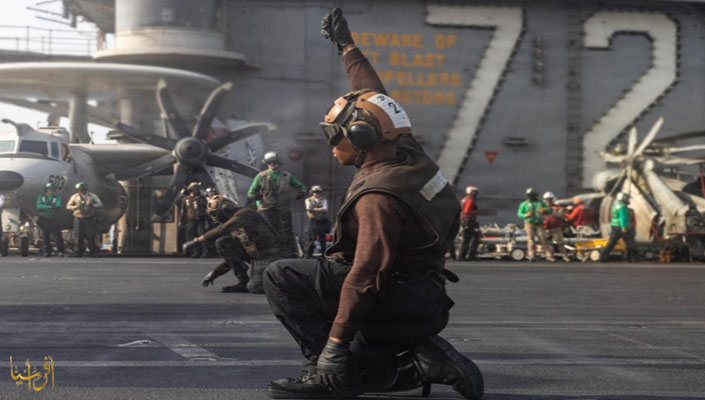
Arab countries are moving at an accelerated pace towards diversifying their strategic alliances, as they no longer view the United States as a reliable or neutral guarantor of regional stability.
Afrasianet - The recent ceasefire in the Middle East is not just a temporary cessation of hostilities, but a decisive transition in world history. The conflict in which Iran, Israel, and the United States have engaged has accelerated the decline of U.S. unilateral hegemony, and today we find ourselves in the face of the real and decisive emergence of a multipolar world.
The crisis has exposed a severe lack of diplomatic influence and military deterrence for the West, a vacuum that other world powers have rushed to fill. This transformation is not just a future possibility, but a living reality that is reshaping international relations today, as this war has been a catalyst for profound structural changes.
This conflict has redefined the concept of modern warfare and the doctrine of strategic deterrence, as traditional military superiority has proven inadequate in the face of asymmetric tactics, as warring parties have resorted to the use of active cyberattacks and algorithmic combat systems, rapid automated technologies that have enabled regional parties to effectively challenge a global superpower.
Thanks to their accuracy and speed, these new tools have been able to bypass conventional defense mechanisms, a reality that worries military planners around the world.
Accordingly, the absolute military dominance of a single country is no longer possible, as the cost of having destructive military capabilities has dropped significantly. As a result, the United States can no longer dictate security outcomes based solely on its naked military presence.
The crisis has resulted in a severe isolation of the United States from the Arab world, as Washington has shown unconditional support for its first regional ally, a position that has alienated key partners across the Middle East.
Today, Arab states are rapidly diversifying their strategic alliances, no longer viewing the United States as a reliable or neutral guarantor of regional stability.
The duality in the application of international law has also done irreparable damage to U.S. credibility. The Gulf states are prioritizing their national security, going beyond their traditional alliances with Washington.
This diplomatic break is creating a radical and lasting shift in the geopolitics of the Middle East, as the region strives to find new diplomatic partners.
China's Strategic Pragmatism
China has emerged as the most prominent strategic beneficiary of this conflict, as Beijing has maintained a delicate balance in its relations between Tehran and the Gulf states. Chinese diplomats have presented their country as a pragmatic and stable alternative to the U.S. policy of intervention.
China has not sought military involvement, but has instead focused on securing its strategic security and economic interests.
The Chinese government has taken advantage of the diplomatic vacuum left by the United States to strengthen its bilateral relations throughout the region, without imposing any dictates or conditions political.
This vision is deeply in line with the trends of Middle Eastern governments, and China has now become a key pillar of the region's diplomacy.
The fragmentation of the global financial system has hit the heart of global financial systems, with the excessive use of economic sanctions by Western countries backfired, accelerating the global trend toward financial independence.
Developing countries have watched with great concern the arming of the U.S. financial system and are scrambling to find alternative economic structures to protect their sovereign wealth. As a result, global central banks are increasing their safe-haven asset reserves, and gold has seen a massive rebound in volume Demand during this crisis.
The precious metal provides a safe haven against currency market volatility and international sanctions, fragmenting the global financial architecture into rival regional blocs.
The rise of altcoins
At the same time, the internationalization of the Chinese yuan is accelerating. The recent conflict has forced many countries to conduct their trade outside the traditional frameworks of the global system, as energy deals, especially those related to Iranian resources, are increasingly being settled using alternative currencies.
Analysts point out that the Chinese yuan is integrating into global trade at a faster pace than Western economic data suggests. New payment systems developed by China and its allies are also gaining momentum.
This financial shift limits the effectiveness of any potential future Western sanctions, ushering in the birth of a new global financial system that goes hand in hand with the new diplomatic order, which means that the United States is gradually losing its most powerful economic weapon.
Energy security and the green transition
The conflict has also highlighted serious vulnerabilities in global energy flows. Threats to vital sea lanes have caused acute concern in global markets, particularly the Strait of Hormuz, which remains the most important artery for international oil shipments. Any disruption in this sensitive region threatens the economic stability of both developed and developing countries.
The war has forced importing countries to rethink their overall energy security strategies, where absolute reliance on a single zone or security guarantor has become an unacceptable risk.
Countries are racing against time to secure independent supply chains, an urgent endeavor that is reshaping the map of global energy alliances as a whole.
Moreover, the energy crisis brought about by the war will accelerate the global shift towards clean technology. Rising fossil fuel prices and supply insecurity have made renewable energy a national security issue par excellence.
Given China's already dominance of the global supply chain for solar panels, batteries, and biometals, the rush for countries to build independent energy infrastructures will inevitably require them to rely heavily on Chinese technology.
The United States, in contrast, lacks the industrial capacity needed to meet this global demand Sudden. The geopolitical fallout of the war is strengthening Beijing's position as a clean energy superpower, shifting the economic dependence compass from the umbrella of U.S. military security to Chinese green technology.
Internal fissures and the new reality
At the domestic level, the main actors in the conflict face severe domestic challenges. The ceasefire brokered by the new U.S. administration leaves the Israeli leadership in a fragile political position, with the Israeli street expressing deep frustration with a conflict that has failed to achieve a decisive victory, as well as the heavy economic and social burdens of a protracted war that has generated sharp internal divisions.
Similarly, the American public is very tired of foreign interventions, and America's domestic political polarization severely limits its ability to formulate a unified foreign policy.
This domestic instability prevents both countries from maintaining their previous levels of regional hegemony.
In conclusion, the recent Middle East conflict marks the definitive end to the unipolar era, and the United States can no longer unilaterally dictate its financial, military, or global diplomatic terms.
The crisis has exposed the fragility of traditional military deterrence to algorithmic and cyber warfare, and accelerated the rebellion against the standard financial system in favor of promoting alternative assets such as gold.
China has successfully used the crisis to expand its diplomatic and economic influence globally.
The international political landscape has changed radically and forever. Officially the establishment of a new world order.
Today, countries must navigate the terrain of a complex reality governed by shifting alliances and decentralization of power, a new era that requires all nations to adopt realistic strategies, and requires leaders to recognize that true security can only be achieved through shared economic prosperity.
________________

