
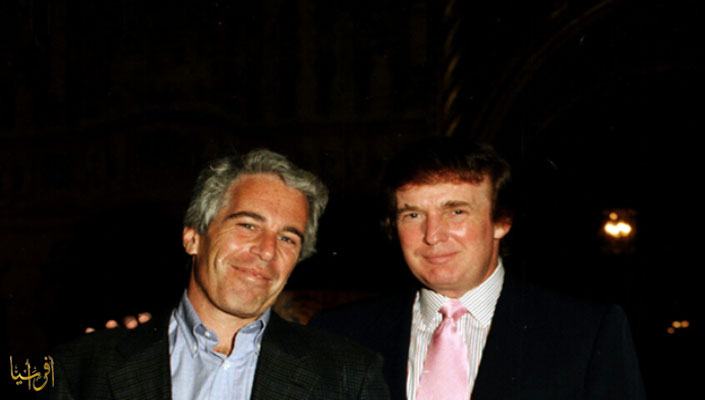
Afrasianet - In an investigation, the New York Times revealed how the relationship between the late sex offender Jeffrey Epstein and current U.S. President Donald Trump "arose through the pursuit of women."
What did Trump say about his appearance in Jeffrey Epstein's photos?
According to the New York Times, Jeffrey Epstein was described as a "wonderful person" and "very fun to be around." As for his relationship with Donald J. Trump, according to the changing accounts, "it wasn't official," they attended many of the same parties, but they "weren't socializing," they weren't real friends, they were just business acquaintances, or "there wasn't a relationship at all." Trump said on one occasion: "I wasn't a fan of his, that's all I can say."
For nearly a quarter of a century, Trump and his representatives have presented variable, and often contradictory, accounts of his relationship with Epstein, a relationship that was sometimes captured by community photographers and news clips before ending in a dispute in the mid-2000s. Since Epstein died in a Manhattan prison cell during Trump's first term, the relationship has come under intense scrutiny, and with questions about what the president knew about Epstein's abuses threaten to swallow up his second term.
The controversy has shaken Trump's firm grip on his grassroots like never before. His supporters demanded to know why the administration didn't act more quickly to uncover the secrets of a sex offender. In November, after months of resistance to pressure for the release of more federal documents related to Epstein — and facing a rare rebellion among Republican lawmakers — Trump backed down and signed legislation requiring the release of those documents starting this week.
According to the New York Times, Epstein had a knack for befriending influential people, some of whom were implicated in the constant scrutiny of his crimes. For months, Trump has aggressively sought to get himself out of the limelight, calling questions about his relationship with Epstein a "democratic hoax" and urging his supporters to ignore the case entirely.
A New York Times investigation concluded there was no evidence of Trump's involvement in Epstein's abuse and sexual exploitation of minors. But the relationship between the two men was much closer and more complex than the president currently admits.
Since the late 1980s, they have developed a bond so strong that those who knew them thought they were best friends. Epstein was then a relatively little-known financier, whose wealth and size shrouded in mystery, while Trump, who is six years older, was a highlighted, high-profile real estate heir. Neither drank alcohol or used drugs. Their pursuit of women was a game of vanity and domination, with women's bodies being turned into currency.
For nearly two decades, as Trump toured party circles in New York and Florida, Epstein was probably his most trusted companion. In the 1990s and early 2000s, they frequented Epstein's mansion in Manhattan, the Trump-owned Plaza Hotel, and one of Trump's casinos in Atlantic City, as well as their Palm Beach home. They also visited each other's offices and spoke frequently on the phone, according to former Epstein employees and women who spent time at his home.
Epstein was discussing topics such as tax havens, international affairs or neuroscience with other men, but with Trump he was talking about sex.
Stacey Williams, who rose to fame in the 1990s as a star in swimsuit editions of Sports Illustrated magazine, said in an interview with the newspaper: "I think it was a prize hunt." In previous posts and interviews, she described how Trump harassed her in 1993 at Trump Tower while Epstein, whom she was dating at the time, was watching. "I think Jeffrey liked the idea of him dating a well-known model, and that Trump was after me." Trump has denied her account.
To highlight their friendship, The New York Times interviewed more than 30 people, including former Epstein employees, victims of his abuse, and others who crossed paths with the two men over the years. The newspaper also obtained new documents, and reviewed judicial records and other public documents.
Many of those interviewed by the newspaper asked not to be identified, fearing for their safety from Trump supporters, who have used the influence of the federal government to target and punish his political opponents. A statement released last month by more than two dozen of Epstein's victims said they had already received death threats to demand full disclosure of the government's investigation.
Over the years, Epstein or his partner, Ghislaine Maxwell, have presented at least six women — who were later accused of solicitation or abuse — to Trump, according to interviews, court testimony and other records. One of them was a minor at the time. None of them accused Trump himself of inappropriate behavior.
One woman, speaking out for the first time, said Epstein forced her to attend four parties at his home, all of which Trump attended. In two of them, Epstein directed her to have sexual relations with other male guests.
In an email released by Congress in November, Epstein boasted that Trump had "gifted" a 20-year-old woman he was dating in the 1990s. During a joint flight in the early 1990s, Trump harassed one of Epstein's female employees, telling her he could have any woman he wanted, another employee said of the incident. A third employee said Trump would sometimes send cards to models for Epstein to show "as if it were a menu."
Epstein, who claimed he needed three "orgasms a day," had exploited or abused hundreds of women and girls before his death, which was classified as a suicide. Trump does not face charges of sexual abuse of minors. But during and after his friendship with Epstein, he was pursued by numerous accusations of sexual abuse and abuse, many of which came to light during his successful 2016 presidential campaign.
Nearly 20 women have publicly accused Trump of harassment, forced kissing, or sexual assault, behavior he had previously boasted about getting away with because of his fame, before later denying it. In 2023, author E. Jane Carroll won a $5 million civil judgment against him for sexual assault and defamation.
In response to detailed questions from the newspaper, White House spokeswoman Carolyn Levitt said in a statement: "This is a fake news story that is not worth the paper it was written on, and it is just an old recycling of decades-old false accusations against President Trump. The truth will remain the same no matter how much the New York Times tries to change it. "President Trump did nothing wrong, and he kicked Jeffrey Epstein out of Mar-a-Lago because he was a disgusting person."
It remains unclear what new information might emerge under the new law passed by Congress, as the legislation allows the administration to withhold records that reveal the identities of victims or classified material, as well as documents that could harm ongoing federal investigations.
Trump denies knowing about Epstein's abuse of underage girls. But emails released in November showed Epstein hinted at the opposite, writing in 2019 to journalist Michael Wolfe, "Of course he knew about the girls, because he asked Ghislaine to stop." The full context of that statement remains unclear.
In a 2010 affidavit, Epstein was asked if he had socialized with Trump in the presence of girls under 18, and he refused to answer on the grounds of his constitutional rights.
Sex talk and office hours
The phone sometimes rang in Trump's office at Trump Tower. The caller — "the mysterious Jeffrey," as Trump described him in a 2004 business book — didn't mention his last name, and he didn't need to. Similarly, Epstein's office phone rang several times a week in the mid-1990s, and Trump was on the line.
One of Epstein's aides, according to the New York Times, recalled that Trump was talking at length about his sexual adventures, while Epstein was enjoying embarrassing her. She recounted a call in which the two men discussed crude details about a woman's body, and another in which Trump talked about having sex at a pool table.
Other testimonies confirmed that these calls had been going on for years, touching on beauty contests, fashion shows, and even women's preferences by country.
Artist Maria Farmer, who has accused Epstein and Maxwell of assaulting her, said Epstein once summoned her to meet Trump, who "looked at her lustfully" before Epstein said, "It's not for you."
Although the White House denied that Trump had visited Epstein's office, multiple testimonies, including that of Epstein's brother, confirmed that he frequented him. Handwritten notes dating back to 1994 also showed repeated instructions to call or respond to Trump, and to invite him to events at Mar-a-Lago.
Their relationship was marred by jealousy and contempt, with Epstein criticizing Trump's business prowess and once complaining that he was asking for financial aid, including boarding his private jet.
Rewriting History
In the early 2000s, Epstein — who had become extremely wealthy and well-connected — seemed less satisfied with the mystery surrounding his life and work. In 2002, in a move that sounded like a call for public scrutiny, he arranged a humanitarian flight to Africa on a plane that included former U.S. President Bill Clinton and a host of celebrities. Details of the trip were soon published in the "Page Six" column of the newspaper New York Post." Shortly after, New York magazine published the first extensive dossier on Epstein. Trump provided the headline quote: "It's so much fun. It is even said that he loves beautiful women as much as he does, many of whom are young."
But in later years, their friendship deteriorated. Exactly when that happened, and why, is unclear. As the accusations against Epstein gradually began to emerge in the mid-2000s, the narratives of Trump and his representatives about their relationship and its end began to change. Epstein was reportedly expelled from a Mar-a-Lago resort for inappropriate behavior with a masseuse or a member's daughter. Or Trump barred him because he hired employees or because he was a "suspicious person."
The first public signs of the breakup appeared in 2007, in an anonymous Page Six column, coinciding with Epstein's negotiations on a plea deal to settle the first federal and state cases against him. The newspaper reported that Epstein was denied entry to Mar-a-Lago for luring " a masseuse of about 18 years old." The news appeared to be referring to Virginia Giuffre, who said she was recruited by Maxwell from the spa days before her 17th birthday in 2000 — when Epstein and Trump were still close.
Years later, when Giuffre made her allegations public, Epstein wrote to Maxwell expressing surprise that Trump had not come under further scrutiny, noting that his friend had "spent hours at my house" with Giuffre. Maxwell replied that she had been thinking the same thing. In testimony in 2016 — when Trump was a leading candidate for the highest office in the country — Giuffre said Trump had not sex with her and that she did not recall seeing him at Epstein's homes. She died by suicide last April.
In 2009, Brad Edwards, a lawyer for a group of Epstein's victims, sought to question his circle of powerful friends. He wrote in his book that Trump quickly agreed to a phone call. He told him that Epstein was just a business acquaintance, that he did not remember exactly why he was fired from Mar-a-Lago, and that the last time he saw him was at a business meeting at Epstein's home in Palm Beach before the charges surfaced.
However, in early 2015, as Trump began exploring a presidential candidacy, reports of Epstein's legal troubles continued to describe him as Trump's friend. Trump and his representatives became more intense. Alan Garten, Trump's top aide and lawyer, told BuzzFeed News that Epstein was "just one of thousands of people who visited Mar-a-Lago." The following year he was more decisive, reporting to Fox News: "There was no connection between Jeffrey Epstein and Donald Trump. They weren't friends, they weren't socializing."
When asked about Epstein in 2015, Trump replied evasively: "He was definitely a community man, and since the place is a small island, he got to know a lot of people," referring to Palm Beach. "When I started reading about different things and then some things were proven, this is a different world, a different planet," he said.
But interviews and public records suggest that Trump sometimes socially interacted with women who accused Epstein and Maxwell of solicitation or abuse. The federal case against Maxwell described her role in luring three victims under the age of 18 between 1994 and 1997. One of them, known in court records as "Jane Doe," alleged in a separate civil lawsuit that Epstein took her to visit Trump at Mar-a-Lago in 1994, when she was about 14 years old.
According to the complaint, Epstein jokingly shoved Trump with his elbow, "That's good, isn't it?" Her case ended in a settlement with Epstein's estate. In 2021, during her testimony at Maxwell's trial, she said she participated in Trump's "Miss Teen USA" pageant.
Jack O'Donnell, who ran the Trump Plaza Hotel in Atlantic City for several years and then wrote a book critical of Trump, recalled that Trump once arrived at the casino just after midnight one September 1989 with Epstein and three young women.
The state's gambling inspector identified one of the women as tennis player Gabriela Sabatini, who was 19, younger than the legal age to enter the casino. In a phone call on Monday, the inspector told O'Donnell that All of the women looked "very young." Shortly afterwards, O'Donnell called Trump to let him know.
Trump said, as O'Donnell recalls, "yes, Jeffrey likes them little girls." Then he added, "They're too small for me." O'Donnell had previously told Slate magazine about the incident, while the White House described his account as fabricated. Attempts to reach Sabatini were unsuccessful.
Whatever the reason for their subsequent disagreement, Epstein remained obsessed with Trump. In the years since their last known communication, he exchanged hundreds of emails with others in which he mentioned his ex-boyfriend.
As Trump's political career took off in the mid-2000s, Epstein's resentment began to grow. Even as he tried to regain his influence within Trump's world, he was mocking and criticizing him in private, calling him "crazy" and "incredibly evil," according to congressional messages.
The messages showed that he resented Trump's attempts to distance himself from him. His older, smoother former friend seemed immune while he was once again surrounded by scandals as more victims came forward with their stories. In a 2017 taped interview with writer Michael Wolf and published by The Daily Beast last year, Epstein described what he said was Trump's method of trying to seduce his friends' wives. When Wolf asked him how he had such intimate knowledge, he replied: "I was Donald's closest friend for 10 years."
In emails, he hinted to his friends that he could bring down Trump, without explaining how.
