
• Will the War Rebuild a Unified Arab Strategy?!
Afrasianet - Mohamed Abd El Azim Al Ajmi - As is well known according to the traditions of wars and the inevitability of history, neither the Arab region nor the world will emerge from this war as they entered it, otherwise there would be no need to ignite it, the war must undermine buildings to take their place, shake up alliances to form new alliances in their place, and for countries, regions and regions to reconsider their long-term strategy and their current and postponed goals.
Field Commander Marshal Montgomery asked the writer Mohamed Hassanein Heikal this question in one of his interviews: "So what is your Arab strategy now?" Heikal replied: "Achieving Arab unity at any level that circumstances allow," and Montgomery repeated the question: Is there enough among the Arab peoples to achieve this strategy and achieve this great project?
The writer replied: In the Arab world, are not the bonds of language, culture, history, race, religion and neighborliness enough? He replied: Yes, it is enough.
This was the idea of building a comprehensive Arab unity under a unified Arab leadership, and perhaps the project was impossible due to many factors that cannot be mentioned, when the idea of partition (Sykes-Picot) came to him, and then came after the liberation of nationalism, Baathism and socialism, passing through the (Qatari state) as an alternative to the idea or the Western nation-state.
Actively seeking the right of the Arab side to possess peaceful nuclear energy – and military energy – if necessary – if the Israeli threats to possess nuclear bombs remain.
The idea of the Qatari state (the homeland), which was introduced to the Arab mind and thought during the 1980s and 1990s, is centered around the homeland with its narrow political and legal concept, shared interests, and convergent visions, where there was relative stillness before and after the Iraq war.
Now, however, this idea is no longer effective or successful in light of the force majeure changes that are imposing itself on the region and the world, and the talk of the ongoing Gulf war.
Now, during and after the end of the war, we find not only the conditions permitting, but also forcing the Arab region rulers and peoples to strive to develop a unified Arab strategy, even if it cannot be comprehensive at all levels, no less the first and foremost:
• The formation of a joint Arab force, which has become inevitable by events and realities, as stated in the Damascus Declaration (1991), and then the transition to a cooperative economic and political package that is indispensable to support this Arab power.
• Information cooperation at the level of systems allows the establishment and rooting of this strategy in the short and long term, as Arab national security – based on the previous proposal – is no longer feasible to be a single security, but a collective or comprehensive security (Arab rather than Qatari).
• Formulate a unified or integrated Arab vision towards geopolitical issues in the region, especially the Palestinian issue and the proposal for a two-state solution, as well as Sudan, Libya, Syria, and Yemen, and seek to convey this vision to the world, and form diplomatic task forces to resolve these issues and defend them vis-à-vis the international community.
• Reconsidering the shape of Arab-Israeli relations, especially towards hostile Israeli policies, which do not seriously seek a satisfactory solution to the Palestinian issue, but still pursue strategic military superiority, blatant regional expansion at the expense of neighboring countries, and creating a continuous state of confrontation to ensure the continuation of the spurious Zionist idea.
• Reconsidering the shape of Arab-Arab relations, and forming committees to resolve the ongoing disputes imposed by the region's conditions with the major world powers, provided that these disputes do not create separate or intermittent visions of major fateful issues.
• Reconsider the Arab Party's historical right to manage or participate in the management of international corridors (Bab al-Mandeb, Strait of Hormuz, Red Sea, and Arabian Gulf), and the extent to which this right plays a role in avoiding international clashes and regional wars.
• Striving for the right of the Arab side to possess peaceful nuclear energy – and military energy – if necessary – if the Israeli threats to possess nuclear bombs remain, as well as the Iranian side that strives to do so, which disturbs the balance of power in the Middle East, and activates ongoing conflicts and clashes due to the imbalance of power.
• Building a joint economic power that represents an Arab pillar in an industrial technological renaissance that can compete with or confront that scientific renaissance in the region (Turkey, Iran, and Israel) as an example.
Consequently, the exit from the strait of the future or new importing party, especially military technologies, with the asymmetry with the ocean, to the capacity of the manufacturing or resourced party, and the Arab scientific or economic mind will not be able to carry out such tasks if it has the capabilities, means and resources.
The world is now being forcibly reshaped (by wars) and voluntarily (by the revolution of digital technologies and information), and it will be useless for the Arab region to be absent from such change.
As for the "Arab technical and scientific mind", I do not think that it is less powerful and efficient than the European and American minds, and that allocating budgets for scientific missions and scientific research at the level of the Arab League, rather than at the level of Arab countries, is a necessity that imposes itself to transfer the Arab region to a productive mind, especially with the openness and creation of many alternative cooperative opportunities for the European and American West.
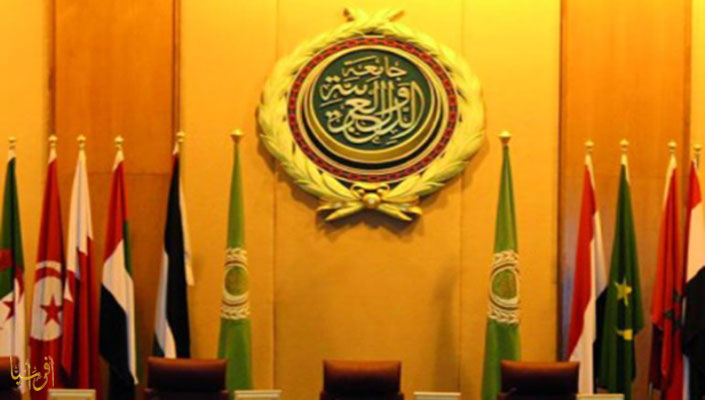
As for the Arab League, which has turned into a form of Arab routine or tableaux brought by the factors of the times, as well as other international alliances and groupings, and what the European Union and NATO are far from us, we have seen a state of disconnect between American thought and the new reality and European countries towards international issues, contrary to what was shared by visions in the first and second Iraq wars (1991, 2003).
The Arab League is in urgent need of restructuring, or expanding the circle of alliances in the region (Turkey, Pakistan, Malaysia, Indonesia), where these countries, as economic, military, and technical powers, do not have political or ideological visions separate from the Arab entities and their league, but only need to expand the Arab vision to rebuild a strategy (near and long-term).
As for retreating and insisting on the idea of the former Qatari state, it is more like a case of political and military suicide, and we have seen, so far, the feasibility of the declared and undeclared alliances, and the cooperation that Iran has made with the major countries (China and Russia), which made it more capable of continuing the war against the power of the United States and Israel, which is equipped with the latest military technologies, and the intersection of interests that opened the information bridge (Sino-Russian) to the Iranian ally.
The world is now being forcibly reshaped (through wars) and voluntarily (through the revolution of technologies and digital information), and it will not be worthwhile for the Arab region to be absent from such a change, either to choose it voluntarily and keep pace with the world with its changes, or to be forcibly swallowed up by the traditions of change and change, and then "no hour of regret".
