
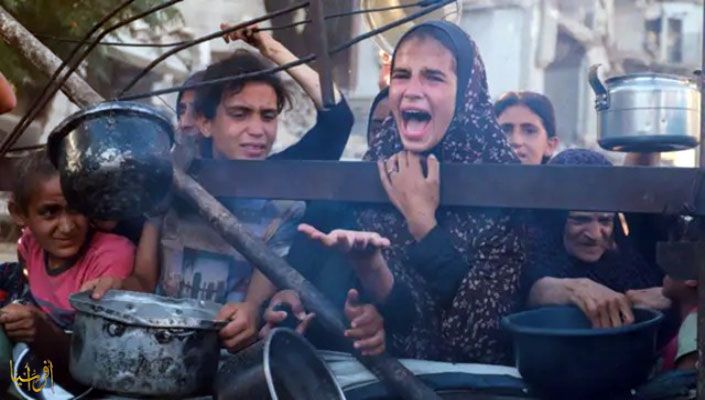
Afrasianet - The ceasefire in the Gaza Strip does not appear to be being implemented as announced by the US president on the basis of which the World Peace Council was formed, which has so far failed to carry out any of the tasks it was supposed to do.
Human Rights Watch says that the humanitarian infrastructure that supports life in Gaza remains at risk more than six months after the October 2025 ceasefire agreement.
As the Peace Council prepares to brief the UN Security Council on May 21 on the new six-month progress report, the Israeli authorities are undermining the lifeblood of humanity.
Ongoing Israeli attacks have killed at least 856 Palestinians and injured 2,463 others, according to Gaza's Ministry of Health.
The Peace Council, presumably authorized by UN Security Council Resolution 2803, istasked with assessing the parties' commitment to the comprehensive plan to end the conflict in the Gaza Strip .
For example, the protection of aid is at the heart of the plan, along with the restoration of basic civilian infrastructure. But the volume of aid remains well below the required levels, and vital humanitarian access routes have been repeatedly blocked, according to the UN Office for the Coordination of Humanitarian Affairs (OCHA).
"The plan was supposed to bring convenience. Instead, Palestinians in Gaza are still hungry, have no access to medical care, and civilians continue to be killed," said Adam Cogle, deputy Middle East director at Human Rights Watch.
Security Council, this is what life looks like after six months
In its May 15 report, the Peace Council said that aid distributed by UN agencies and partners increased by more than 70 percent during the reporting period compared to pre-ceasefire levels, and that "basic food needs have stabilized for the first time since then.
The Council's key figures overlook that the volume of aid has been reduced since early on.
2026 has not recovered from what it was before the start of the war between the United States, Israel, and Iran in late February, and it has never reached the minimum that the United Nations says is necessary.
Four UN agencies warned in December 2025 that famine, which was postponed just weeks ago by a ceasefire, could quickly return without continued access and supplies.
On February 28, 2026, with the start of Israeli-US military operations against Iran, Israeli authorities closed all crossings into Gaza.
The number of trucks that entered in the following weeks fell from a weekly average of 4,200 to just 590, based on U.S. Army coordination figures reported by Haaretz.
The Kerem Shalom crossing was partially reopened on March 3, following reportedly US pressure , and the Kerem Shalom and Zakim crossings remain the only operational entry points for humanitarian and commercial goods.
In the first 11 days of May, only half of aid trucks coming from Egypt were allowed to unload their cargo at Israeli-controlled crossings.
Commercial trucks have begun to enter Gaza in greater numbers again, with 789 private trucks crossing between May 4 and 10, according to the Australian Editorial Office. But total deliveries are still below pre-February 28 levels and well below what Gazans need.
According to the situation report released by the Office for the Coordination of Health and Safety on May 1, relief groups reached about 197,000 families with food parcels in April, covering 75 percent of their minimum daily calorie needs, an improvement from March when food rations covered only half of those needs. But the total.
The World Food Programme (WFP) reported that people in Gaza were eating less in the first half of April compared to March, with most families eating vegetables, fruits or protein once a week or less.
With cooking gas shortages, 68 percent of people are now burning waste to cook their meals, up 13 percent from March.
As of February 5, none of Gaza's 37 hospitals were fully operational, and only 19 were partially operational, according to the Office of Mental Health Affairs. More than 43,000 people have suffered life-changing injuries, one in four of them children, and more than 50,000 require long-term rehabilitation care, according to estimates by the World Health Organization (WHO).
There is no fully functional rehabilitation facility.
Israeli delays in approving specialized surgical equipment limit complex care, and at least 46 percent of essential medicines are unavailable, according to the World Health Organization.
Israeli restrictions on the entry of generators, engine oil, and spare parts are causing disruptions in health care, sanitation, debris removal and humanitarian work, according to the Office of the Pedestrian Health and Public Safety.
Rodents and insects are spreading through displacement camps, and skin infections and other diseases are on the rise, OCHA reported.
UN agencies and aid groups working in the field of water and sanitation warn that severe shortages of lubricating oil and spare parts are causing generator failures.
In Khan Younis, sewage pumping stations have stopped working and untreated waste has begun to flood residential streets. Across Gaza, more than 200 water and sewage facilities have been operating on backup generators for more than two and a half years, most of which are now on recycled oil.
On April 6, Al Jazeera reported that Israeli forces fired at a World Health Organization vehicle east of Khan Younis, killing a contractor and wounding several others.
The World Health Organization (WHO) suspended medical evacuations across Rafah for six days in response.
As of late April, the Archiving Coordination Organization has recorded the deaths of at least 593 aid workers in Gaza since October 2023, including 8 since the ceasefire.
The airstrikes killed an aid worker at a water well in Gaza City on 20 April and a worker for the NGO Ard Insan on 26 April, both of which led to the suspension of basic services.
According to the Ministry of Health in Gaza, more than 1,400 patients have died while awaiting medical evacuation since the takeover of the Rafah crossing in May 2024, and more than 18,500 patients, including 4,000 children, are still awaiting evacuation.
The NGO Geisha reported how Israeli authorities have categorically blocked access for patients in Gaza to hospitals in the West Bank, including East Jerusalem, and Israel since October 2023, although they have at times facilitated limited access to treatment abroad, including through Israeli territory since July 2024.
Since the ceasefire, Israeli forces have moved the "yellow line," the agreed limit for Israeli control of territory inside Gaza, westward beyond its agreed borders. They have established at least 32 forward positions and built what appears to be a permanent or long-term ground barrier, according to an analysis of satellite imagery published by Haaretz.
The Office of the United Nations High Commissioner for Human Rights (OHCHR) has recorded at least 167 Palestinians killed near the line between October 11 and January 21, including 26 children and 17 women.
The line moves west, swallowing water points and sanitation.
According to UNRelief and the Action Agency for Palestine Refugees in the Near East (UNRWA), 127 of its installations are now located behind the line or in areas that require Israeli approval for entry.
Since March 2025, Israeli authorities have prevented the Agency from transporting humanitarian aid directly to Gaza.
The comprehensive plan includes commitments from Israel that remain unfulfilled, including expanding humanitarian assistance. Human Rights Watch has previously raised concerns about other elements of the plan, including the establishment of a peace council without Palestinian representation.
At the inaugural meeting of the Peace Council in February, ten member states and observers pledged a total of US$17 billion for reconstruction against the UN's estimates of US$70 billion requested.
As of April, the board had received less than $1 billion of the pledged amount, with only three shareholders handing over the funds, according to Reuters.
Israel, as the occupying Power, is obligated under international humanitarian law to ensure that the civilian population has access to food, water, medical care, and basic supplies, and to facilitate the rapid and unhindered passage of humanitarian relief.
Starving civilians as a means of war is a war crime under the Rome Statute, which established the International Criminal Court (ICC). The imposition of deliberate living conditions aimed at the physical destruction of a people is an act of genocide under the Genocide Convention.
Human Rights Watch documented in December 2023 that Israel is using hunger as a weapon of war in Gaza, and in December 2024 published a report finding that Israel's deliberate deprivation of water constitutes a crime against humanity that amounts to genocide and acts of genocide.
The Israeli authorities must immediately comply with their obligations under international humanitarian law, including ensuring the unimpeded passage of humanitarian assistance in the Expand aid across all crossings, lift unlawful restrictions on UNRWA and other international humanitarian organizations, andensure the safety of humanitarian workers, Human Rights Watch said.
Governments should suspend arms transfers to the Israeli government, and impose targeted sanctions on Israeli officials credibly implicated in serious abuses;
Suspend preference for tradeagreements with Israel, and promote accountability by supporting the International Court of Justice and the International Criminal Court, including the implementation of ICC arrest warrants.
"When the Peace Council briefs the Security Council, members must balance what they hear against what they hear from the United Nations agencies' reports from the ground," Kugel said. "No representation can hide the fact that aid is not being provided on a required scale, that patients do not receive adequate medical care, and that transit into Gaza remains limited."
