
Afrasianet - Ibrahim Nawar - The war industry is Israel's first profession. It is the engine of growth and expansion, and it is the key to understanding the aggressive Zionist identity that tries to reproduce the image of the "victim Jew" to justify war on others. In this identity, war is the only way to survive.
Thus, war has been and continues to be a tool for melting down and shaping the identity of the state, since it was founded on rape, and it has continued to act against the Palestinian people and the peoples of neighboring Arab countries.
Despite being the most powerful aggressor, Israel, which has not lost a war, still promotes itself around the world as the victim in a sea of enemies.
Israel, which was founded after World War I with the promise of the haveless to the unworthy, has spent 78 years of its life in blatant wars of aggression, including nearly 15 years of regular wars and 55 years of irregular wars with the resistance forces.
From this perspective, it has been able to torpedo the Oslo Accords through settlement policy, and it is now seeking to torpedo the peace agreement in Gaza, known as the "20-point agreement" by putting the issue of disarming Hamas over all else, and the ceasefire agreement between Iran and the United States, known as the "Memorandum of Understanding" based on 14 points, by putting the issue of the Strait of Hormuz on the other side by pressuring the White House from within the United States, and it also seeks to torpedo the ceasefire agreement in Lebanon In each of the previous cases, Israel has not stopped achieving its goals and continuing its aggression, and in all of its history, it has not presented a real initiative because its regional policy is based on domination and the confiscation of the will of others.
Israeli peace means absolute superiority over neighboring countries and peoples, and the use of force to achieve their political ends. In this context, Israel seeks to turn the war between Iran and the United States into a regional war in which the Gulf states are involved, and other countries from outside the region may slip into it.
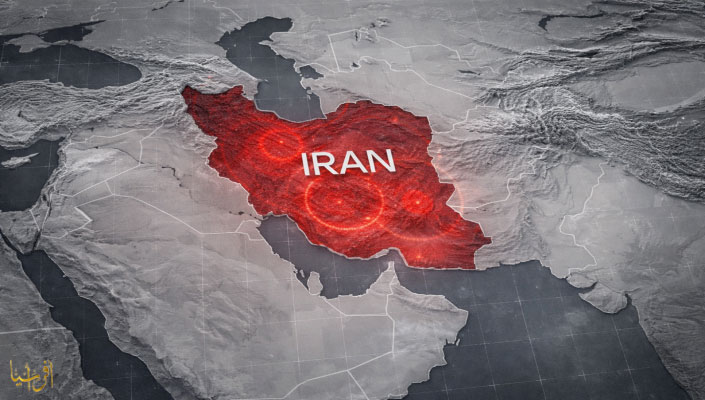
What is happening now in the Strait of Hormuz, in terms of the dramatic collapse of the provisions of the Islamabad Memorandum of Understanding, is an integrated Israeli industry.
Although Washington is still officially operating within the space of intermittent reciprocal military strikes, Israel is betting that those strikes will turn into all-out war, is leading a fierce and organized campaign to torpedo the U.S.-Iran deal signed last month, and is publicly demonstrating its willingness to resume war with the United States on Iran.
In my article on this page on the 24th of last month, about Israel's options for confronting Iran after the deal, I wrote: "Simply put, Israel will not stop trying to torpedo the agreement in every way, from the continuation of the war on the Lebanese front to encouraging public support for the Israeli position in the United States, under the pretext of the "right of self-defense."
It will resort to turning the procedures of the implementation of the agreement into daily sources of media and political headaches, so that the understanding with Iran becomes a central issue in the November elections.
But it will still commit not to engage in an open confrontation with the U.S. president. This does not prevent Israel's supporters from venting their anger on Vice President J.D. Vance, who has been at the forefront of attacking Israel's position on negotiations.
We expect that the Israeli intelligence and security services will work to mobilize extremist groups inside Iran to destabilize the regime on the grounds of rejecting the agreement, as well as encouraging extremist separatist organizations and movements." Leaders in the US Congress, strategic think tanks, and the media are also participating in the Israeli campaign to torpedo the agreement.
The campaign aims to corner the US president, make political accusations against his vice president, and encourage senior figures within the administration itself to publicly criticize the deal, including Secretary of State Marco Rubio and the commander of the Middle East Central Military Command, Admiral Brad Cooper.
A former Department of Homeland Security official commented, "It should be taken seriously because Iran has many means it can use to assassinate the president, including the possibility of sending a drone, a ballistic missile, or even an Iranian fighter jet to try to shoot down the U.S. presidential plane." Trump himself commented on the information provided by Israeli intelligence, telling the New York Post that he had instructed U.S. forces to respond overwhelmingly if Iran succeeded in assassinating him.
The newspaper quoted Trump as saying, "I have instructed, if anything happens, to bomb them at levels they have never seen before." Israel is also working to heat up the fragile ceasefire in the Strait of Hormuz and increase the pace of escalation by coordinating with the Central Military Region Command and the Fifth Fleet Command in Bahrain, which we have been witnessing for almost a week.
Through Israeli pressure within Congress, attempts are being made to accuse the U.S. negotiating team of failing to protect U.S. interests. Zionist lobbyists, Republicans and pro-Israel Democrats are also working to set the stage for a return to promoting the declared goals of the war on Iran on February 28, foremost of which is regime change, tightening sanctions to the maximum, and ending the missile and nuclear programs.
In this context, the US administration has suspended the implementation of commitments included in the first phase of the agreement and has reinstated some sanctions.
At the same time, new legislation is being prepared to provide assistance to the Iranian people, by providing an alternative online communication system in Iran, which allows for easy communication internally and communication abroad, as this is the "best way" to "strengthen opposition to the regime in Iran and document human rights violations," according to a report published by The Hill.
According to a letter from that coalition to congressional committees, "Shutting down the internet has become one of the regime's most powerful tools of repression, facilitating violence, mass arrests, and gross human rights violations, while preventing Iranians from communicating with themselves and the outside world."
It will be fruitful with new weapons that Israel has developed and tested over the past months. That diplomacy also includes promoting plans to establish alternative routes for exporting oil and gas from the Gulf abroad, with the aim of stripping Iran of the strategic advantages of the Strait of Hormuz.
Although Israel's multi-pronged and multi-directional attempts have not completely succeeded in torpedoing the memorandum of understanding so far, they have at least succeeded in increasing the fragility of the ceasefire, increasing the rate of reciprocal military strikes between the two sides (Iran and the United States), halting the implementation of American obligations under the memorandum, and even reimposing sanctions.
At the same time, Israel and its allies in the United States continue to launch an organized media and political attack on Vice President J.D. Vance in the context of downplaying the importance of the negotiating track with Iran and promoting that the agreement represents a major defeat for the United States, which Vance caused by the absence of Secretary of State Marco Rubio from the negotiations.
Influential newspapers such as the New York Times and major television stations such as Fox News are involved in this attack. Israel does not want peace in the Gulf, in Bab al-Mandeb, in Lebanon, in Gaza, in the West Bank, or anywhere in the Middle East, because peace is at odds with its aggressive identity.
The situation will not change unless Israel suffers political defeats, which opens the door to a change in aggressive political doctrine and acceptance of the principles of coexistence and peace on the basis of mutual respect, equality of rights and duties, respect for the right to self-determination of the Palestinian people and the rights of other peoples to security and well-being, and the peaceful resolution of differences.
Israel's political defeat begins with depriving it of the power to turn its military power into a political victory, and is complemented by a strengthening of resistance that builds resilience and responds efficiently, and the development of a regional and global political discourse that benefits from the growing wave of hatred of Israel's aggressive policies.
________________
Ibrahim Nawar - Egyptian writer
________________
