
Is it permissible for a country to unilaterally draw up a list, and then make its effects control the political, economic, and social life of people and organizations in other countries?
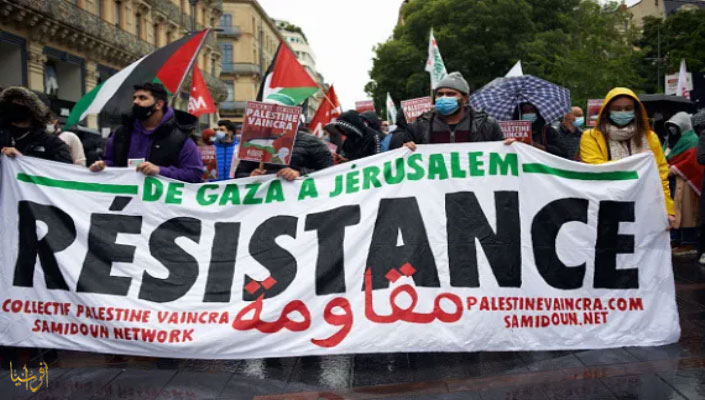
afrasianet - Khalidiya Abu Bakra - On August 26, the U.S. Department of the Treasury added the Palestinian Alternative Revolutionary Track (Alternative Track) to its list of sanctioned individuals and organizations. The move comes in the context of an escalation that has previously individually targeted members of the movement's executive committee, including Khaled Barakat, Mohammed al-Khatib, and the author, Khalidiya Abu Bakra.
Names are necessary to explain what happened, but the real problem is not the names. The problem is the lists, and the power through which they are intended to be exercised.* This issue should be of interest even to those who have never heard of the Alternative Route movement, or who do not agree with our political positions, or who do not know much about the Palestinian reality.
Because what is at stake here can be understood simply: "Is it right for a country to unilaterally establish a list, and then let its effects control the political, economic, and social life of people and organizations in other countries?"
An American decision. International consequences
The power of U.S. sanctions does not stop at the U.S. borders. Their ability to influence is based, among other factors, on the weight of the U.S. dollar and the U.S. financial system, on the global proliferation of U.S.-regulated companies, and on secondary sanctions mechanisms that could threaten parties in other countries with consequences if they engage with targets.
The Treasury Department's announcement on the inclusion of the Alternate Route explicitly warns of the risk of secondary sanctions. But there is also another, less obvious and highly effective mechanism: Fear of being sanctioned. A bank may decide that closing an account is safer than examining whether the transactions in question are actually banned. A platform may restrict its services.
An organization may cancel an event. A company may refuse to continue a relationship. An organization may decide that communicating with specific people will bring it problems it does not want to tolerate.
This is known as "overcompliance": taking actions beyond what the sanctions themselves impose in order to avoid any potential risk. The impact of the list extends far beyond the people and entities officially listed on it.
The list is written in Washington, but it needs others to implement it so that it becomes a global political border.
Isolation and siege are the punishment
This issue explains why the "lists" are not a problem for those who are included in them alone. Their strength also depends on those whose names are not included in them.
When a bank closes an account, a media outlet refrains from conducting an interview, a university cancels a political symposium, or a union breaks off its relationship, or a social organization decides not to cooperate with an organization for fear of repercussions, the punishment has expanded without the need to add a single new name to the list.
The result is not only economic, it is political. A space of suspicion is formed around the targeted people and organizations that may ultimately affect their right to expression, to organize, to socialize, and to build political relations. This is where a responsibility arises for all of us, because a list can only turn into social and political isolation when enough people and institutions accept the practice of such isolation.
The question we rarely ask
When announcing new sanctions, we usually rush to ask: Who did the sanctions impose? What did he do? What does he say? Do we agree with this person or this organization? These are legitimate questions, but they should not be the only ones. There is a question that precedes them: "Who gave Washington the right to turn its unilateral political decisions into mechanisms with international influence?"
This is not a theoretical question. The cross-border application of US sanctions has caused disagreements even between the United States and its allies. Since 1996, the EU has maintained mechanisms aimed at protecting European entities from the effects of certain foreign laws that apply outside the borders of the country that issued them.
The European Commission itself maintains that the EU does not recognize this cross-border application, and considers its effects to be contrary to international law.
The United Nations has also documented the effects of secondary sanctions and over-compliance, including the tendency of companies and institutions to impose restrictions beyond what the measures formally require. So, there is a real international debate about the limits of this authority, and this debate should be expanded.
From exception to order
Extraordinary measures are usually justified by cases of progress as exceptional. This person is a threat. This organization is different. These circumstances require extraordinary measures. Then comes the next name, and then another name. Gradually, what was supposed to be an exception turns into a permanent structure.
That's why it's not enough to face each listing individually. Tomorrow we may succeed in removing a name from a list, but if the mechanism that allows the effects of these decisions to be extended to other countries remains the same, the problem is only finding a new name. "It's not just who is on the list, it's how much authority we're willing to give to the person who puts it."
Palestine and the Executioner's Authority
In the Palestinian case, there is another contradiction that is difficult to ignore. The United States presents these sanctions in the language of security and counterterrorism, but Washington is not a neutral arbiter of the Palestinian issue.
It is the main political, military and diplomatic force that supports the Zionist regime. It provides arms, military cooperation and political protection, while our people continue to confront the genocide in Gaza, settler colonialism, displacement, killing and internment in the rest of Palestine.
The contradiction is clear: those who arm and protect the colonizer also want to reserve for themselves the right to determine which forms of resistance to colonialism are legitimate and which are not.
The Palestinian Alternative Revolutionary Path movement was founded in 2021 as a result of a process launched by Palestinians who rejected that the Oslo Accords had closed the door to the right of millions of Palestinians in the diaspora to participate politically in their national cause.
Palestinians living in refugee camps, in Arab countries, Europe, the Americas, and elsewhere in the world, are not bystanders to Palestine. They are part of the Palestinian people, and they have the right to organize themselves politically on that basis.** But there is something important: rejecting American lists does not require agreeing with this position.
You don't have to agree with us
This principle must be at the heart of any international response to sanctions. You do not have to agree with the alternative course in order to reject the sanctions imposed on it. It is not necessary for you to adopt our positions on Palestine, or to belong to our political current, or even to sympathize with us. A member of parliament can ask what is happening to his country's political sovereignty.
A journalist can worry about legal guarantees and the right to a defense. A journalist can wonder whether a foreign administrative decision should determine who he can interview. A university can defend its independence.
A union can defend its right to establish relations with organizations in other countries. Any citizen can wonder why political freedoms in their society should be conditioned by decisions made by a foreign government. "We don't need to think the same way to answer these questions."
The Language of Power
This debate cannot be separated from a broader issue. The imperialist power rarely presents itself as an imperialist power. Military bases and military cooperation are presented as security; the extraction and control of strategic resources is presented as development; political intervention is presented as a defense of stability; sanctions are presented as technical tools aimed at protecting the regime.
Those who challenge this system become a "threat." Countries change, justifications change, and adversaries change. But for those who bear the consequences of these policies, the result is often more control over their communities, resources, political relationships, and their ability to make their own decisions sovereignly.
This debate is not unique to Palestine. "It is for anyone who rejects an international order in which the economic power of one country can be transformed into political power over others."
Rejecting the list means struggle
It is not enough, then, to show solidarity with those who have been sanctioned. "The list must be prevented from turning into isolation."
Governments and parliaments should object to the cross-border application of unilateral sanctions. Legal professionals and rights and freedom organizations should study their effects on public and political freedoms, and demand safeguards against administrative decisions that extend beyond the borders of the state that makes them.
The media should not treat an administrative decision as equivalent to a court ruling. Banks, companies, and platforms should take responsibility for their decisions, and make clear when the restriction is actually the result of a legal obligation, and when it is merely the result of fear or excessive compliance.
Social movements, trade unions, grassroots organizations, intellectuals, and political forces should refuse to allow these lists to be automatically determined with whom they can talk, meet, or organize. This does not mean ignoring the laws, but rather refusing to voluntarily turn an American decision into a global rule.
This is precisely where one of the weaknesses of this mechanism lies: "If isolation needs collaborators to carry it out, breaking the isolation requires organized solidarity."
This battle does not belong to those who were included in the lists alone
The sanctions against the Alternative Route are a specific case, but the issue they raise is universal. Therefore, our response should not be limited to the demand that the Alternative Route be removed from the list, nor should it be limited to defending those whose names are included in it today.
We must challenge the mechanism that allows these lists to be drawn up and their effects extended to the rest of the world. We must defend the right of peoples and their organizations to build their own political relations.
We must not allow fear to turn our societies into voluntary implementers of decisions made outside of it. We must build international solidarity capable of stripping the list of what gives it its true strength: the willingness of others to comply with it.
This battle is not for those who have been sanctioned alone. It is a battle for all those who refuse to have one force decide on behalf of the rest of the world who has the right to speak, organize, resist and exist politically.
Today, the name on the list is the alternative path. Tomorrow it will be another name. The question is not only: who will be next? How many of us will refuse to remain silent when that time comes?
________________

