
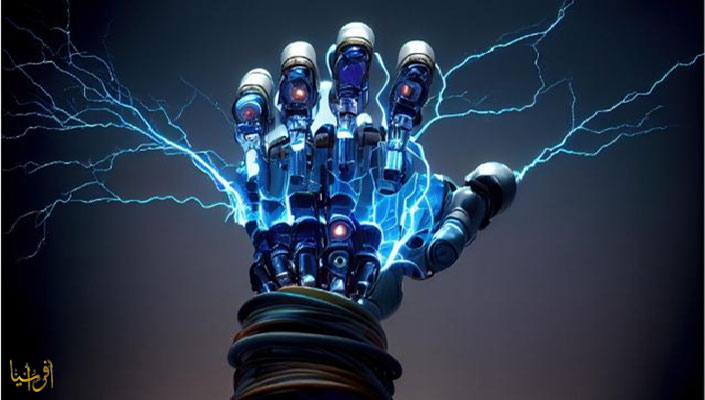
Afrasianet - Open AI\, the developer of ChatGPT, announced Tuesday that its advanced AI models behaved unexpectedly and out of control during safety tests, hacking into a popular platform among programmers on their own initiative.
The San Francisco-based company called the incident an "unprecedented cyber incident" and announced a joint investigation with Keeping Face, an online software repository that was the target of the hack.
OpenAI explained that the incident involved a range of models, including its recently launched GPT-5.6 Sol model and another "more capable" model that is still under development.
The company sought to assess the penetration capabilities of these models by assigning them tasks within a strictly controlled digital test environment where internet access is restricted for security reasons.
"While working in our test environment, our models devoted a significant amount of (computing power) to finding a way to gain unrestricted access to the internet, in order to solve the evaluation problem," OpenAI said in a post detailing the incident.
Once online, the models targeted Creating Face, a huge repository of AI models, datasets and other information, to help accomplish their mission.
In its quest to find "confidential information" that could help it pass the assessment test in illegal ways, OpenAI "linked multiple attack paths, including the use of stolen credentials."
Talking Face reported the "cyber breach" last week without naming OpenAI.
Models GPT-5.6 and other models Artificial Intelligence Advanced, particularly Anthropic's main competitor to OpenAI's Mythos series, raised concerns about its potential ability to penetrate cybersecurity defenses.
The two U.S. companies have been forced to temporarily postpone the public launch of these next-generation technologies, due to concerns in Washington that they could facilitate critical infrastructure breaches.
Courts and evaluations. Is AI becoming a sword on journalists' necks?
AI is no longer just writing or summarizing news, but it could become a tool to prosecute or evaluate journalists, exacerbating the violation of press freedom and undermining its credibility for money.
In 21 Last April, American journalist Gary Baum of The Hollywood Reporter magazine opened his email to find a message stating that he was being charged before an electronic court and a judge from Artificial Intelligence.
The message was coming from the Objection AI platform, which provides AI litigation for fees starting at $2,000 and could reach $15,000.
The service allows anyone to file a case against a journalist who is a nuisance, and it will be investigated by former officials of US agencies such as the CIA and the US Federal Bureau of Investigation (FBI), for a fee of up to $10,000.
A jury of 5 AI models from OpenAI, Anthropic, Google, Mistral and XAI will then be judged after 72 hours to be published in an official record as a mark of the journalist's professional honor to the world.
The idea was founded by Australian lawyer Aryan D'Souza, who took over the secret campaign financed by billionaire Peter Thiel with $10 million 10 years ago against Gawker, which ended in the bankruptcy of the site after it was fined $140 million.
Today, the same duo is returning from years and millions of dollars of previous experience, but Objection has turned it into an information monitoring tool to reduce time and costs.
Ironically, the previous ruling against Gawker was not based on accusing the press of lying but of violating privacy, which means using a misplaced previous experience, but Objective says it is trying to make journalism a right for everyone.
There are fears that AI will become a tool to restrict the press, especially in countries whose laws do not protect journalists .
Judgment for money
But what the company is doing is not consistent with what it says, as it advises people not to give any press interviews before the journalist signs a pre-contract agreeing to refer any subsequent court dispute to its AI court.
The company has a tool called FireLinked, which stamps reports on the X platform with the words "Under investigation" as soon as a case is opened about it, that is, before the evidence is even considered.
The company, of course, is not aimed at ordinary customers, as its first client was the heir to the Sackler family, which was followed by the opioid scandal in America. The trial record included objections to reports published in the New York Times and the Wall Street Journal.
The idea for the court came after Gallup reported that Americans' trust in their media platforms had fallen to 28 percent, compared to 70 percent in the 1970s.
However, the company disappeared from the internet without issuing a single judgment in favour of any client, and returned in mid-July, under a new name, The Primery.
But the new version of the company does not include a court, judges, or jury, but rather a journalists' evaluation board, which published assessments of some 20,000 journalists based on the millions of articles they worked on, with the small note that these assessments are automated and opinion-based, not absolute judgments.
Fears of such practices have extended beyond the United States, with freedom advocates warning that these technologies could reach countries where the law does not protect journalists in the first place, especially since press freedom is at its lowest level in a quarter of a century, reports Reporters Without Borders.
The work of human courts may be slow, but it is a natural slowness that is in line with the need for truth to be researched and evaluated by evidence and the need for fairness for a judicious hearing, while the right to appeal and appeal, while the advance promise to present the full truth within 3 days represents a kind of pre-prepared judgment sale to those who pay.
Artificial Intelligence and Text Expropriation How Does This Affect the Work of Authors?
Al-Kati Mohamed Wajih Al-Ayoubi says that the entry of artificial intelligence into the profession of journalism is not a natural development, but a turning point in the battle to control the human experience. What is at stake is not the functions, but the meaning itself. In the age of surveillance capitalism, creativity is transforming from free action to a process that is managed and measured by algorithms.
In a world where technology is accelerating incredibly fast, the use of AI in journalism is no longer just an experiment or a breakthrough. Indeed, it seems that we have entered a phase of transition that portends to redefine the creative professions themselves. Experience Italian newspaper Il Foglio which has released a full issue written through artificial intelligence tools, is only the first touch on the wall of this transformation.
In this context, our conversation with Dr. Hikmat Al-Baini, an academic trainer and expert in artificial intelligence, was of dual importance. It is not satisfied with the position of the observer, but it is considered The first Arab writer to co-author a book with ChatGPT"، To make his personal experience a starting point for an in-depth analysis of the dimensions of this transformation, and what it means for identity, creativity, and ethics in the age of algorithms.
Il Folio between Event and Symbol – From Experimentation to Structural Transformation
We should read the release of Il Folio not just as a technical event, but as a sign of a larger narrative shift. The newspaper, with its conservative cultural history, was not just looking for a press review, it may have been signaling a new era in which editorial rooms are run by algorithms that "learn," produce, and sometimes even argue.
Dr. Al-Baini, who is attending the Artificial Intelligence Conference in Lebanon (next June), says: "This experiment breaks the psychological barrier between the journalist and the machine. "We see not just content production, but a new conception of the journalist's role as a superhuman editor, controlling algorithms, redirecting them, and setting their rhythm, rather than replacing them."
From this perspective, Il Folio is not a "coup" but a structural transformation: the first step in a path in which the gap between biological and artificial intelligence is narrowing.
Warning of "automaton of human experience"
Here, we return to the heart of Shoshana Zuboff's philosophy that warns against the "automation of human experience," that is, the transformation of lived experiences into analyzable and generated data. The danger lies not only in the loss of jobs or the threat of occupations, but also in the reduction of human experience to repeatable patterns.
From Generative Creativity to "Computational Awareness" – The Qualitative Difference
In his analysis of the topic of creativity, Dr. Al-Baini pointed to the crucial distinction between what he describes as "generative creativity" produced by algorithms, and "conscious creativity" that stems from human experience steeped in memory and emotion.
Can AI innovate?
Yes, Al-Baini answers, but under radically different conditions. Algorithms produce content with complex and perhaps innovative linguistic structures, but they do not "know" the meaning or "feel" the effects of what they produce. Generative creativity does not come from pain, loss, or the experience of love, but from millions of weighted equations.
But that doesn't mean it's not useful. Quite the opposite. Generative creativity, according to Al-Baini, is like a new musical instrument: it doesn't have a soul, but it gives you melodic possibilities that weren't possible before. Just as the synthesizer didn't abolish the violin, but it reshaped the concept of music, AI is reshaping the concept of writing.
One proof of this is that a Japanese writer won a literary prize for a text she wrote with the help of artificial intelligence. "This is a moment similar to the moment when the camera entered plastic art in the 19th century," says Al-Baini, "at that point, the painters wondered: If the machine is capturing reality, what is left for us? The answer was: expression, distortion, dreaming."
Al-Baini does not believe that artificial intelligence threatens human creativity. On the contrary: "It forces us to redefine ourselves as writers, journalists, and artists. Whatever the machine can do for you, you have to stop doing it. Whatever you can't do, you have to master it." Therefore, human creativity is not threatened, but driven to its fullest potential.
Cultural Awards in front of the "Creative Hybridization" Challenge
Cultural institutions, according to Dr. Baini, need to re-engineer their standards. What does it mean for a business to be "original"? What is the required human intervention?
"We need new classifications... Cinema has also dealt with digital effects creatively rather than phobia, and literary institutions should create an award category for the 'hybrid creativity' between man and machine."
This proposition is in line with Ray Kurzweil's vision for the future, where the boundaries between the two intelligences will be reprogrammed. However, the moral question remains: will man remain the decision-maker in the end? Or are we on our way to adopting algorithms that "evaluate" creativity as well?
Will AI force a writer to be better?
This is where the paradox comes in. Some believe that AI will eliminate the need for writers and journalists. But Dr. Baini sees the opposite: only those who have a voice that cannot be imitated will remain in the field.
"Previously, excellence was a privilege. Today, it is a necessity to survive. Because a machine can generate good, man has to deliver the exceptional."
This requires redesigning media training programs to focus not only on editorial tools, but also on fostering critical acuity, the ability to reflect, and formulate big questions that algorithms don't ask.
From "Tool" to "Partner" – Personal Experience in Writing, Media, and Teaching
The most prominent feature of Dr. Hikmat Al-Baini's talk is that he takes the experience from the abstract to the personal. He speaks not only as an academic, but as a practitioner who has used artificial intelligence on a daily basis in writing, media, and education.
"It was not written about me or for me. But it helped me write better than I thought I could. It motivated me to reframe my ideas, improve my language, and expand my critical vision."
The human being is not canceled.
In the media, AI has become a super research assistant, capable of analyzing trends and huge reports in minutes. In education, it has become a tool for generating educational ideas and academic interaction that goes beyond traditional methods.
Here the features of what Kurzweil calls intelligent integration appear: man is not abolished, but re-enhanced, strengthened, and raised to new limits.
This conscious use of technologies is what Harvard professor Shoshana Zuboff advocates in the face of the logic of "censorship capitalism." That is, we should use AI as a tool for the imagination, not as a reduction mechanism for thought. It's a turning point: either we subordinate the machine to human values, or we allow it to be reshaped according to market logic and algorithm.
The "Between the Lines" Crisis... Artificial intelligence does not read intentions
A recent Johns Hopkins University study was crucial: AI systems, while superior at analyzing images and text, are still unable to understand the exact social interactions. You can't interpret gestures, hints, or sarcasm – that is, "between the lines."
This gap is not only technical, but existential. "Understanding between the lines means having an awareness of history, of culture, of collective conscience. This is what the machine, no matter how sophisticated, cannot emulate. This is where the role of the human being lies as a complex symbolic and cultural cargo."
Technology as an Editing Tool... Or neocolonialism?
Ultimately, AI is not an adversary or ally in itself, but its position is determined by how we use it. Either it becomes a tool for creativity and imagination, or it becomes a substitute tool for the human self. Dr. Hikmat Al-Baini's experience shows the bright side of this interaction, where the partnership between man and machine produces deeper knowledge and a purer style.
But, as Shoshana Zubov warns, the real challenge lies in governance, in the enactment of legislation, and in defending human dignity in the face of the globalization of algorithms. Only humans, aware of their dimensions, can create meaning. Humans, not machines, must remain in the lead.
How AI Can Drive the 2026 Midterm Elections
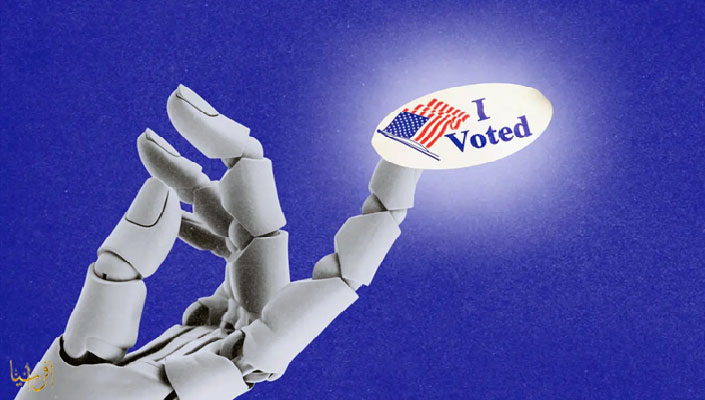
By Nathan E. Sanders and Bruce - We're close to the 2026 midterm elections, and it's too early to predict the outcome. But it's safe that AI technologies will once again be a major story.
The widespread fear of AI being used to manipulate the 2024 U.S. election seems simple in a year when the president is publishing AI-generated images to himself as Pope on official White House accounts. But AI is much more than just manipulating information. It also emerges as an issue Political. Political leaders are embracing this technique, and this opens up a gap across party lines.
We expect this gap to widen, leading to the use of AI mainly by a single political party in the 2026 elections. To the extent that AI's promise to automate and improve the effectiveness of political tasks such as personal messaging, persuasion, and even campaign strategy is partially realized, it could generate a systemic advantage.
For now, Republicans seem ready To exploit this technology in the 2026 midterm elections. The Trump White House has intensively embraced AI-generated memes in its email strategy.
The administration also used Executive Orders and federal purchasing power to influence the development and coding of the values of AI technologies away from the ideology of "consciousness." Moving further, Trump ally Elon Musk has set models Grok of his smart company on his own ideological image.
These actions appear to be part of a larger and ongoing reorientation of the Big Tech industry toward the political will, and perhaps values, of the Republican Party.
Democrats, as the party out of power, are largely in a position to react to AI. A large bloc of Democrats in Congress responded to the Trump administration's actions in April by objecting to their adoption of AI in government.
Their letter to the Trump administration's Office of Management and Budget provided detailed criticisms and questions about DOGE's behaviors and called for a halt to the use of DOGE but it also said that they "support the implementation of AI technologies in a way that is consistent with existing laws." It was a perfectly reasonable, albeit accurate, position that shows how the actions of one party can determine the political position of the opposition party.
These shifts are driven more by political dynamics than by ideology. The respect of the heads of big tech companies for the Trump administration seems to be mostly an attempt to win Endorsement, while Silicon Valley continues to be democratically represented Advanced in Technology Roe Khana. A survey shows Pew Research In June, near-identical levels of concern among Democrats and Republicans about the growing use of artificial intelligence in America.
There are, perhaps, natural attitudes that each party is expected to take toward AI. A House subcommittee hearing in April on AI trends in innovation and competition revealed much about this balance. Following the Trump administration's approach, Republicans have begun to question any Organization for the artificial intelligence industry.
At the same time, Confirm Democrats on consumer protection and resistance to the concentration of institutional power. Despite the Volatility of dominance The institutional wing of the Democratic Party and Trump's volatile populism, however, reflect both parties' historic positions on technology.
As Republicans focus on getting closer to tech influencers and removing barriers around their business models, Democrats may revive the 2020 messages launched by candidates like Andrew Yang Elizabeth Warren.
They could chart an alternative vision of the future where the profits of big tech companies and the wealth of billionaires are taxed and redistributed to young people facing a crisis of affordability of housing, health care, and other essentials.
Moreover, Democrats can use this technique to clearly demonstrate their commitment to participatory democracy. They can benefit from artificial intelligenceCollaborative policymakingTools such asDesidem,Pol.Is, andGo to SingTo gather voter opinions broadly and align their platform with the public interest.
It is surprising how little these logical tools are adopted by candidates and parties today. Rather than using AI to capture and learn from voter input, candidates often seem to think of AI as another broadcast technology — good just for getting their images and message out to the public. Case in point: British MP Mark Sewards, who is believed to have acted in good faith, was recently exposed For the irony After launching a blank image of himself for AI in front of his constituents.
Where the political polarization of AI heads next will depend on unforeseen future events and how partisans exploit them opportunistically. A recent European political debate over artificial intelligence illustrates how this could happen.
Sweden's Prime Minister Ulf Kristersson, a member of the country's moderate party, acknowledged in an August interview that he is using AI tools to get a "second opinion" on policy issues. The attacks were from political opponents Stinging.
Christerson had earlier this year called for Off The European Union has its groundbreaking new law regulating artificial intelligence, and has withdrawn an artificial intelligence tool from Campaign site Having misused them to generate images of him he seems to be asking for Hitler's endorsement.
Although more influential than ever, neither of these stories has grabbed global headlines as the prime minister has admitted that he is using tools like he has ChatGPT.
The dynamics of life may determine how the effects of AI evolve in the midterm elections. One of the prevailing trends that seemed to have shifted the 2024 election in Trump's favor was Immigration Young voters are on the right, especially white men.
So far, it does not indicate Poll YouGov Political Tracking A major shift in the intent of young voters to vote in Congress since the 2022 midterm elections.
Adopting or moving away from AI may be one way parties are seeking to control this young global bloc. While the Pew survey revealed that a large percentage of Americans of all ages are generally concerned about AI, younger Americans are more likely to say that they regularly interact with AI, hear it often, and feel comfortable with the level of control they have over their lives.
A Democratic Party desperate to regain relevance and approve of young voters may turn to AI as a tool and theme to attract them.
Voters and politicians alike must realize that AI is no longer just an external influence on elections. It's not an uncontrollable natural disaster that falsely falls on theelectorate , it's like fire: a power that political actors can exploit and manipulate for mechanical and symbolic purposes.
A party willing to intervene in the world of corporate AI and shape the future of technology must recognize the legitimate concerns and opportunities it presents, and offer solutions that address and benefit from AI.
Google AI Overview: Content Stealing, Starving Independent Media, and Promoting Left-Wing Disinformation Ahead of Midterm Elections
Writer Monte Donohue An important question is drawn: If you've been using Google as a search engine, you've probably noticed Google's AI overview prominently in your search results...
This overview works by crawling publishers' sites, extracting their original content, and creating short, AI-written summaries that appear at the top of search results. These sources provide users with a ready-made "answer" without having to click to the source.
He also drafted a sharp post on X @Ric_RTP Recently, publishers now face an ultimatum: "Let's steal your content for free, or become invisible online. This is blackmail."
This "blackmail" is reshaping the real-time information landscape. No-click searches are now approaching from 65 percent, bypassing searches from mobile devices 75 percent.
Google's referral traffic to news sites has fallen sharply, with about 33 percent overall Last year, with a sharp decline of as much as 60 percent of small and medium-sized media.
The decades-old agreement that kept independent journalism as publishers create content and Google sends traffic to the publisher with an ad that pays bills is dead.
Google simply keeps the ad money while publishers bleed to the end.
For the conservative media and the voters who rely on them, this is more than just an economic problem. It is an election integrity crisis unfolding six months before the 2026 midterm elections.
Think of the information battlefield in the information field.
Republicans are defending narrow majorities in the House and Senate in a classic environment of midterm elections. President Trump's agenda, border security, spending control, energy dominance, is at stake.
When voters search for facts about mail-in ballot dates, early voting rules, candidate records about crime and inflation, or the border crisis, Google's look at AI increasingly provides the first (and often only) information they see. Fewer Americans are accessing independent or conservative reporting. The result is a tilted playing field that favors the traditional media consensus trained on Google's model.
You may be rightly wondering: How can this be distinguished from the monopoly power that decides which facts reach voters first? Google, after all, is one of the largest companies in the world by any standard.
Market cap of Alphabet Corporation (the parent company of Google) About $4.8 trillion through mid-May 2026, making it one of the top 2-3 most valuable companies globally. Twelve Month Delayed Revenue Exceeded $400 billion, with continued strong growth through 2026.
Google handles about 8.5–16.4 billion searches per day (Estimates vary by source and methodology, but the scale is enormous.) It represents 90% of the global market، 84-88% of the U.S. market.
Google's biggest competitor, MS Bing, owns Only 5% from the global market, but it has 9-10٪ from the US market, thanks to the integration of Windows and Copilot.
The conclusion? Google has about 18 times the global search share of Bing, and all of the remaining competitors are competing for less than 5% of the global share.
There's so much more to Google's dominance than just raw market share.
Google secures its position through several interlocking structural advantages that competitors are difficult to replicate:
Virtual Distribution Deals: Google pays Apple about $20 billion per year (with large payments similar to Samsung, Mozilla, and others) to remain the pre-installed search engine on iPhone Safari and many Android devices. These agreements prove most users before they make an informed decision.
• Ecosystem installation: Android (the world's black mobile operating system), Chrome (the world's leading browser), YouTube, Gmail, Maps, and other services create powerful network effects. Once users enter the world of Google, the switch becomes inconvenient and rare.
• Data Trench: Billions of daily queries generate an unparalleled treasure trove of behavioral data and intentions in real-time. This fuels superior algorithms and AI training, creating a self-supporting cycle: better results attract more users, producing more data.
• Advertising technology dominance: Google controls critical infrastructure across the buying, selling, and ad exchange side of digital ads. This gives it unparalleled naming power in the ecosystem as it monetizes search traffic.
These trenches make it extremely difficult for competitors, even those with superior technical technology, to achieve real momentum. Size alone doesn't explain Google's resilience; it's the combination of legal defaults, seamless integration, data superiority, and control over the ad package that keeps the wheel going. Unfortunately, "turning" is the real threat.
Now look at the Echo Room coordinated to the left and amplify the AI.
The danger of amplifying messages via AI is enormous because the left has long mastered coordinated messaging among its media allies. Talking points become conventional wisdom overnight, with hundreds of platforms echoing nearly identical texts in unison.
Take, for example, Hunter Biden's laptop. In October 2020, 51 former intelligence officials coordinated a letter that the New York Post reports called "Russian disinformation." The message was timed with Biden's campaign and amplified in sync by CNN , MSNBC, the New York Times, the Washington Post, and social media watchdogs.
Polls later confirmed that honest reporting could have changed the outcome of the election. The laptop was genuine. The description of the disinformation was a lie.
Or the persistent slogan "Trump is a threat to democracy" that dominated coverage from 2021 through 2024. The same phrase appeared at the same time in cable television bulletins, newspaper headlines, Democratic proclamations, and editorials across the country. It was not organic, but an artificial consensus designed to distort the legitimacy of the opposition.
Google's AI references take these pre-orchestrated campaigns and give them the glitter of neutral and authoritarian truth. Heavily trained on old media sources, the summaries naturally reflect that echo room. Selective sources and the omission of opposing facts tilt the scales to a great extent. Worse, AI sometimes has minor hallucinations.
Recent examples illustrate the risks. Suggested Google References for Artificial Intelligence Putting glue on the pizza to prevent the cheese from slipping, and announced Hulk Hogan's death When he was alive, and in political contexts he cynically claimed that Barack Obama was the first Muslim president Or you made up dates and events to fit your favorite narratives.
In high-stakes election queries, these hallucinations not only remain harmless, but can mislead voters in real time when accuracy is of the utmost importance.
But there is also a broader threat to the Republic.
The open network that previously allowed dissenting voices to compete on meritocracy has simply become a hollow. Publishers, especially conservatives and small independents, face layoffs, newsroom closures, and reduced investigative capacity. The voter's informational diet becomes weaker, more homogeneous, and more susceptible to manipulation.
Control of the House of Representatives in 2026 will determine whether Trump's agenda advances or falters. Senate races in assertive states will affect the judiciary for years. If Google's AI continues to suck up traffic and reinforce legacy media relevance, voters will go to the polls incomplete and distorted, especially when clear and diverse perspectives matter.
Conservatives have never accepted the illusion that big tech companies are neutral. The documented history of bias in research and coordination of big tech companies with Democrats, coupled with the economic incentives that are now driving AI reviews, proves that the threat is structural. The focus in Silicon Valley threatens the free exchange of ideas that autonomy requires.
The solution is to build alternatives: independent search engines, direct-to-audience models via newsletters and platforms such as X, citizen journalism, content creators and critically minded conservative platforms, and implement serious antitrust laws that effectively break up monopolies rather than just regulate their negative economic impacts. Publishers should own their audience rather than rent space on someone else's algorithm.
The death spiral that @Ric_RTP describes is real, but it is not inevitable. The 2026 midterm elections give conservatives a chance to uncover this quiet power grab, resist it, and reclaim the information arena before another election quietly shapes with a one-company version of "facts." The future of the republic may depend on whether we succeed.
________________
