
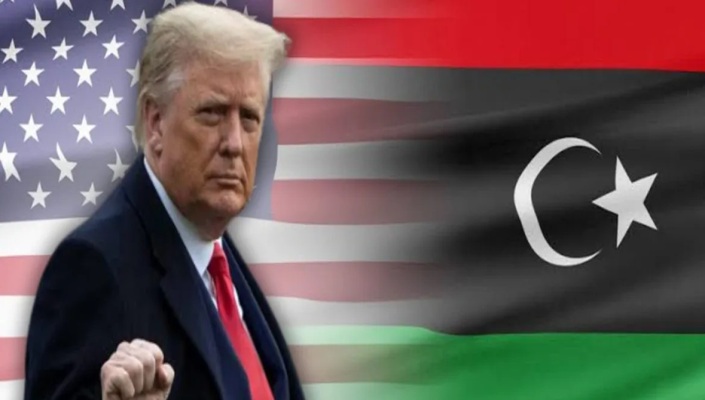
Afrasianet - Thabet Al Amour - Why did Washington decide to enter the Libyan file, and what are the consequences and implications of this? Is this shift in the American role towards the Libyan file a repositioning of the United States in the African continent or just a deal limited to Libya?
Since the fall of Muammar Gaddafi's regime in 2011, Libya has turned into an arena of regional and international competition, and while the American role in the past seemed to teeter between limited involvement and tactical withdrawal, Washington's priorities towards the Libyan file have recently changed and it has decided to enter the depth of the file to compete with the UN role. Libya?
The features of the direct and announced US entry into the depth of the Libyan file began in the briefing presented by the US President's envoy to Libya, Massad Boulos, before the UN Security Council on February 18, 2026, and the briefing began with messages rather than just a passing diplomatic offer, the most important of which was the announcement of the shift towards the Libyan file in the US agenda, as the briefing was not just a presentation from an American point of view of the Libyan crisis, but it seemed to announce the US entry into the depth of the Libyan equation and move from the role The supporter of the UN-led solution to the role of the direct actor who is the sole and sole actor in the solution process.
When Washington pushes the US president's adviser for African affairs to the Security Council to provide a briefing on the Libyan file, it is a clear and explicit announcement that the Libyan file has been put on the White House table, and that dealing with it is no longer just a political role, but a presidential project added to US President Donald Trump's projects in the entire Arab and African regions.
Since last year, the US move towards the Libyan file has begun to escalate significantly through meetings between the Libyan parties, and Washington has held meetings with the deputy commander of the National Army Saddam Haftar and advisor to the Prime Minister of the unity government, Ibrahim Dbeibeh, and there were meetings in Rome in September 2025, and a meeting in Paris in January 2025.
In January 2026, Boulos visited Libya and held a meeting with officials from western and eastern Libya for fruitful discussions, which Boulos described on his X platform account as part of "President Trump's broader peace agenda." During the visit, Massad discussed with the parties ways to unify institutions and promote stability, and in April 2026, AFRICOM will conduct its annual exercise "Flintlock 26" in Sirte with Libyan forces from the east and west side by side. Washington appears to be It will jump towards the approach of unifying the military at the expense of a political solution to ensure that its interests are served only.
What is not known, which reflects the nature of the US entry into the Libyan file and the determinants of this is that Boulos' second visit in early 2026 witnessed the signing of a multimillion-dollar contract between an American company in the field of energy and the government in Tripoli, which means that the economic determinant is present in the American move towards Libya. Boulos was accompanied by officials of major American companies that signed contracts to invest in the energy sector for 25 years.
The American entry into the Libyan file and the announcement of this from the podium of the UN Security Council could have been the entrance to a prospective and expected solution in Libya if it had not been governed by expedient economic determinants based on the principle of the deal according to the logic of President Trump, and if this role was complementary, supportive and helpful to the role of the United Nations and not a rival to it that seeks to remove it after its chronic failure over the course of 15 years.
The US entry into the Libyan file is the most important priority of the US interest and the "economic determinant" Libyan oil, which was reflected in Boulos' speech, which expressed interest in supporting the Unified Development Program agreement signed on November 18, 2025, and highlighting the role of the National Oil Corporation and the Central Bank of Libya.
The presence of the economic file is strongly present in the US moves, which is confirmed by the visits and meetings that witnessed the signing of understandings and agreements in the energy sector, and therefore the economic approach is strongly present in the US policies towards Libya. It is clear that Washington seeks to effectively dominate the Libyan financial resources, specifically oil revenues, because it is aware that the main driver of Libya's parties is the financial resource, and if Washington puts its hand on this, it will hold on to the Libyan file politically, economically, and militarily.
By the way, all of this is happening while the US Treasury is putting its hand deep in the Libyan scene, as it controls financial sanctions, monitors the movement of funds, and imposes its guardianship over the Central Bank and all hard currency transfers, through the International Monetary Fund. This means that Libyan financial policy is directed by an American remote control.
In answering a question about the reasons and motives for the US entry into the depth of the Libyan file, I am reminded here of the statements of retired US General James L. Jones, who served as the former US National Security Advisor and former commander of the US European Command, who wrote in an article published by the Jerusalem Strategic Tribune newspaper in February 2026"Today's Libya represents a crucial strategic test of the readiness of the United States to take a leadership role in the Mediterranean region," he said, warning that the continuation of the current U.S. policy of retreat opens the door for other international powers to fill the vacuum.
The U.S. general identified four reasons why Libya is a strategic issue for the United States: first, preventing the return of extremist organizations, second, maintaining the stability of European allies in the face of irregular migration, third, ensuring the security of energy supplies, and fourth, limiting the expansion of international competitors on the southern coasts of the Mediterranean.
Therefore, it is clear that there is a shift in Washington's positions towards the African continent and the countries of the Sahel and Sahara, and Libya is at the forefront of this transformation not as a result of a late American awakening of conscience nor a promotion of the principle of intervention as one of the principles of American foreign policy, but a shift governed by a purely pragmatic economic interest that seeks Libya's oil and resources only, and it seems that Washington has Russia and China decided to compete and compete in the Libyan arena and later pull the rug from under their feet, claiming that it has an initiative to solve the Libyan file.
In conclusion, Washington does not have the tools to solve the Libyan crisis and does not seem to be interested in a solution as much as it is interested in Libyan oil and financial resources, and therefore the American move in Libya adopts a reality management approach as it is, as there was no talk in Washington's speech and Boulos' briefing about a political solution that guarantees the unification of Libyan institutions or going to a real Libyan national consensus, but decided to jump towards a unified budget, military exercises, economic understandings, and investment contracts.
The American entry into the Libyan file is not a political or humanitarian intervention and does not seek a solution as much as it seeks to achieve its interests, and it is part of an international competition for influence, energy and presence in the Mediterranean and in the north of the African continent, and recently Washington seemed interested in Mali, Tunisia and Chad, and not only Libya, which means that the American approach to Libya is part of an international competition governed by an equation that the more Russian or Chinese presence in a region increases, the greater the American involvement in those The region and Libya are no exception to that equation.

