
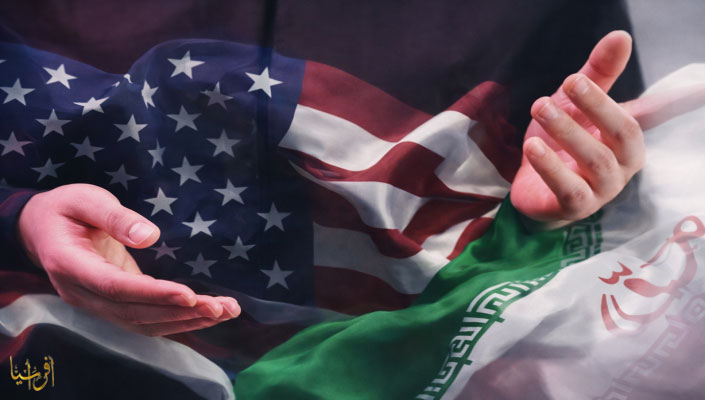
Afrasianet - Noureddine Kaddour Rafi - The Zionist-American aggression against the Islamic Republic of Iran is about to take a very dangerous turn, in conjunction with the relentless efforts to silence the sound of cannons in the Middle East, where several countries, including Pakistan, are leading the efforts to calm the parties to the conflict, while Israel is quick to assassinate a large number of Iranian leaders, while they are at the table of diplomatic negotiations.
In return, Iran is imposing new challenges by closing the Strait of Hormuz, entering the Strait of Hormuz, and threatening to cut off navigation in Bab al-Mandeb, as an indication of the decline of the diplomatic solution that may save the region and the world from a war in which there is no winner except the Zionist occupation, which strives to fulfill the prophecy of "Greater Israel."
The strategy pursued by the Islamic Republic in repelling the Zionist aggression diplomatically is no less solid and flexible than that drawn by the battlefronts in the fields. Or has the war opened up more complex and costly paths for the world?
About Saffron Diplomacy
In order to understand the meaning of saffron diplomacy, it was necessary to follow in the footsteps of the two most prominent political figures who led very complex and sensitive files, namely Mohammad Javad Zarif and Abbas Araqchi, who represent the essence of Iranian diplomacy in the negotiation process with the West, as the 2015 Lausanne agreement on the nuclear program opened the "Iranian saffron fields" to the political tide of the United States of America, in order to avoid a direct military conflict.
After the agreement, the United States announced that it would receive a direct shipment of saffron in 2016, after it was sold through Emirati and Spanish intermediaries.
Although Iran's strategy has been, and still is, based on the principle of negotiation and good neighborliness, the American aggression on it has opened a "third window" between traditional and soft diplomacy called "saffron diplomacy", which is based on four important and effective axes, to the extent that the West has begun to look for ways out of the Iranian impasse.
The four axes on which Iranian diplomacy is based are:
1. Exploiting the sources of power, not energy wealth, by managing the Strait of Hormuz according to the political understandings imposed by the Islamic Republic on navigation, which makes the war a global dimension, without dropping bombs on other capitals.
2. Dismantling political alliances with economic guarantees; When Spain, Italy, and others declare no participation in the aggression, it returns to the West, in particular, its nationalist structure outside the European Union, which is absolutely under American domination. This dismantling has a negative impact on NATO's decisions to adopt a military position in support of the United States.
Iranian policy has formulated an integrated system of equal diplomacy, based on flexibility in dealing with more sensitive and complex issues for the republic, and toughness when both sides resort to the sound of bullets
3. The refusal to negotiate with the activation of indirect mediation is in itself what the saffron growers are doing, as they gather the blossoming pages of the conflict in the Middle East, where everyone is rushing to end the war, rather than overthrow the regime.
To this end, Abbas Araqchi is quick to refute any American claim that he has accepted negotiations, allowing the Israeli occupation to continue its aggression and drag the region to the brink of nothingness.
There is no way to stop the war except by extinguishing the cannons and hearing the voice of peace.4 Iran's scattering of the cards of the military conflict through its alliances with the resistance forces in Lebanon, Iraq, Yemen and elsewhere raises an important question about the nature of the conflict that the whole world is collapsing to end by any means.
The scattering of the conflict does not mean not controlling it, but rather a test of international law and its institutions, and of the Arab and Islamic space about the humanitarian commitment to decolonization in all its forms.
This reinforces the definition of saffron diplomacy, which means making contradictions, such as war and negotiations, escalation and mediation, a tool to expand the negotiation space, by creating a predicament for the opponent instead of a solution, where negotiations become a burden on the other side, pushing everyone to look for a way to survive.
To this end, saffron diplomacy is based on managing the military conflict and directing it towards the negotiating arenas, in order to create more conscious options.
Iran's Predicament
When the United States announced that Operation "Saga of Wrath" had completed its final stages by eliminating the Iranian regime, the republic's missiles were pounding the occupied Palestinian territories in a ironic irony, but it sums up what it means to be a silent voice in the face of an enormous arsenal of diplomatic rhetoric that inevitably outlines the Middle East's impasse.
Iranian politics has forged an integrated system of equal diplomacy, based on flexibility in dealing with more sensitive and complex issues for the republic, and toughness when both sides resort to the sound of bullets.
While Persian geography has fought multiple wars since the Iranian Revolution was announced, the frameworks of diplomacy have been dyeing its political carpets red saffron, opening up the fields of Iran's economy, culture, and identity to the world.
The Islamic Republic's diplomacy was based on a multi-headed and multi-institutional pattern, within a revolutionary framework that was purportedly hostile to the West, but in reality it was looking for an outlet toward a civilizational ambition that would add to the Iranian nation's future and the well-being of its people.
These policies were subject to a revolutionary approach that imposed the need for a narrative of the Iranian Republic in the region, where the regime formed two sides of the same political coin: conservatives led the military and identity, while reformists flirted with the West through openness and mutual interests, but the Islamic Republic's ambitions were complicated by its pursuit of a nuclear program and the development of its missile program, which made it a matter of time before it was militarily targeted. Iran concluded a nuclear deal with the P5+1 group, with the aim of limiting Tehran's nuclear capabilities, in exchange for a gradual lifting of sanctions imposed on it.
Under this agreement, Iran curtailed its nuclear activities and agreed to subject them to international monitoring, but the U.S. withdrawal from it in 2018 led to its faltering and escalating regional tensions.
Iran did not condition its nuclear future on the fate of the republic, but instead pushed the West to undermine the course of negotiations for a avoidable reason: Israel's quest to expand in the Middle East and seek new spheres of influence.
It has used so-called "saffron diplomacy," which makes negotiations a stalemate for the other, rather than a principled solution to end the conflict.
Now, in the midst of this war that has entangled the world in the predicament of the "saffron fields", the threads of an American-Israeli game entitled to overthrow the republican regime, whose ultimate goal is to control the world's energy and navigation resources, are unfolding in order to establish the absolute dominance of liberalism.
Algerian writer
