Afrasiant - Leila Nicolas - The most prominent conclusion drawn from the discussions following the US elections is that a broad segment of the American society has sent a message to the political class: political legitimacy is now more than ever tied to the ability to manage the economy.
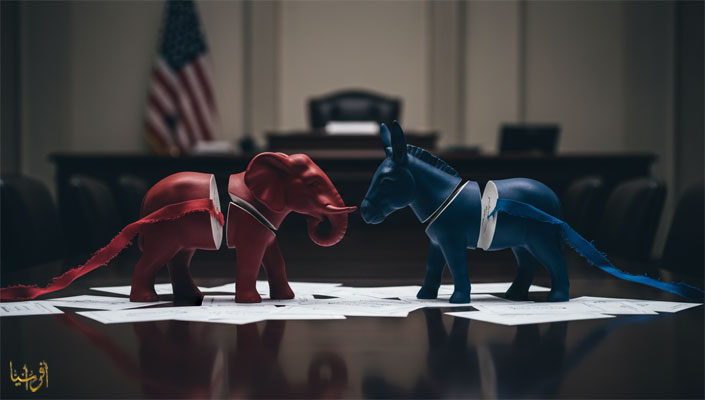
The 2026 US midterm elections reveal that political division in the United States is no longer limited to the traditional rivalry between Republicans and Democrats; rather, it extends within each of the two parties themselves.
The debate now reaches more fundamental questions regarding the position of the United States in the international system, the limits of using military force, the future of relations with allies—foremost among them "Israel"—as well as the repercussions of the war with Iran on the US economy and international standing.
First: The Republicans and the Strategic Dilemma
The debate within the Republican Party after the elections focuses on the reasons for the loss, with reviews centering around several questions:
Has Trump become an electoral liability?
Did the war on Iran cause the party to lose?
Should priority return to the economy instead of cultural files and foreign policy?
Who will lead the party in 2028: Trump or the post-Trump trend?
Here, the party is divided into two currents:
The Trumpist Current: This faction still sees the problem not as the President, but rather as economic conditions and the war with Iran, which raised energy prices and dampened public sentiment.
Other Party Circles: A bolder opinion has begun to emerge, considering that the party's centralization around Trump’s persona—which defined the party’s trajectory over the past decade—has made it less capable of attracting centrist and independent voters. Consequently, some Republican leaders have begun hinting that the party needs a transitional phase allowing it to preserve the Trumpist base without remaining captive to Trump himself.
Second: The Democrats and the Dilemma of Interpreting Victory
In contrast, the major victory sparked a debate within the Democratic Party regarding the reasons that led to this win, igniting a controversy between the progressive and centrist wings over how to interpret the victory:
Progressives argue that voters rewarded a bolder rhetoric.
Moderates argue that the win was achieved because the party presented more centrist candidates in conservative states.
This disagreement acquires special importance because it directly relates to the upcoming presidential race. The Democratic Party is not only debating who will assume leadership, but also what kind of leadership American society needs during a phase where trust in institutions is declining and economic and geopolitical challenges are mounting.
Herein lies the party's dilemma: how to maintain this coalition in the upcoming presidential elections without letting disagreements over the economy, identity, and foreign policy tear it apart.
Third: The Return of the Economy as a Primary Determinant of Electoral Behavior
One of the most prominent conclusions repeated in most media analyses is that the American voter has rearranged their political priorities around the economy above any other issue. Topics such as inflation, fuel prices, and purchasing power have emerged as decisive factors in shaping the electoral mood.
The importance of this point lies in the fact that it reflects a shift from politics based on issues of identity, culture, asylum, and gender transition—which dominated in 2024—toward politics based on direct economic self-interest. This means that the legitimacy of any US administration in the coming years will be increasingly tied to its ability to improve living indicators rather than its attachment to grand ideological slogans.
Fourth: "Israel" from a Matter of Consensus to a Subject of Debate
Historically, support for "Israel" constituted one of the points of greatest consensus between the two American parties. However, developments in recent years and the war with Iran have reopened a wide debate regarding the nature of this support and its limits.
What is new in the American debate within each party is the transition of the discussion surrounding support for "Israel" into a strategic question concerning the calculus of costs and benefits—especially after the war on Iran, in addition to the discussion surrounding the genocidal crimes committed by "Israel" in Gaza.
Even within circles traditionally supportive of "Israel," questions have begun to surface about whether direct American military involvement in wars tied to Israel's security serves American interests, or rather imposes political, economic, and military burdens on Washington that are disproportionate to the gains achieved.
Fifth: The War with Iran and the Revival of Realism
Perhaps the most influential issue in current political discussions is the war with Iran and its economic repercussions. Intellectually, the war has revived an old debate within the United States between two currents:
The First Current: Believes that maintaining American hegemony requires a readiness to bear heavy security and military burdens outside borders. This is the current that managed to direct the decisions of President Trump's administration with Israeli support, intersecting with the interventionist vision historically associated with neoconservatives.
The Second Current: Considers that the priority should be rebuilding the American domestic front and reducing involvement in costly regional conflicts.
This is the "America First" movement, which includes diverse nationalist and conservative trends that nevertheless converge in questioning the utility of the US bearing external burdens that they believe do not yield a direct return for American interests.
The Democratic progressive current converges with this view on certain points, despite a major difference in intellectual and political premises between the two sides.
Thus, the most prominent conclusion from the post-US election discussions is that a broad segment of American society has sent a message to the political class indicating that political legitimacy is now inextricably linked to the ability to manage the economy and avoid costly foreign adventures.
However, this message does not necessarily mean that American society has become opposed to America's global role, as much as it reflects mounting questions about the nature and limits of this role, and whether current external commitments yield returns proportional to their economic, political, and military costs.
From a broader strategic perspective, these transformations indicate that the upcoming American political elite will push the United States toward a phase where foreign policy is measured by how well it serves domestic economic stability. If this trend continues through 2028, we may witness a gradual transition from an America seeking to lead the world at any cost, to an America that is more selective and calculating of costs and benefits.
Leila Nicolas - Professor of International Relations at the Lebanese University