

Afrasian- A new policy has led to the emigration of male citizens. Will they return if the war ends?
The New Yorker magazine publishes an article about the experience of a 22-year-old Ukrainian man named Klim Milchenko while trying to leave Ukraine during the war, and the restrictions he faced on movement and military service.
The article analyzes the political, military, and social situation of Ukraine during the war, focusing on the issue of desertion, where large numbers of men try to escape or hide to escape military service.
The following is the text of the article:
On October 10, I was sitting on a Ukrainian sleeper train in front of Klim Milchenko, a quiet young man from Zaporizhzhia who was on his way to Wroclaw to see his mother, while I was on my way to Kraków for a short holiday.
After Russia's invasion of Ukraine on February 24, 2022, the Ukrainian government banned men between the ages of 18 and 60 from leaving the country, and then lifted the ban this year for men under 23. The 22-year-old Milchenko was taking the legal opportunity to escape the threat of shelling, saying he just wanted to survive.
Before leaving, he sold his bike, said goodbye to his friends, and took a bus to see his father. But upon his return, he was greeted by conscription officers and escorted to the center, where his grandmother visited him two days later. Milchenko felt reassured to see his father, who told him he might be sent to serve but would not be on the front line.
Milchenko boarded the train to Poland with two backpacks, having sent a large box of clothes in advance, spending the trip sleeping or watching YouTube. Thirty minutes before the border, he was informed to have his travel documents ready, after repeatedly checking that his military registration had been updated and watching educational videos on what to say to Polish immigration officials.
The train stopped at the border station in a cloudy and rainy atmosphere, where a drug-detected dog peered over and was followed by a Ukrainian guard who reviewed Milchenko's military record. An hour later, the passports were returned, and Milchenko was named to verify his identity without any problem, while the train was delayed by two hours due to the detention of two unknown men.
The war in Ukraine is a war of attrition. Even before the Trump administration last week presented a 28-point plan to end it, a plan that requires, at least in its initial form, that Ukraine cede territory, reduce the size of its military, and pledge not to join NATO, Russia, whose population is more than three and a half times the population of Ukraine, was in control.
On October 27, Ukrainian President Volodymyr Zelensky told reporters that Russian forces outnumbered Ukrainian forces by eight to one in the battle for Pokrovsk, a strategically important city in the eastern Donetsk region. Then, earlier this month, Russian forces took advantage of the thick fog to capture fifteen square miles in the neighboring Zaporizhzhia region. , a Ukrainian organization that monitors changes on the battlefield, this was Russia's biggest territorial gain in a single day this year.
Elsewhere, Russian missiles have destroyed Ukraine's energy infrastructure, causing power outages across the country and further frustrating war-fed public opinion, which is facing its patience with the Zelensky administration with a corruption scandal involving $100 million in bribes, allegedly paid by contractors specifically in the energy sector. Soldiers' morale has dwindled just as much, if not more, as many await replacements who have yet to come.
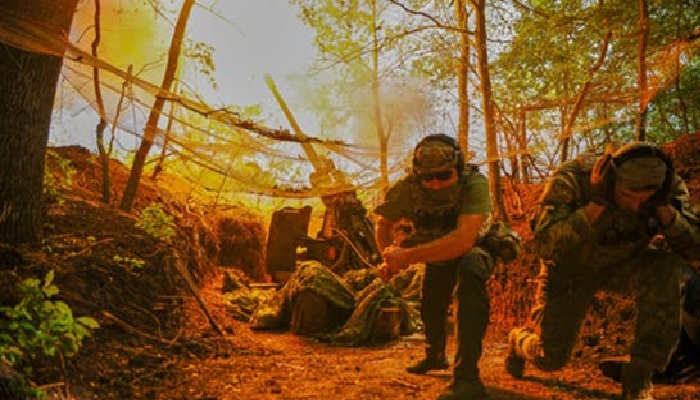
Hundreds of thousands of Ukrainian men have gone into hiding or fled abroad to avoid military service. Ukraine's border guard estimates that about seventy people have died trying to flee through forests and rivers. Many of those who have been recruited and sent to the front lines have abandoned their positions at the first opportunity. A soldier fighting near Pokrovsk told me: "They start walking west. If they are not killed by a Russian drone, they are usually picked up and sent back to the front. Then they wait and try again. No one can force them to fight."
According to reports, Ukraine's prosecutorial public prosecutor opened more than 180,000 cases of escape and absence without permission between January and October this year, bringing the total since the start of the full-scale invasion to 311,000.
In light of the severe shortage of manpower, the Ukrainian government's decision to give thousands of young people the option to travel abroad has sparked controversy among military experts. President Zelensky defended the new law, saying it will help prevent young people from leaving at an early age. He added at a press conference after the law came into force: "If we want to keep Ukrainian children in Ukraine, we need them to complete their studies here, and parents should not send them abroad. But they started leaving before they graduated, which is very bad because it makes them lose their connection to Ukraine." He stressed that the change will not affect the country's defense capabilities.
Simon Schlegel, director of the Ukraine program at the Center for Liberal Modernity in Berlin, said that may be true for now, but it could cause future problems: "It limits the scope of mobilization over the next three years when these men are eligible for service."
The new rule has also been criticized by some of Ukraine's closest partners. In a Nov. 13 phone call, German Chancellor Friedrich Merz asked Zelensky to take action to prevent so many young Ukrainians from coming to Germany, saying, "They must serve their country," even though he may have been referring to his own country as well.
Although the numbers vary, the number of Ukrainian men aged 18 to 22 entering Germany rose from 19 per week in mid-August to between 1,400 and 1,800 per week in October, according to the German Interior Ministry. Since the war began, Germany has granted temporary protection to more than 1.2 million Ukrainians, the highest number of any EU country.
Poland has also seen a large influx of Ukrainian men of the same age group, with more than 121,000 since the end of August, compared with about 34,000 in the previous eight months, according to the Polish border guard. Many of these men will cross Poland on their way to other destinations, but others, like Milchenko, have decided to stay. "I feel like I'm starting a new life," Milchenko said.
In early November, I visited Milchenko in Wroclaw, and we met at a café across the street from a KFC restaurant in the Old Town, where a bronze statue of a dwarf stands, one of more than 1,100 statues scattered throughout the city. Milchenko, tall, slender with short light brown hair, wore a black jacket, gray jeans and sneakers, and was no more relaxed than he had been on the train.
While sipping on a pumpkin-flavored latte, he told me that he has been spending most of his time since arriving looking for work. "I sent my resume to thirty different destinations," he said. So far, I have only received a response from one of the pools. I told them I worked as a lifeguard in Kyiv and got a certificate, but they said they wanted someone else."
Milchenko speculated that the pool was looking for an older person or a native Polish. He heard stories of Ukrainians in Poland being discriminated against, sometimes worse. In September, "forward" paint was sprayed on the cover of a Ukrainian woman's car, and a Romanian man was accused of shooting and seriously wounding him thinking he was Ukrainian, both incidents in Wroclaw.
National opinion polls show that popular support for accepting Ukrainian refugees is slowly and steadily declining, reaching its lowest level since Russia's annexation of Crimea in 2014. Poland's new president, Karol Nowruki, has vowed to tighten restrictions on government support, and the far-right Union party has accused Ukrainian men who have moved to Poland of "burdening taxpayers with the costs of their migration", despite a study by Poland's National Development Bank finding that Ukrainians pay more in taxes than they receive Subsidies.
Whatever his reason for turning down the job, Milchenko tried not to let that dissuade him. "I'm sure I'll find something," he said. He was in the process of getting a Polish driver's license. His mother, who moved to Wroclaw in 2019, has a car that she rarely uses. "My mother's ex-boyfriend is a taxi driver," he said. I don't mind that." He also knew a young Ukrainian who had recently landed a job in a warehouse in the city. "I'm waiting for his opinion on the matter," Milchenko said. If he likes it, I'll apply there as well."
After we finished our coffee, Milchenko and I had bagels for lunch and walked to the Oder River that cuts through Wroclaw. It was a cold, sunny day, and the city's red-brick rooftops gleamed under the clear blue sky. On our way, we passed a 17th-century Baroque church, whose foundations had been dug with bullet holes from World War II. We tried to get in, but the door was locked. "I came here with my mother once," Milchenko said. It is one of the most beautiful churches I have ever seen."
Milchenko lived in Wroclaw intermittently for several years before invading Russia in 2022, during which time he studied and became fluent in Polish, earning a living from delivering food for Uber Eats, working at an Amazon distribution center, and then enrolling in a computer science program at the local campus of a private university. "I had a girlfriend and started making friends," he said. It was probably the first time I felt comfortable in Wroclaw."
In November 2021, he returned to Zaporizhzhia to apply for a new passport, then began the invasion three months later, and was barred from leaving. Milchenko moved to Kyiv in May 2023 in part to be away from the front line, as Russian troops were about 25 miles south of the city. There he got a lifeguard job, and spent the first months on the shores of the Dnipro River.
One day, an air raid alarm went off while he was on duty on the island of Trukhanov. He pointed everyone there towards the nearest shelter, but almost no one went. "Alarms had become part of everyday life by then," he said. Most people, including me, didn't take it seriously." Minutes later, a missile exploded in the water about half a mile away next to a bridge, and Milchenko ran to a nearby brick building and waited for the safety signal.
Like almost every Ukrainian I have met, Milchenko has become intimately aware of tragic and premature deaths. He told me on April 2 that a friend of his named Sasha was sitting in his car outside the main train station in Kryvyi Rih, in central Ukraine, when a ballistic missile landed near him. The explosion shattered the windows of the car and shards of glass scattered on Sasha, killing him instantly. "He had gone to the station to pick up his mother. He was a very kind person. He didn't deserve to die."
We arrived at the Oder River in the heart of Wroclaw, and Milchenko explained that he was grateful that there was a river in the city, as he could visit it without worrying about drone and missile strikes. I asked him how his father was doing, and he replied, "He has some problems with his back. He will soon undergo a medical examination to determine the military tasks he can be assigned." Currently, his father is stationed in a small town north of Kyiv, far from the front line.
As we crossed a bridge leading to the northern part of the city, Milchenko asked me where I came from in the United States. I said, "Kansas." And he said, "Like Tom Sawyer." I laughed and said, "No, he's from Missouri, but he's right next to Kansas." And he asked, "Have you been to the Mississippi River?" I replied, "I visited him. It's huge, like the Dnipro River." He said, "This is what I heard. I hope to see him one day."
Milchenko is unsure how long he will stay in Poland. He would like to take a road trip to Paris after getting his driver's license, visit a friend in Germany, and also consider trying to work on a lobster fishing boat in Norway, saying: "I watched videos on Instagram of Ukrainians doing it. The work seems hard, but it generates a lot of income." When I asked him if he would return to Ukraine if the war ended the next day, he was silent for a long moment, then said, "I don't know. It's a tough question. I don't really know."
Source: The New Yorker