

Afrasianet - In the latest developments of Uria regarding Russian funds, EU member states decided on Friday to freeze Russian assets worth 210 billion euros indefinitely, stressing that they will continue to work to increase the cost of the war on Ukraine for Russia, while Moscow said Europeans will face serious consequences.
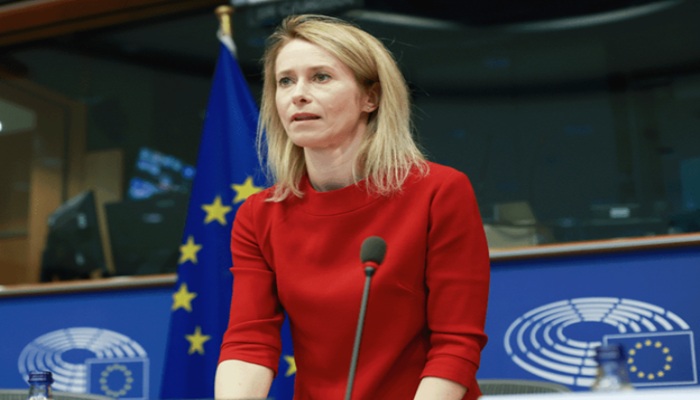
EU foreign policy commissioner Kaia Callas announced that EU countries have decided to keep Russian assets frozen indefinitely, unless Russia pays Ukraine full compensation for the damage it has caused.
Kallas stressed that the EU will continue to step up pressure on Russia to get it to take seriously the negotiation process.
A statement from the Council of the European Union said on Friday that member states had decided to ban the return of frozen assets of the Russian central bank in the countries of the bloc, adding that the decision was taken urgently to limit the potential damage to the EU economy.
The new decision ends a previous process of extending the freeze on Russian state assets amounting to about 210 billion euros every six months, a process that requires the unanimity of all members, thus removing the risk that Hungary and Slovakia will reject the extension.
reservations
Meanwhile, Politico said that an internal document seen by Politico confirms that Belgium has expressed its opposition to the European Union's plan to freeze Russian assets, and that Italy supports it in this position.
The intervention of Italy, the EU's third-largest country by population and voting power, less than a week before a crucial meeting of EU leaders in Brussels, would undermine the European Commission's hopes of reaching a final agreement on the plan.
Italy has upset the European position by drafting a joint document with Belgium, Malta and Bulgaria urging the European Commission to explore alternative options for using Russian assets to support Ukraine in the coming years.
Moscow warns
In Russia's first reaction, Russian special envoy Kirli Dmitriev said that "the Europeans will face serious consequences if they decide to use our frozen assets."
Russia's central bank had pre-empted the European decision, stressing on Friday morning that the proposals published by the European Union to use its assets were illegal, and warned that it reserved the right to use all available mechanisms to protect its interests.
Belgian Prime Minister Bart de Weaver has previously stated that the seizure of frozen Russian assets by the European Commission would be "theft".
The Belgian news agency Bilga quoted the prime minister as saying that there are "more appropriate decisions than the theft of the funds of the Central Bank of Russia."
"This is the state money that we are not at war with," the prime minister said.
The European Commission is considering an initiative to confiscate frozen Russian assets in the EU to use to support Ukraine.
Belgium, Hungary and the European Central Bank oppose the European Commission's proposals in this regard, as well as the Euroclear platform, which holds Russian assets.
Kremlin spokesman Dmitry Peskov warned that any steps taken regarding frozen Russian assets "will not go unanswered" and will have "very serious consequences" for the countries, entities and individuals involved.
Peskov told the Izvestia newspaper: "The president has said that (the government) is involved in this matter, and of course there is already an understanding (of the work). Such steps will not go unanswered, and will have very serious consequences for states, legal entities, as well as individuals."
In this context, media outlets revealed that Japan has refused to join the European Union's plan to confiscate frozen Russian assets and lend them to Ukraine. According to these means, "Japan has made it clear that it cannot use approximately $30 billion of Russian assets frozen on its territory to provide a loan to Ukraine."
The topic was discussed during a meeting of G7 finance ministers on December 8, where Tokyo conveyed its position to Brussels, which was requesting to join plans to transfer the equivalent of Russian sovereign assets to Ukraine.
Japan's finance minister, Satsuki Katayama, ruled out the use of Russian assets for legal reasons, according to an EU diplomat familiar with the meeting.
However, several officials told Politico that Japan's position is tied to the U.S. opposition to the use of Russian assets to fund Ukraine. They explained that Tokyo does not want to ignore its most important ally, Washington.