
Afrasianet - At a session of the United Nations, Israel's Permanent Representative to the United Nations, Gilad Erdan, launched a sharp attack against the members of the United Nations General Assembly , tearing up pages from the organization's charter, in protest against the vote on a draft resolution calling for the expansion of Palestine's privileges as an "observer state."
The Israeli delegate brought to the podium a "small machine" through which he tore up pages of the UN Charter to express his rejection of the vote, after finishing his speech to the General Assembly.
The Israeli delegate used harsh words and insults addressed to the delegates of the countries of the world in the General Assembly, and his dictionary extended from describing the United Nations as "rudeness" to ending his speech with shouts of "Shame on you" in the face of the attendees.
In his speech, Erdan made harsh accusations against supporters of the Palestinian cause, claiming that voting in favor of the establishment of the State of Palestine means a "return to Nazism."
Ahead of the vote on the draft resolution, he said he wanted the whole world to remember this "immoral act", adding that Member States were "tearing up the Charter of the United Nations with their own hands".
"This brazen body has chosen to reward modern Nazis with rights and privileges," Erdan told delegates of member states, adding: "The United Nations is rewarding this country on the anniversary of the Holocaust. Have you lost your sight, or are you afraid of the diplomatic threat from Palestine and its conspirators?"
The Israeli delegate accused the Assembly of violating the Charter by bypassing the Security Council and "making a mockery of the meaning of the love of peace", ending his speech with the words "Shame on you".
It did not stop there, but Israel continued to lead a frenzied and continuous campaign against the United Nations and its international organizations.
Israel is recruiting many supporters in this campaign, such as author Dr. Ludwig Weinberg, who has close ties to Israeli leaders and shares the right-wing ideas of the Israeli government. The aforementioned asks the US administration to review relations with the United Nations even to stop funding it. He accuses the United Nations of anti-Semitism, stressing that the anti-Israel resolutions of the United Nations Council insult the United States and ignore the special nature of relations between the United States of America and Israel.
In turn, instead of the United Nations, Israel proposes to create some alternative structures that would secure the interests of the United States of America and Israel;
The author's argument confirms that Israeli elites believe in the "exceptional" status of their country and ignorance of the national interests of other countries. At the same time, Israel ignores the role of the United Nations in creating Israel and in maintaining international peace and security after World War II.
Nor do the United States and Israel take into account the approach of Arab and African countries to reform the United Nations. They want to salvage their hegemony by limiting the role of non-Western countries in international relations.
Whoever is not with me is against me".. Israel is facing its "international" opponents
Israel is engaged in a conflict with many international organizations on several fronts, under the pretext that it is biased towards the Palestinians, and this conflict has been evident since the outbreak of the war in the Gaza Strip.
Israel's conflict with international organizations is due to a range of reasons that include political, legal, and human rights aspects, as Israel's view of international laws and provisions related to the Occupied Palestinian Territories and the Palestinian-Israeli conflict differs, and it considers these organizations to adopt positions that favor the Palestinians or unfairly criticize its policies.
The following are the most prominent features of the conflict between Israel and international organizations:
1. Conflict with the United Nations:
Israel is highly critical of the United Nations , as it considers the resolutions of the General Assembly and the Human Rights Council to be biased against it. Israel also objects to the appointment of special commissions of inquiry into its work in the Palestinian territories, which it considers biased and unfair.
Israel accuses the United Nations of ignoring incitement to violence by Palestinian factions, saying the organization is overly focused on its military actions and security measures.
2. Conflict with the Human Rights Council:
Israel faces repeated criticism from the UN Human Rights Council, which regularly issues resolutions condemning its policies in the West Bank and Gaza Strip. Israel refuses to cooperate with some of the Council's commissions of inquiry, and considers the Council to adopt double standards and criticize them unevenly.
In 2012, Israel decided to sever ties with the Human Rights Council after a commission of inquiry on settlements was established, and although limited cooperation has returned, relations remain strained.
3. Conflict with the International Criminal Court (ICC):
Israel opposes the ICC's jurisdiction to investigate possible war crimes in the Palestinian territories. It considers that the court interferes in its internal affairs and that it does not have the legal jurisdiction to investigate cases related to Israel, especially since Israel is not a member of the court, as it has not ratified the Rome Statute, which established the court in 2002. As such, Israel refuses to recognize the court's jurisdiction over Israeli citizens or activities in the Palestinian territories.
Israel avoids cooperating with the court and criticizes its decisions, considering that the court politicizes cases and takes biased positions. With regard to
the court's decisions on war crimes, the court has not yet issued final rulings against Israel, but it has opened investigations into war crimes in the context of Israeli military operations in Gaza and settlement activity in the West Bank. However, Israel rejects these investigations as illegal and based on illegal foundations.
4. Conflict with the World Health Organization (WHO):
In the context of the pandemic and criticism of the handling of the Palestinian territories, Israel is facing some criticism from the World Health Organization regarding the access of vaccines to Palestinians, and Israel considers the criticism to be exaggerated and that it is making efforts to coordinate with the Palestinian Authority.
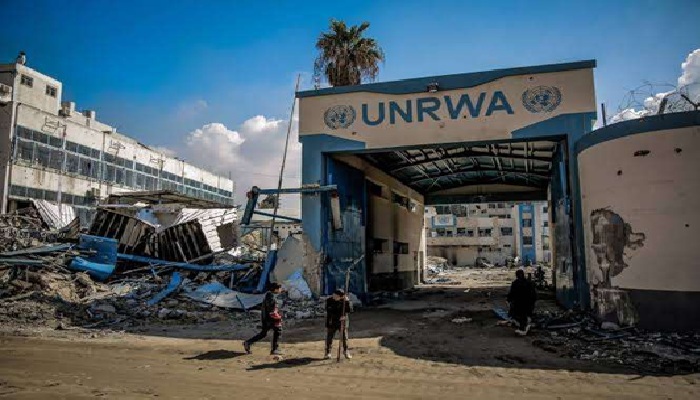
5. Conflict with the United Nations Relief and Works Agency for Palestine Refugees (UNRWA):
Israel adopts a position critical and even rejects the agency's existence and considers it to support the Palestinian cause and increase tensions in the region, rather than helping to resolve it.
Israel accuses UNRWA of perpetuating the refugee issue rather than solving it, by expanding its definition of refugees to include successive generations, and accuses it of tolerating the presence of Hamas and other armed groups within its facilities, especially in the Gaza Strip. Israel also claims that some UNRWA facilities are used to store weapons or facilitate Hamas activities, which UNRWA denies and affirms its commitment to neutrality.
Israel is also calling on some countries to reassess their financial support for UNRWA, and is proposing the abolition of the Agency and the transfer of responsibility for Palestinian refugees to the United Nations High Commissioner for Refugees (UNHCR), which deals with refugees in the rest of the world.
6. Conflict with the United Nations Interim Force (UNIFIL) in South Lebanon:
Israel takes a complex stance toward the forces, officially treating them as a neutral party aimed at ensuring stability on the border with Lebanon, but at the same time expressing concern and reservations about the role and effectiveness of these forces.
While Israel supports the presence of UNIFIL as part of Security Council Resolution 1701, it criticizes UNIFIL for what it sees as a failure to carry out its missions, particularly in monitoring and preventing Hizballah from strengthening its military presence in southern Lebanon.
Israel claims that UNIFIL forces are unable to prevent arms smuggling or counter Hizbullah's increased activities in areas near the border.
7. Conflict with international human rights organizations:
Israel is highly critical of human rights organizations such as Human Rights Watch and Amnesty International, both of which have issued reports accusing Israel of practicing apartheid policies against Palestinians. Israel considers these reports biased and inaccurate, and ignores its right to defend its security against attacks.
As for Israel's position on UN Secretary-General Antonio Guterres, Tel Aviv declared on October 2 that he was "persona non grata" and reiterated on October 12 that it would not revoke this resolution despite the condemnation of this resolution by 105 UN members.
Guterres has been heavily criticized by Israel for his statements on the humanitarian situation in the Gaza Strip, especially after Israeli military operations there. She considers that the position calling for an end to the Israeli occupation in accordance with international resolutions focuses heavily on the suffering of the Palestinians and ignores what she considers to be her security concerns.
It also considers that his call for international investigations into incidents of violence between Palestinians and Israelis is bias against them and tools to distort its image in the international arena.
Tensions between Israel and Guterres have increased significantly during recent conflicts, with Guterres expressing concern over Israeli actions in Jerusalem and Gaza, as well as expressing solidarity with the Palestinian people, prompting Israel to sharply criticize him and describe him as taking a biased stance.
With regard to the UN resolutions that Israel refused to implement, we review the most prominent of them:
1. Resolution 194 (1948) — Right of return: This resolution calls for the return of Palestinian refugees to their homes and compensation for those who do not wish to return, a sensitive and still unfulfilled issue.
2. Resolution 242 (1967) - Withdrawal from the Occupied Territories: Adopted after the 1967 war and demanding Israel to withdraw from the territories it occupied during the war (the West Bank, East Jerusalem, the Gaza Strip, the Sinai Peninsula, and the Golan Heights). Israel did not commit itself to withdrawing from all the occupied territories except the Sinai, which was returned to Egypt under the Camp David Accords.
3. Resolution 338 (1973) - Ceasefire: Adopted during the October War, calling for a ceasefire and the commencement of negotiations to achieve a lasting peace on the basis of resolution 242. Israel partially complied with the terms of the ceasefire, but the negotiations did not lead to a comprehensive solution.
4. Resolution 446 (1979) - Illegality of settlements: The resolution states that Israeli settlements in the occupied territories are illegal and calls for a cessation of settlement activity. Israel has not complied with this resolution and has continued to expand settlements.
5. Resolution 478 (1980) - Jerusalem: This resolution condemns Israel's decision to annex East Jerusalem and to recognize it as its capital, and calls on Member States not to move their embassies to Jerusalem. Israel rejected the resolution and continued to regard Jerusalem as its unified capital.
6. Resolution 497 (1981) - The Golan Heights: Adopted after Israel declared the annexation of the Golan, the resolution demands that such annexation not be recognized. Israel has not complied with and considers the Golan to be part of its territory.
7. Resolutions 1397, 1515, and 2334 - Two-State Solution and Settlements: These resolutions affirm support for the two-state solution and condemn settlement activity as an obstacle to peace. Israel has not committed to halting settlement construction.
8. UN Security Council Resolution 2728 – which called for an immediate ceasefire in Gaza, the release of hostages, and the unhindered entry of humanitarian assistance.
9. Resolution 2735 was adopted in support of the ceasefire agreement with Hamas but was not publicly approved by Israel, citing internal political complications that impede the acceptance of such agreements.
10. Supporting Palestine's Quest
The United Nations General Assembly on Friday announced its support for the Palestinians' bid for full membership in the UN after acknowledging that they were now eligible to join it and recommended that the UN Security Council "reconsider the matter positively".
The General Assembly adopted the resolution on Friday by a vote of 143 in favor, with nine against, including the United States and Israel, while 25 countries abstained.
The 193-member General Assembly's vote is a global poll of how much support the Palestinian bid for full U.N. membership enjoys, a move that would lead to de facto recognition of a Palestinian state after the United States vetoed the bid at the Security Council last month.
The resolution does not provide for full membership of the Palestinians, but it does acknowledge that they are eligible to join it.
The General Assembly resolution states that "the State of Palestine... should therefore be accepted as membership" and "recommends that the Security Council review the matter positively".
The General Assembly resolution would grant the Palestinians some additional rights and privileges starting in September 2024, such as a seat with UN member states in the Assembly Hall, but without the right to vote on them.
Palestinians currently have non-member observer status, a de facto recognition of a state recognized by the UN General Assembly in 2012.
A United Nations commission of inquiry concluded today that Israel is committing genocide in Gaza and that senior Israeli officials, including Prime Minister Benjamin Netanyahu, instigated these acts.
Citing examples including the scale of killings, aid obstruction, forced displacement and the destruction of a fertility centre in support of its genocide findings, the commission added its voice to human rights groups and other organizations that have reached the same conclusion.
The United States of America fully supports Israel, even with the knowledge of many American lawmakers who speak out publicly, and it helps Israel in its campaign against the United Nations, even if it does not announce it directly, so what is the story of the fence that Washington is putting up on the United Nations headquarters?
Dozens of cases of visa denials of representatives of countries and UN-recognized entities over the past decades have been recorded by the United States, which was entrusted with hosting the United Nations headquarters in New York in 1947, giving it a kind of direct control over the access of representatives of countries to the world's most important diplomatic platform.
The most recent and widespread visa denial was in August 2025, when Washington announced the cancellation of the Palestinian delegation's visas ahead of the new session of the General Assembly.
Despite the clarity of the binding provisions of the UN Headquarters Convention affirming the right of states to free access to US territory for UN purposes, the US is relying on legal loopholes in its federal legislation to withhold visas, citing "national security concerns" and accusations of "incitement," "support for terrorism," and "violation of human rights."
This U.S. attitude raises legitimate questions about the motives in light of international criticism that accuses Washington of being selective in applying its officially adopted standards.
What are the historical and legal backgrounds of the visa denial policy? And what do leaders who are effectively denied the presence of the largest UN forums represent? How does politics and law intersect in this scene, which represents a test of international structures as independent or exploited actors?
Historical Roots and the Role of the Host State
Numerous examples have emerged throughout the history of the United Nations that show the United States employing the advantage of hosting its headquarters as a point of geopolitical influence.
In the middle of the last century, for example, the Soviet Union briefly boycotted Security Council sessions in protest against China's representation, granting China's representation at the United Nations to the Republic of China led by Kai-shek in Taiwan, at the expense of the People's Republic of China led by Mao Zedong.
The United States does not stop at controlling the entry of its territory, but imposes other measures that limit the movements of some commanders even if they are allowed to stay. In the 1960s, Washington imposed restrictions on Fidel Castro 's movements within a limited mile.
During the Cold War, Washington continued to adopt this approach against its ideological opponents, and representatives of the Soviet Union, the Eastern Bloc states, and national liberation movements from Africa, Asia, and Latin America faced repeated restrictions.
In the 1980s, countries took the unprecedented step of protesting when the United States under President Ronald Reagan refused to grant a visa to Yasser Arafat in 1988, with diplomats and leaders packing their bags for the historic General Assembly meeting in Geneva as an alternative.
While this is a precedent that was supposed to limit U.S. behavior, subsequent blockade scenarios against various international leaders have been repeated.
In theory, the international community is trying to maintain the UN's independence from the legal or security constraints of host states. In reality, however, the UN system relies heavily on the major power balances in the Security Council, precisely when U.S. interests intersect with political and expedient considerations.
While questions arise about the compatibility of these restrictions with the provisions of the conventions and the norms of international law, Washington seems determined to continue the policy of "selection" justified by domestic legislation and a different political agenda.
Disadvantaged leaders
U.S. visa-deprived leaders represent a broad spectrum of political and ideological orientations that have in common opposition to U.S. policies and their challenge to Western hegemony.
Iran, in particular, has faced a systematic campaign of rejection and restriction that has included its leadership at various levels. In January 2020, Foreign Minister Mohammad Javad Zarif was denied entry to the United States.
Zarif was preceded and followed by dozens of Iranian officials who faced the same fate. Iran's ambassador to the United Nations, Majid Takht Ravanji, has repeatedly complained about the routine and systematic denial of visas to his country's delegations.
Cuban diplomats have faced persistent constraints since the Cuban Revolution in 1959 against the backdrop of persistent ideological hostility dating back to the Cold War.
Venezuela under Nicolás Maduro is another example, where Venezuelan officials have faced increasing restrictions since the 2019 Venezuelan political crisis, when Washington recognized Juan Guaidó as the legitimate president instead of Maduro, as Washington subjected more than 140 Venezuelan officials to U.S. sanctions, and identified nearly 2,000 Venezuelans as potential targets for visa restrictions.
Finally, the denial of the Palestinian delegation to the annual meeting of the UN General Assembly is the most comprehensive and controversial case. In August 2025, Washington not only denied the visa of President Mahmoud Abbas, but also revoked the visas of 80 Palestinian officials, as a preemptive move to influence the country's attitudes and dissuade them from recognizing a Palestinian state.
The Headquarters Agreement and the Loophole in U.S. Legislation
The arguments for the U.S. refusal are based mainly on a patchwork of federal laws and amendments, most notably the Immigration and Nationality Act (INA) with its successive amendments, and various sanctions laws such as the Caesar Act against Syria, the PLOCCA Compliance Act of 1989, and the Middle East Peace Commitments Act (MEPCA) of 2002.
This legislative system gives U.S. administrations wide scope to designate individuals and organizations as "terrorist activity" or support for terrorism.
Although these laws come in the context of Washington's attempt to impose its policies on hostile countries or push them to change their behavior and adopt more coherent policies—whether it is as part of a policy of pressuring for abandonment of Iran's nuclear program , for example, or pushing the PLO to renounce violence—they have raised a number of questions.
How can these texts be reconciled with the 1947 United Nations Headquarters Convention, which imposes an absolute obligation on the host State to grant access to official representatives? Article XI of the Convention requires that the host authorities shall not impose any restrictions on the transit and attendance of accredited delegations. Article 13 also emphasizes the need to grant the required visas.
From the perspective of international law, the 1988 Advisory Opinion of the International Court of Justice asserts that the host State is essentially "obliged" to ensure the access of delegations and officials, and that in the event that domestic law conflicts with the obligations of international treaties, the priority of international law applies.
However, the United States has included in its General Law (80-357) its right to "protect its security and national interests," effectively creating a legal loophole that allows for justification for refusals or restrictions on movement.
Double standards
Decisions to deny visas to officials from countries — whether Palestinian, Iranian, or Cuban — compared to other leaders have sparked widespread debate about selectivity in the application of U.S. standards. Many countries whose leaders are accused of crimes or widespread abuses, some even to the extent of issuing UN arrest warrants, yet no similar restrictions are exercised against them.
For example, in November 2024, arrest warrants were issued for Israeli Prime Minister Benjamin Netanyahu and his former defense minister, Yoav Gallant, as convicted of war crimes in the Gaza Strip, but Washington did not confront them with bans.
In contrast, the United States has taken the initiative to protect Israeli officials from international justice, even imposing sanctions on international prosecutors who sought to prosecute these officials. In contrast, in 2013, Omar al-Bashir was barred from entering the United States on the same charges.
This disparity raises an important and urgent question about the promotion of the use of international law as a tool in the service of major powers only against adversaries, and how is the idea of "countering terrorism" or "protecting human rights" valid if decisions are made according to considerations of geopolitical alliances rather than fixed legal criteria?
Countries such as Russia and China support the rights of delegations under international conventions, but the Security Council itself is divided, and the current balances do not appear to tilt in favor of U.S. interpretations of the Headquarters Agreement.
U.S. Domestic and Domestic Considerations
The Palestinian visa denial is motivated not only by security concerns as justified by U.S. leaders, but also by a complex package of domestic political considerations in the United States. President Donald Trump has built a solid alliance with the evangelical Christian base, which is interested in supporting Israel in any dispute over the Palestinian territories for religious and political reasons.
In addition, he sought to appease an impressive percentage of American evangelical voters who favored a policy of tightening the grip on any practices deemed hostile to Israel.
Israeli lobbying groups play a pivotal role in Congress, encouraging legislation that undermines the structure of Palestinian diplomatic activity in UN forums. Any Palestinian move to gain international recognition or appeal to international courts is also portrayed as a "legal war" that requires an immediate response through pressure and sanctions.
As the election deadline approaches, decision-makers in the White House and State Department are often forced to show more rigor on the Palestinian file to ensure support for these groups.
Dissenting voices
U.S. voices, such as former U.N. human rights official Craig Mukieber, have emerged warning of the danger of politicizing the U.N. headquarters agreement and undermining Washington's credibility internationally if it continues to obstruct the presence of U.N.-recognized delegations.
But another current argues that the Palestinian Authority, especially after 2015, is approaching the "red" line through initiatives such as joining the International Criminal Court, and sees the need to punish these moves as a warning to other countries that may use international justice against U.S. allies.
Ultimately, the denial of visas to Palestinian leaders to attend General Assembly meetings reflects a tension between the requirements of international legitimacy and the host state's expedient and security requirements.
The impact of this continued situation is not limited to the Palestinian issue alone, it reflects a growing trend toward the "politicization of international law," which could put the credibility of the entire UN system at stake.
Rejection of Palestinian Visas
For Palestinian leaders, the visa challenge began early on when the PLO was granted observer status at the United Nations in 1974, and despite the new UN recognition at the time, the organization's representatives faced U.S. restrictions.
In the 1980s, the United States under the Reagan administration refused to grant a visa to Yasser Arafat in 1988, and subsequent denial scenarios against various international leaders were repeated.
None of the official Palestinian leaders affiliated with Hamas , such as the late Palestinian Prime Minister Ismail Haniyeh, participated in any of the international summits there. This is not due to measures such as visa denial, but to criminalizing the movement and calling it terrorism, but the result is the same.
The rejections have been steadily accumulating in parallel with the Palestinians' adherence to international strategies, most notably the recourse to the International Criminal Court andthe International Court of Justice to demand the prosecution of Israeli officials accused of war crimes.
As Palestinian diplomatic and legal efforts have escalated since 2017, the PA and PLO have faced greater restrictions, followed by the August 2025 "largest visa denial campaign in history."
This step marked an unprecedented explicit escalation, as it not only banned specific figures accused by Washington of terrorism, but also included a broad team representing the PA's top political and administrative structure. The US authorities did not stop at this measure, but also circulated an internal decision to their embassies to deny any visa to any citizen holding a Palestinian passport.
In the end, it does not seem that Israel will stop its campaign against the United Nations, nor does it seem that America will stop supporting what Israel is doing, but since the international organizations of the United Nations have become ineffective, the United Nations will not be able to be what is wanted to be created, and it has become captive to the effects of self-interested countries that aspire to dominate the world, such as the United States and its advanced base, Israel, especially in the areas of wealth. Can we see a rejection of American and Israeli projects from the countries of the world, or are we facing an unpredictable situation?