

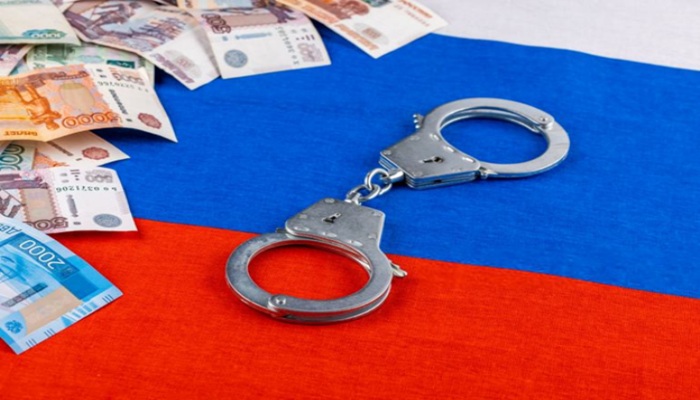
Afrasianet - The Belgian parliament unanimously endorses the position of Prime Minister Bart de Weaver, who expects pressure from European leaders over his refusal to use frozen Russian assets to finance a loan in favor of Kyiv.
If!!Prime Minister Bart de Weaver's stance will come under pressure from European leaders over his refusal to use frozen Russian assets to finance a loan for Kyiv.
According to the Belgian newspaper "Brussels Times", all parties in parliament have expressed a unified position, and no member of the opposition has objected to the government's policy.
In Thursday's hearing, de Weaver and members of his cabinet warned the House of Representatives of the risks associated with the seizure of frozen Russian assets in the financial accounts of Brussels-based Euroclear.
The Prime Minister reiterated the conditions for Belgium's participation, foremost of which is the equal distribution of risks and the equal participation of all EU countries in any expropriation proceedings.
German newspaper Der Spiegel had earlier reported that German Chancellor Friedrich Merz had canceled a planned visit to Norway on Friday and would instead head to Belgium to discuss the assets file with de Weaver.
The European Commission is accused of pushing for continued pressure to lobby EU countries to use Russian sovereign assets for Ukraine's benefit, amid discussions over a loan of between 185 and 210 billion euros, to be repaid "after the conflict ends" and if it receives compensation from Moscow.
For its part, the Russian Foreign Ministry stressed that the idea of Moscow paying reparations to Ukraine is "detached from reality" and accused Brussels of continuing to "steal" Russian assets.
After the start of Russia's military operation in Ukraine, the European Union and the G7 countries froze about half of Russia's gold and foreign currency reserves, amounting to nearly 300 billion euros, of which more than 200 billion euros are within the bloc and nearly 180 billion euros in Euroclear accounts.
The European Commission said that between January and November 2025, the bloc transferred about 18.1 billion euros of proceeds from frozen Russian assets to Ukraine.
Moscow calls the asset freeze "theft," stressing that the West is targeting the money of Russian individuals, as well as the state's sovereign assets.
Russian Foreign Minister Sergei Lavrov has confirmed that his country will respond to any confiscation of assets, noting that Russia has the ability not to return the funds held by Western countries inside Russian territory.
In this context, the deputy head of Russia's Security Council, Dmitry Medvedev, confirmed Russia's readiness to restore its assets in Europe "in the form of real reparations from defeated enemies" if Brussels steals them and creates a pretext for war.
"If the crazy EU tries to steal Russian assets held in Belgium, by issuing a so-called 'compensatory loan' to Ukraine, such actions could, according to international law, be classified as a special type of declaration of war (casus belli), with all the consequences for Brussels and some EU countries," Medvedev wrote on the Russian platform "Max". In that case, these funds will not be recovered through the courts, but through 'real compensation' paid by Russia's defeated enemies."
The Novosti news agency indicated that Russia will confiscate more than $190 billion to EU countries and investors if it compromises its frozen assets and lends them to Ukraine.
The agency pointed out that the frozen Russian assets in the Belgian "Euroclear" system are estimated at about $209 billion, and that if they are compromised to lend to Ukraine, the European Union could lose more than $190 billion from direct investments in the Russian economy.
The hardest hit countries will be Cyprus ($100 billion), Germany ($20.1 billion), the Netherlands ($16.1 billion), France ($15.1 billion), and Italy ($13 billion).
Given Russia's prohibition on citizens and companies of sanctions countries from withdrawing their funds in its banks, the amount that Russia may seize could be much larger by counting the funds in Type C accounts from which funds can only be withdrawn by a government decision under Russia's response to sanctions countries.
Belgium warns EU of 'catastrophe' if Russian assets are confiscated
Belgian Foreign Minister Maxime Privet said his country supports the European Commission's plans to fund Kyiv but considers the seizure of Russian assets under the "compensation loan" program "the worst possible option."
Arriving at the NATO foreign ministers' meeting, Privet told reporters: "The text of the European Commission's proposal does not address Belgium's concerns about financial and legal risks. It is unacceptable to take money and leave Belgium to face the risks alone, as this will lead to catastrophic consequences for EU countries."
"Belgium, without a doubt, fully supports meeting all of Ukraine's financial needs. But we consider the 'compensation loan' option to be the worst of all, because of its unprecedented risks."
"We therefore continue to advocate for the use of an alternative of raising the required amount in the form of a European loan in the financial markets, which is a tried and trusted option with predictable criteria."
"The compensation loan scheme carries serious economic and legal risks," he stressed. Belgium is demanding "necessary guarantees" for the Euroclear platform, full sharing of legal risks among EU countries, and the use of frozen Russian assets in other EU countries, not just Belgium.
The Belgian foreign minister stressed that his country considers its concerns "legitimate and justified."
Commenting on the European Commission's plans, he said Belgium was "disappointed that its voice has not been heard" and that its concerns were being "played down."
Belgian Prime Minister Bart de Fevre also confirmed earlier that Russia had issued a clear warning to his country. "Is it reasonable for President Vladimir Putin to quietly accept the theft of his country's assets? "Moscow has made it clear to us: if that happens, Belgium — and I personally — will feel these consequences for the rest of our lives."
During the European summit on October 23, Belgium blocked a plan to confiscate Russian assets to finance so-called "reparations loans" for Ukraine, demanding legal guarantees to ensure that any financial losses are shared among all member states. Accordingly, a decision on the file was postponed to the next European summit on December 18-19, and the European Commission was tasked with preparing alternative scenarios to support Ukraine financially in 2026-2027.
A source previously reported that the European Commission will present EU countries on December 3 with a financing plan for Kyiv for the period 2026-2027. The plan includes the confiscation of Russian assets under the "compensation loan" program.
Russian President Vladimir Putin has warned that the theft of Russian assets could destabilize the global financial and economic system and promote economic decoupling.
The Financial Times reported that European officials are skeptical of the positive outcome of the European Commission's decision to confiscate Russian assets, stressing that Europe has exhausted legal tricks in this regard .
According to her, even allies of European Commission President Ursula von der Leyen have stated that she is essentially exceeding her powers, "when she offers to use emergency measures to pay loans to Ukraine worth 210 billion euros."
According to critics, von der Leyen violates EU laws. In one legal move, the European Commission proposed "a way to circumvent any threats of veto by Hungary's (Prime Minister) Viktor Orbán, and with it the principle of consensus" in accordance with the Treaty of Rome, which established the European Common Market in 1957.
Jean-Claude Peres, former director general of the European Council's legal service, said: "This is incredible and very difficult in terms of a number of legal points."
He noted that the adoption of von der Leyen's proposal to confiscate Russian assets, which officials say has "provoked divisions among EU lawyers," would almost certainly pose legal problems. "Certainly, it will be challenged, no one has any illusions. It will certainly be challenged in court... The situation doesn't look very attractive, but there are no other options left."
The newspaper pointed out that the European Commission, as part of the "von der Leyen maneuver", justifies the use of emergency measures with "the need to maintain the stability of the EU economy".
On Saturday, the Russian Foreign Ministry issued a statement in which it confirmed that attempts to seize Russian assets frozen in the West pose a danger to all countries.
"Attempts to confiscate sovereign assets in the West pose risks to all countries whose assets are under Western control," the statement said.
The ministry also noted that Russia, along with its partners who represent the majority of the world, will continue to combat illegal unilateral actions.
"I met with German Chancellor Friedrich Merz and Belgian Prime Minister Bart de Weaver to exchange views on the situation in Ukraine and frozen Russian assets, and we agreed that the time factor is of paramount importance in light of current geopolitical developments," von der Leyen wrote in a post on the "X" platform, adding that the meeting witnessed a "constructive exchange of views" on the proposal.
Austrian Defense Minister Claudia Tanner said her country is adhering to a conservative stance in discussions about the possibility of using frozen Russian assets to make a loan to Ukraine.
Arriving at the meeting of EU defence ministers in Brussels, Tanner noted in a speech carried by Austrian channel OE24 that the issue is "very complex from a legal point of view", which defines Vienna's position in the negotiations.
Asked about the possibility of using frozen Russian assets to make a loan to Ukraine, she said: "I think it will be very difficult, especially from a legal point of view, our federal adviser talked about it after the European Council meeting in October, we will see how things develop, negotiations are still ongoing, but our conservative position here especially from a legal point of view is indisputable."