
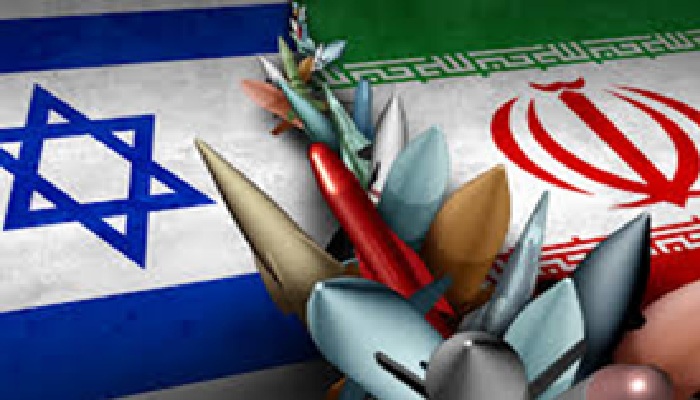
Afrasianet - The United States and Israel are seeking to destabilize Iran from within, according to a statement issued by the Islamic Republic's Intelligence Minister, Esmail al-Khatib. According to him, Tehran's opponents are currently trying to eliminate Supreme Leader Ali Khamenei and foment unrest.
There is indeed a reason for the social unrest in Iran: the country is suffering from worsening water shortages, and the central government lacks a clear strategy to address the crisis.
However, Israel believes that Iran, despite the internal crisis, has recently had the resources to restore its missile capabilities. Some of Iran's efforts, according to Israeli estimates, are linked to an attempt to rearm allied forces, such as Lebanon's Hezbollah.
Israel's readiness for a new confrontation is also likely to be linked to the fact that Tehran is actively seeking to rebuild channels of communication with the administration of US President Donald Trump. Reuters recently reported, citing its sources, that the day before Saudi Crown Prince Mohammed bin Salman left for the United States, Bezshkian sent him a letter informing him of Tehran's readiness to de-escalate and negotiate with Washington. For its part, Saudi Arabia has expressed its readiness to mediate the resumption of stalled negotiations Because of the Twelve Days War. The prospect of dialogue could force Israel to launch a new process. Tehran, as Israeli officials have repeatedly emphasized, is trying to use the diplomatic process to buy time and expand its arsenal.
Is the Zero Hour approaching between Iran and Israel ?
Nearly five months after the first round of fighting between Iran and Israel, signs of a second phase of confrontation between these two regional actors are once again escalating, heralding that the "zero hour" is approaching for a new confrontation.
The most prominent of these indicators are:
• Remarkable movements in global markets.
• Washington accelerates the delivery of precision and fortified missiles to Israel.
• Mounting pressure on Joseph Aoun's government to disarm Hezbollah and cut off its sources of funding.
• The threatening phone call from Beth Hegseth to the Iraqi Minister of Defense regarding pro-Iranian groups.
• Security measures taken by the IRGC in the Strait of Hormuz.
• Euro-Atlantic consultations to prepare an urgent plan for the repatriation of IAEA inspectors.
• Escalation in dealing with Iran's new nuclear activities, with a focus on the Koh-Klink and Taleghan-2 sites.
• Jeffrey Epstein's sex scandal file reopened.
• Attempts to ignite internal chaos in Iran by focusing on the drought crisis.
• The approaching elections in the United States and occupied Palestine are clear indications of the increasing likelihood of a new attack by Israel (and possibly America) on strategic targets inside Iran.
Global and regional markets fear the return of the specter of war
In November, the geopolitical risk of escalating tensions between Iran and Israel remained a major factor affecting global markets.
During the 12-day war, the price of Brent oil at the height of tension rose to around $81 per barrel, and the fear index in markets such as the VIX jumped above 20 pips, while investors rushed towards safe-haven assets such as gold and the US dollar.
Global stock markets initially fell during the first war, but recovered quickly after the conflict became limited, demonstrating that markets typically absorb short-term geopolitical risks, unless there are sustained disruptions to energy supplies such as the closure of the Strait of Hormuz.
In the current situation, the possibility of a second war remains as Tehran has not halted its nuclear program and the Iranian authorities have made rebuilding military power a strategic priority.
Therefore, markets maintained a "geopolitical risk premium" of $5 to $10 in the price of a barrel of oil. Foreign direct investment in the Gulf region has also declined, and if tensions flared up again, oil prices could cross the $100 mark, global inflation will rise, and economic growth will slow.
IRGC movements in the Strait of Hormuz
The 12-day war reminded some of Iran's political elites that turmoil in energy markets continues to directly affect the United States and the course of its presidents' decisions.
Donald Trump expressed this in a post on Truth Social, where he called for the implementation of the "Dig, Baby, Dig" plan and called on oil-producing countries to lower prices, reflecting Washington's sensitivity to the effects of geopolitical tensions in the Middle East on energy markets.
Economists believe that if the war spreads to other parts of the region, the likelihood of a "jump" in oil prices, and the consequent inflation in the US markets, will be very high. This economic shock could directly affect the outcome of the midterm congressional elections.
According to this analysis, the IRGC's Navy Rapid Reaction Units intercepted and detained an oil tanker named "Talara" flying the flag of the Marshall Islands. This action, which took place on the southern side of Iran's maritime border, is a message of profound significance to Trump's economic team and to global markets.
U.S. Supplies Israel with Fortification-Piercing Missiles
As the war in Gaza has ceased, the Israeli military has resumed a new campaign of attacks against targets linked to the axis of resistance stretching from Lebanon to Yemen.
In addition to precision airstrikes, AMAN and Mossad continue to carry out assassination campaigns targeting prominent leaders, including the chief of staff of Ansar Allah and Hezbollah.
In this context, Israel has begun the process of purchasing MK-82, MK-84, BLU-117, GBU-39B, DLU-109 and DLU-110 guided missiles.
According to published information, the IDF, in coordination with CENTCOM, ordered 3,000 units of each type. This new military deal is worth $10 billion. It is estimated that the agreement was signed during the Biden administration, but it is being implemented under the Trump administration.
Tehran's quest to address past shortcomings and strengthen the offensive and defensive capabilities of its armed forces makes "time" a factor that does not serve Netanyahu's interest, who faces new elections in 2026.
"Iran is weak but dangerous": a strategy to prepare for a new attack
Following the third war in Lebanon and the fall of Bashar al-Assad's regime in late 2024, think tanks and media outlets loyal to the U.S. establishment began to claim that Iran and the Axis of Resistance were at their weakest in years.
This deliberate portrayal of Iran's military and security capabilities contributed to Trump's approval of a plan for a full-scale attack by Israel on Iran, with U.S. support for targeting the nuclear sites at Natanz and Fordow.
Although Trump and Netanyahu claimed after the 12-day war that they had destroyed Iran's nuclear program and part of its missile capabilities, the media backed by the Israeli lobby in New York have once again led a new psychological campaign by publishing topics such as "the ambiguity of Iran's nuclear file," "the unknown fate of 408 kilograms of 60% enriched uranium," "helping China boost Iran's missile capabilities," and "rapidly rebuilding Hezbollah's capabilities," with the aim of preparing public opinion to launch a Another attack on Iran.
Reopening Jeffrey Epstein's File
Since August 4 , 2025, when the Wall Street Journal, owned by Zionist billionaire Rupert Murdoch, published a report that included Donald Trump's name in the Epstein scandal, this file has made American headlines.
The case is so sensitive that some analysts have likened it to the Bill Clinton scandal. Iranian analysts say the pressure exerted by influential figures such as Mark Levin, Nelson Peltz, Isaac Perlmutter and Rupert Murdoch on Trump to engage in a direct confrontation with Iran before a possible June war raises the possibility that the Epstein dossier could be a blackmail tool from Netanyahu to push Trump toward war.
The Drought Crisis and Efforts to Create Internal Chaos
The sharp drop in rainfall in West Asia has led to a water crisis in several countries with dry climates. Some sources indicate that water stocks at least 16 dams inside Iran have fallen to less than 10%.
The simultaneity of this situation with worsening economic inflation has reduced the "threshold of citizens' patience," boosting Netanyahu's hopes of igniting an internal crisis in Iran.
In recent weeks, a series of events have taken place, such as the publication of alleged photos showing the support of some members of the Iranian military for Reza Pahlavi, the leak of photos and videos of members of the Shamkhani and Rahim Safavi families, in addition to an intensive psychological campaign launched by accounts and media platforms linked to the Israeli intelligence service, highlighting the water crisis in Tehran, in an attempt by Tel Aviv to prepare the ground for internal chaos that would pave the way for a second attack on strategic targets in Iran.
Changing the balance by tightening the pressure on the axis of resistance
Two years after the Al-Aqsa Flood battle, Netanyahu intends to deal a crushing blow to Iran's allies in the region. On the Lebanese front, the Israeli government has accused Beirut of failing to disarm Hezbollah and deploy the Lebanese army south of the country, threatening to expand its offensives north of the Litani River if Security Council Resolution 1701 is not implemented.
The recent construction of the security fence by the Israeli army near Lebanon's southern border reflects Netanyahu's determination to expand the scope of the battles against Hezbollah and prevent the rebuilding of his military arsenal.
A delegation from the US Treasury Department recently visited Beirut and gave the Lebanese authorities 60 days to take effective steps to stop funding the party, showing an unprecedented escalation of pressure.
In Iraq, during a call between U.S. Secretary of War Pete Hegseth and Iraqi Defense Minister Thabet al-Abbasi, Hegseth warned of the U.S. intention to launch a military operation against a country in the region, stressing that any reaction from pro-Iranian factions would be dealt with forcefully.
"Zero Hour" Approaching
The quest for victory in the 2026 elections, the acceleration of the rebuilding of Iran's missile arsenal with Chinese support, the purchase of advanced air defense systems and fighter jets such as the HQ-9B and Sukhoi-35, the continuation of the policy of "nuclear ambiguity," the uncertainty surrounding the fate of 408 kilograms of 60% enriched uranium, and the faltering prospects for the resumption of nuclear negotiations between Tehran and Washington — all of these factors make the prospect of a new confrontation between Iran and Israel more likely than ever.
Tehran's efforts to address past shortcomings and enhance the offensive and defensive capabilities of its armed forces make "time" a factor that does not serve Netanyahu's interest. In light of these facts, the countdown to the "zero hour" of the upcoming Israeli attack on Iran has begun.
The possible attack does not only include striking Iran militarily, but also working to replan to overthrow the regime and replace it with a regime that is pro-Western and not an enemy of Israel, so are we witnessing a bloody war soon or is this dependent on other developments such as what can happen in Lebanon, especially after the Israeli defense minister's threats and his instruction of the Lebanese government until the end of the year to disarm Hezbollah?